Jul 09, 2010
Oct 07, 2012
Nov 02, 2008
Jan 04, 2010
Aug 28, 2011
Oct 24, 2012

Poles Apart: Elites and Masses After the Disaster

I joked about this photo when I first it, perhaps because my wife showed it to me.  “I sure feel sorry for that kid.  Picking a fight with a middle-aged man, what was he thinking?”
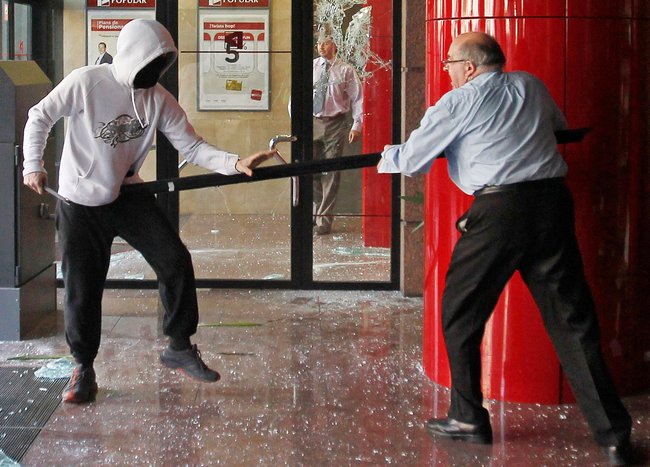
But the truth is, it really is a mismatch in just that way.  Even if you notice the shiv in the protestor’s hand, the odds are against him.  If caught, he’ll be charged with breaking and entering, assault, mayhem, you name it.  If he gets away, it’s just to return to the austerity, vanishing opportunities, and grim future being forced on Spain by the European bankers’ neoliberal policies.  As for the fight itself, frankly, the guy on the right has the bigger weapon, good heft, and no fear, and he’s aggressively going for the gut or lower yet.

Just what you’d expect from a banker, come to think of it.  Like once sound economies around the globe, Spain is in trouble because of unchecked greed and recklessness by big banks and other financial institutions–a binge of aggressive mismanagement that was promoted by the same neoliberal ideology that now justifies transferring all of the losses downward.  Sure, there’s more to the story and each country is different, but as Cassandra–that is, Paul Krugman–has been warning for a long time now, there is no sound economic analysis that justifies the austerity policies being enforced in Europe and trumpted by Republicans in the US.  The bottom line is that many who did nothing wrong are being sacrificed to protect an elite that behaved very badly.  In Spain, students were demonstrating because the heat was being cut off in their classrooms, and you can bet that isn’t happening on the 45th floor.

If you take a better look at what is happening on the ground, you can see more of the texture of the political situation.  The bank lobby is a scene of conflict–but the demonstrators will get no farther than that.  The shattered glass suggests that the opulent decor is at least superficially vulnerable, but look at how casually the other banker walks through the mayhem: chaos at the edges is just business as usual, another day in the life of creative destruction.  And however lithe the masked demonstrator might be, his clothes aren’t worth the cost of a tie worn by anyone on the other side.  Draconian policies push the masses to confront the elite, but that’s a rigged game from the start.  And at the finish, if democratic government doesn’t do its job.

Which is how we get to this photo of another pole in a very different place.
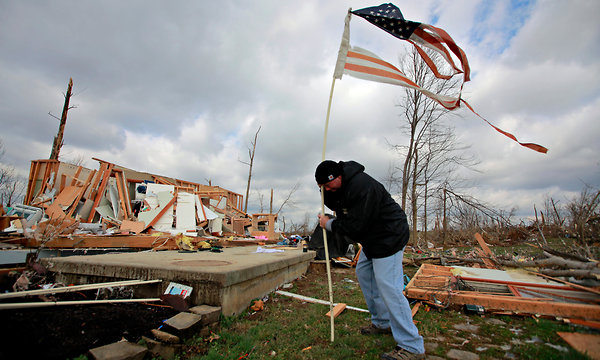
A man strains to raise a flagpole in Crittenden, Kentucky, after the devastating storm that swept through the town last Saturday.  Perhaps the photo alludes to Joe Rosenthal’s iconic image of the flag raising on Iwo Jima.  If so, both the similarities to and differences from the original photograph are notable.  On the one hand, a common man labors to plant the national symbol amidst devastation, which suggests that he and his fellow citizens have the same patriotism, determination, willingness to sacrifice for the common good, and similar virtues of those that won the battle at Iwo.  On the other hand, times may have changed: the flag is shredded, the pole is bent and spindly, he is all alone, and now even the wind is blowing against him.

Families, friends, and neighbors are pulling together in the heartland, God bless ’em, and they have to.  As you look through the slideshows on the storm’s aftermath, it becomes clear that these are people who already had been abandoned to economic decline.  Unlike the banker in the the photograph above, for this guy there are few resources at hand, no powerful corporations, connections in high places, or governments that believe in putting your priorities first, last, and always.  Republican governors will call for disaster aid, but try get them to invest in the jobs, education, health care, social services, environmental protection, financial regulation, and other public goods that these people need to live reasonably secure lives.  So it is that a storm has been blowing across the nation for years, wreaking the lives of ordinary people.

Two photographs, both of disasters in the making, neither of which has anything to do with the weather.  The are united by an element of visual composition, but otherwise you might say they are poles apart.

Photographs by Albert Gea/Reuters and Liz Dufour/The Cincinnati Enquirer.

 1 Comment

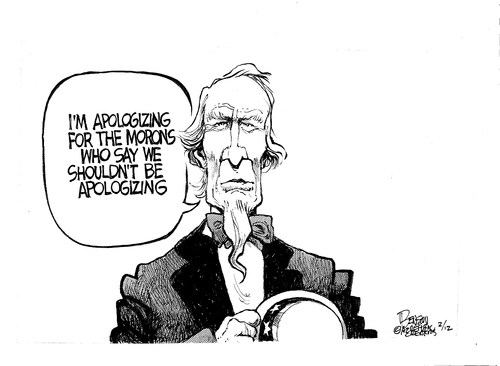
Sight Gag: Apologia

Credit: All Hat No Cattle

Sight Gags” is our weekly nod to the ironic, satiric, parodic, and carnivalesque performances that are an important part of a vibrant democratic public culture.  These “gags” may not always be funny or represent a familiar point of view, but they attempt to cut through the lies, hypocrisy, shamelessness, stupidity, complacency, and other vices of democratic life.  Of course, we invite you to comment … and to send us images that you think might deserve a laugh or at least a wry and rueful look by those who are thinking about the character of public life today.

 0 Comments

The Historian’s Eye: Archiving for a Better Future

Matthew Frye Jacobson is a professor at Yale, which would be excuse enough to keep on writing books for other scholars.  Instead of staying in that comfort zone, he has created a website dedicated to enriching public discussion by gathering images and interviews that reflect history in the making.

As he says, “Beginning as a modest effort in early 2009 to capture the historic moment of our first black president’s inauguration in photographs and interviews, the “Our Better History” project and the Historian’s Eye website have evolved into an expansive collection of some 1000+ photographs and an audio archive addressing Obama’s first term in office, the ’08 economic collapse and its fallout, two wars, the raucous politics of healthcare reform, the emergence of a new right-wing formation in opposition to Obama, the politics of immigration, Wall Street reform, street protests of every stripe, the BP oil spill, and the seeming escalation of anti-Muslim sentiment nationwide.  Interviewees narrate and reflect upon their own personal histories as well, a dimension of the archive that now spans many decades and touches five continents.”

You can look, listen, and otherwise get inside the project here.  And don’t forget to check out the “Participate” link.

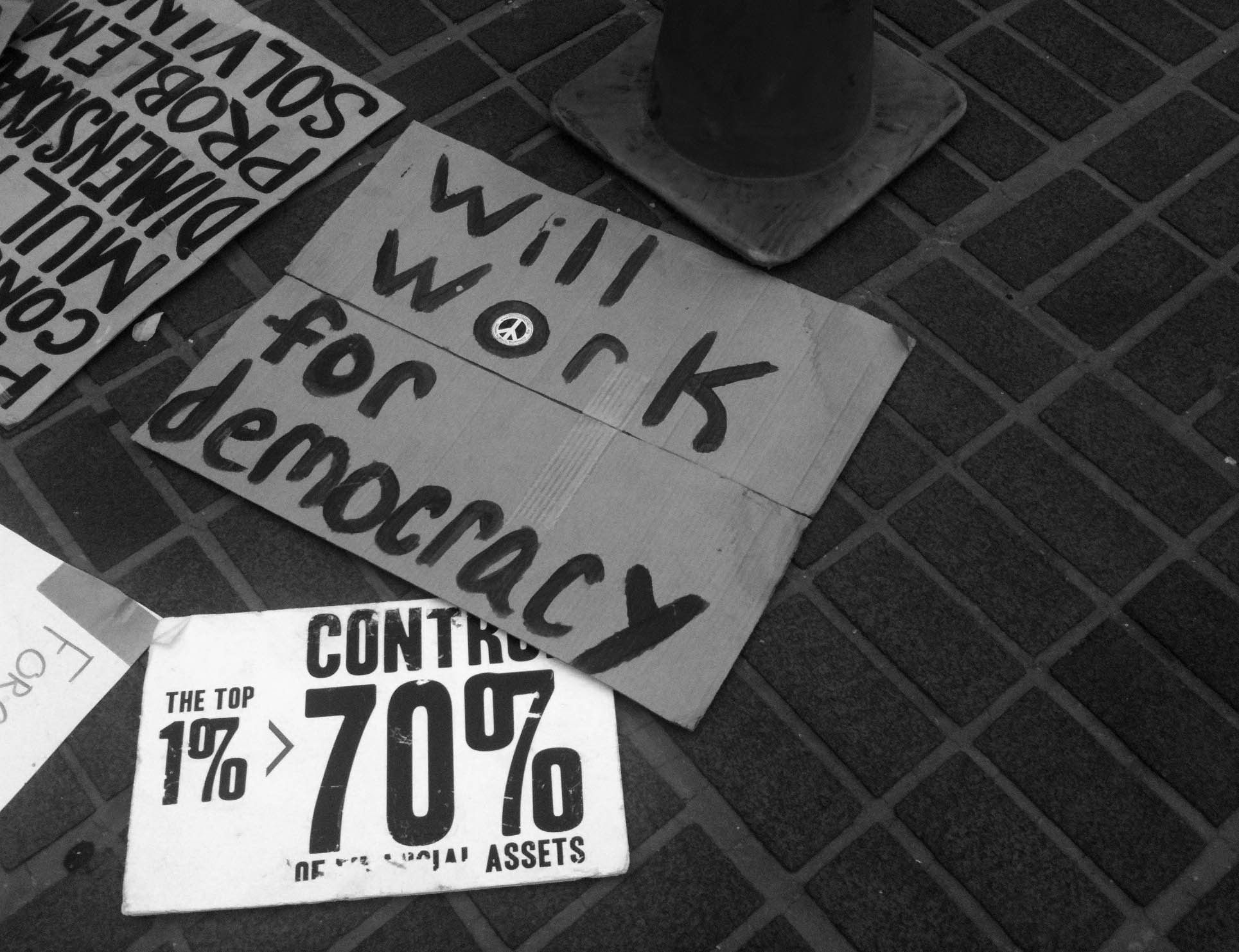
Photograph from Occupy Baltimore, October 22, 2011.


 1 Comment

A Rocket, a Tomato, and a Slice of Bread

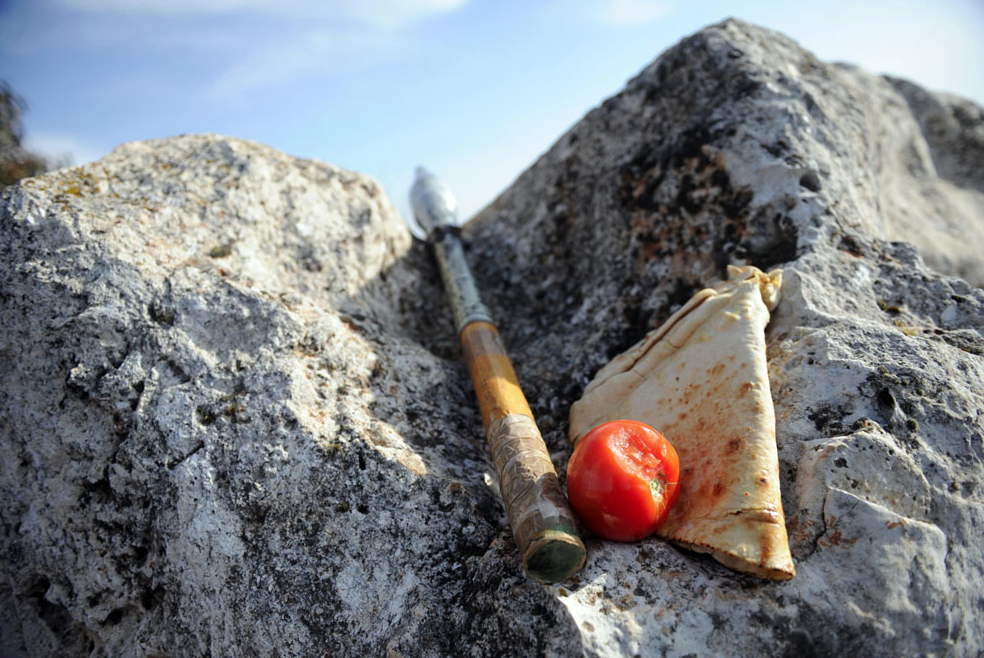
Still life photography, the photographic depiction of inanimate objects, is arguably the genre that provides the photographer with the most flexibility in controlling the conditions of his or her practice.  In the typical still life photograph the variables of light, space, and time are all subject to the photographer’s volition.  Even with its close kin, the portrait, the photographer is at the mercy of the cooperation of the subject being photographed.  But in a still life the object of attention lacks any will.  As such, and perhaps more than in any other photographic genre, the still life photograph underscores the epistemological tension—perhaps even a paradox—that rests at photography’s claim to be a medium of representation:  on the one hand, it relies upon the realist aesthetic that underwrites our faith in the transparency and truth of mechanical reproduction (however limited they might be), and on the other hand, it relies on the artistry of the photographer him or herself.

It is probably because the still life photograph embodies this tension so clearly that we rarely find such images in photojournalistic venues that tend to privilege the realist aesthetic over the artistry of the photographer.  But of course sometimes such photographs work their way past editorial gatekeepers.  And so we have the image above which recently appeared in a slide show titled “Syria’s Long, Bloody Uprising.”  The caption reads, “A slice of bread and a tomato sit next to a rocket at a position manned by Free Syrian Army Rebels in Idlib on February 22, 2012.”

As is conventional for still life photographs, the caption is altogether minimalist, purporting to tell us no more and no less than is patently obvious in the image itself.  And in this sense the caption reinforces the realist aesthetic of the image, for clearly we are looking at a rocket, a tomato and a slice of bread as they “sit” next to one another. But, of course, no sooner than we acknowledge the correspondence between caption and image that problems emerge.  The first and most obvious problems is that technically speaking objects don’t “sit,” they are placed; and whether the placement was effected by the photographer or someone else the point is that their proximity to one another has to be accounted for as something other than objective, self-determination.

The second problem is more interesting, for the caption actually gives the lie to thinking of this as a still life photograph at all, as it situates the three objects not just in in relationship to one another, but in relationship  to a particular place.  And more, that place is not just a geographical location (Idlib), but a subject position “manned by Free Syrian Army rebels.” And of course now the proximity of the three objects to one another becomes all the more significant, for it invites the viewer to consider not just the relationship between objects that give life (food) and objects that take life away (weapons of destruction), but also to sympathize with those who rely upon such simple (indeed, almost primitive) and natural objects.

The larger significance of the photograph and its caption has less to do with how it coaches a political identification with the Free Syrian Army, however much and however effectively it might do that, and more to do with reminding us that all photographs operate epistemologically at the tension between what is mechanically reproduced (what is actually there) and what the photographer artistically creates (how we are invited to view it).  In short, it is a notice that photojournalism is fundamentally a mode of public art and it behooves us to attend to its artistry even when the conventions of photographic representation might otherwise discourage us from doing so.

Photo Credit:  Bulent Kilic/AFP/Getty Images

 1 Comment

The Texture of Political Action: Democracy and Dictatorship

Last night millions of people were watching the Academy Awards ceremonies, which might be thought of as Hollywood’s prom.  You might expect that this next sentence would remark that at the same time millions of other people were suffering and fighting for something more important. But let’s not be too quick to separate society and politics.

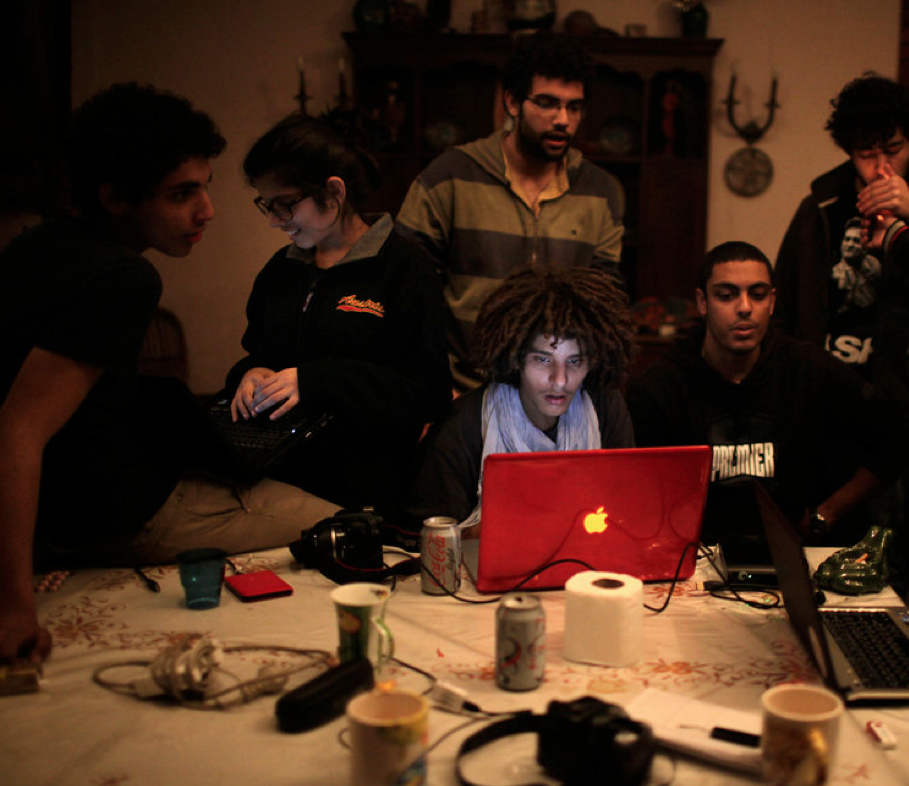
This photo of Egyptian twenty-somethings uploading video from Tahrir Square is a portrait of political action–and a study in youth culture.  They could get beaten, imprisoned, and tortured for what they are doing–and they are wearing just the right kind of student fashions and working on what is the cool computer for anyone who gets anywhere near a university.  We particularly like how the color of the hard drive matches the laptop, which also gets picked up on the Coke cans and the floral pattern on the tablecloth (we probably can thank mom for that).  But nothing is too neatly coordinated, for that would nullify the wonderful informality and messiness that most characterizes the tableau.  They don’t have to wait for an election: this already is a portrait of democratic life.

Of course, the image also plays on sentimental memories, for those who have them, of student days–the ashtray and toilet paper are near-perfect touches–and these revolutionaries also are middle class (or better), Westernized, and otherwise liberal-democratic elites in the making.  They do not look like those demonstrators who were poorer or embodying more traditional customs and Islamist commitments, and less privileged viewers might be quick to see and resent those who don’t have to go to work as soon as they are able.  No one should conclude that these students are or ought to be the face of the revolution or that democracy can’t include wearing galabiyyahs or that every viewer should warm to the glow of the Macbook Pro laptop.

Still, sometimes you can just see the difference.

This is the interior of a nondescript building somewhere in Damascus.  The New York Times caption had nothing to do with the photo as such: “The escalation in Syria, where Mr. Assad has vowed to end a 10-month-old uprising that he has characterized as the work of foreign-backed terrorists, came within a few miles of the epicenter of his power in the capital on Sunday.”  So, what is the photo doing?  We don’t see a recognizable building or evidence of warfare or anything specific to the day-to-day struggle being reported in the text.  But perhaps it’s there to communicate something about the nature of the regime.

Institutional buildings can be dull, unadorned, vaguely depressing places; that, too, is part of the look.  “See how your money is not being wasted, and how functional and egalitarian your government is, and how the rule of law is applied uniformly?”  Even so, the large photograph of Our Leader is the stock image of authoritarian regimes, matched only by the elimination of most other images and their implications of pluralism.  This photo captures that and more, including a sense of social impoverishment, as if the energy is being leached out of everything.  Even Assad’s portrait is fading into a ghostliness.  Perhaps he’s on his way out (I wouldn’t bet on it), but this photo says that the authoritarian regime has already reduced its society to a kind of lifelessness.  Those flags could be in a mausoleum, whether one run by the state or one used for the state’s internment.  Empty surfaces, listless symbols, and a fire extinguisher: welcome to the Syrian government.

Egypt is doing better that Syria but is still a long way from becoming a democracy, so easy contrasts are not the point here.  But one can consider how politics is textured: that is, how the social context and consequences of political action are evident on the surface of things.  By paying attention to the social surface, we can understand how both individual experience and collective action might be shaped by many different factors coming together in a particular place and time.  And we can see how different political practices can make the world more richly interwoven and vibrant, or more relentlessly ordered and depressing.

The genius of the camera is that it captures everything that is there on the surface, whether we intended to see it or not.  Photographers are taking considerable risks to photograph the political events of our time.  To better understand what is happening, one might want to pay more attention to the surface of things, and to how life is being textured.

Photographs by Ed Ou and Tomas Munita for The New York Times.

Cross-posted at BAGnewsNotes.

 1 Comment

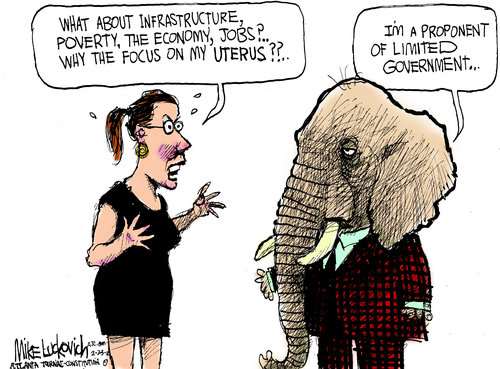
Sight Gag: In the Name of “Limited Government”

Credit: Mike Luckovich

Sight Gags” is our weekly nod to the ironic, satiric, parodic, and carnivalesque performances that are an important part of a vibrant democratic public culture.  These “gags” may not always be funny or represent a familiar point of view, but they attempt to cut through the lies, hypocrisy, shamelessness, stupidity, complacency, and other vices of democratic life.  Of course, we invite you to comment … and to send us images that you think might deserve a laugh or at least a wry and rueful look by those who are thinking about the character of public life today.

 0 Comments

Ruben Salvadori’s Photojournalism Behind the Scenes

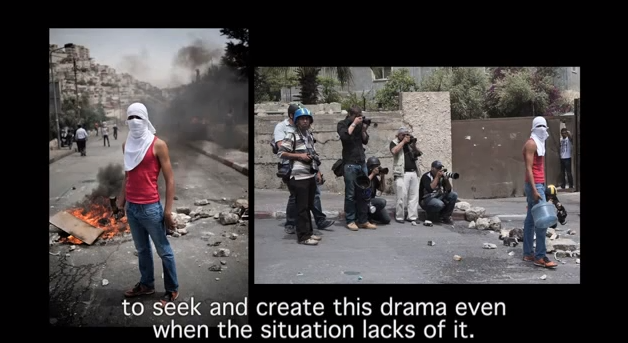
Ruben Salvadori is a young Italian photographer with a BA in Anthropology from Hebrew University in Jerusalem.  While covering the ritualized clashes between Palestinian youth and Israeli security forces, he became interested in the gap between the practice of photojournalism and the images that were shown to the public.

His video, Photojournalism Behind the Scenes, turns an ethnographic eye on the photographers’ relationship with their subjects, and on how that part of the photographic encounter is edited out of the picture.

Salvadori does a fine job of exposing this tacit dimension of conflict photography.  Unlike some critics, the point is not simply to trash visual media on behalf of some supposedly innocent alternative.  In fact, none of us are innocent, and one might well ask how these and other representational conventions contribute to the stalemated catastrophe in Palestine.  Would that we could stand back a bit further and see, not only the photographers, but how many others are all too habituated to crafting illusions of dramatic conflict, rather than achieving an equitable resolution to a political tragedy.

For additional commentary, see the discussion at Planext.

 3 Comments

The Silent Erasure of Executive Order 9066


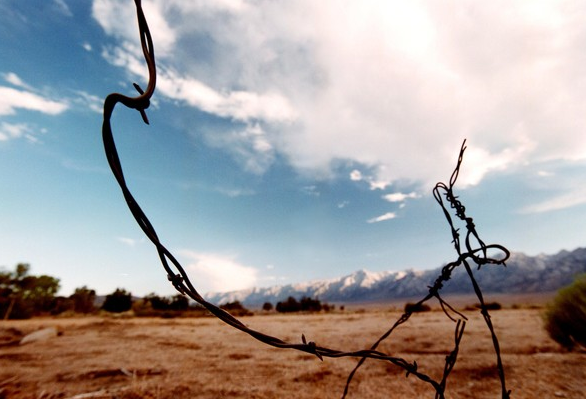
Tule Lake, Minadoka, Heart Mountain, Grenada, Topaz, Rohwer, Jerome, Gila River, Poston, Manzanar: their names should be etched on our national consciousness as a reminder of how quickly fear can blind us to the “better angels of our nature” and activate the dark side of our democratic sensibilities.  But of course they are not; indeed, in all but a few cases the names are barely recognizable.   This week marks the 70th anniversary of Executive Order 9066, President Franklin Roosevelt’s ignominious decision to “relocate” some 110,000 Japanese-Americans—over two thirds of whom were U.S. citizens—in the ten internment camps listed above and scattered throughout the western portion of the nation.   Roosevelt signed the order on February 19, 1942, and that the national media has chosen not to acknowledge the occasion of its anniversary only compounds the original tragedy by contributing to the erasure of its memory.

The photograph above was taken twelve years ago at Manzanar, a relocation camp located five miles south of Independence, California—the irony of its name should not escape us—and home to over 10,000 interned Japanese-American residents. The rusted and bent barbed wire that frames the landscape, emphasizing the wide open spaces and the big sky, is at home in the American west where it was a tool used to establish the boundaries of land ownership in an expansive frontier, and to contain and control cattle or other livestock.  Ordinarily such a framing of the landscape would not warrant a second look as perhaps anything more than a photographer’s affected representation of the relationship between nature and civilization.  But here, of course, the barbed wire is not a tool of civilization but a weapon of war, its purpose to imprison a race of people whose only crime was that they didn’t quite look like “us” and whose ethnicity identified them with a country that was at war with the United States.

When located in relationship to its proximate political history the focus invites us to shift our attention from the background to the foreground, from the majesty of the sky and the distant mountains to the violent protrusions of the barbs, from now to then. While all else seems to have been erased—the stables that were initially used to house humans, the eight guard towers that surrounded the compound and provided twenty-four hour surveillance, and indeed the compound itself—the barbs, cast almost but not quite in silhouette, linger as a twisted reminder of our own violent and unjust past, of what once was and risks being again if only because it risks being no more in our collective, public memory.

Photo Credit: Getty Images North America

Manzanar is now a national historical site maintained by the National Park Service.

 5 Comments

Seeing Double During Fashion Week

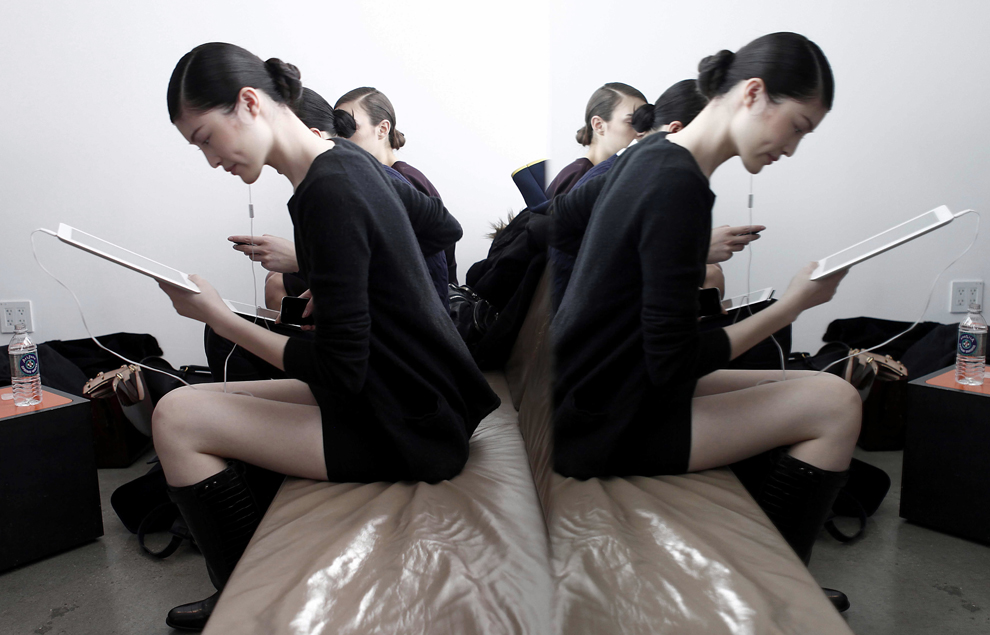
Fashion Week in New York has ended, with the show moving on to London, Milan, and Paris.  Each event will strive to distinguish itself as it jostles for pride of place on the international circuit, yet one doesn’t have to step back very far to see them as alike as peas in a pod.  Which may be one reason why photographers on the fashion beat like to capture double images.

Which side is the mirror image?  Does it matter?  Isn’t any fashion model already a reproduction of a type that is used to motivate imitation?  As with the replicants in Blade Runner, we might come to learn that they, too, have feelings, personalities, and lives, but that is hardly the point.  More likely, the process provides just enough human features to ensure conformity while subverting any attempt to further humanize the model or those around her.  So it is that we see this model reading, as if she has an interior life of her own, but that interest is then quashed by the duplication that emphasizes her impersonal appearance and replicative function.  All models might read, but so what?

One could place the image in a long lineage of paintings of the woman reader,  If that could restore enough of an aura of authenticity, the viewer might become interested in a considering a woman’s private experience as it can be found in the act of reading.  But that possibility raises the prior question of what one should be looking for in the first place when viewing a double image.   One answer might be some assurance of what is real, or some cue regarding how we might know.  The double image creates an initial skepticism–which side is reality and which is appearance?–and that in turn prompts more careful scrutiny to identify the reflective surface.  Carried far enough, that examination extends to the photograph itself.

Let me suggest that there is much more to be learned than whatever might be gleaned from that philosophical exercise.  And one key to unlocking the power of the double is to turn from the exact duplicate to images could be seen as double images, but need not be.

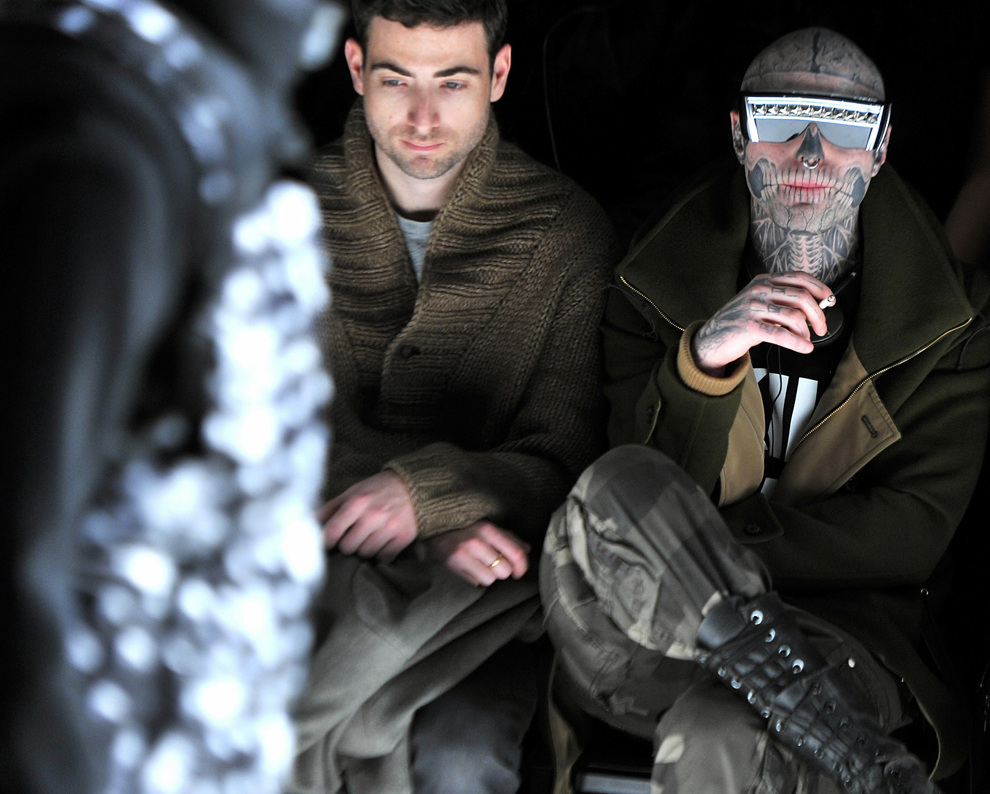
You want uncanny, you got it.  Or, if you want to shake off the really disturbing vibe, just pretend that they are two very, very different people and focus on either one or the other.  “What a freak” or “What a nice guy” will each work the same–and it doesn’t matter which way you apply them.  The power of this photograph, however, comes from the fact that it, too, is a double image, and one that taps a far deeper fear than the first photograph.  In the first image, whatever lay under the surface could be assumed to be as docile as the well-groomed body on the soft bench.  After all, whatever the content, she’s only reading.

But what if the nice boy in the sweater and the Mad Max outlaw are the same guy?  Because they are, of course: each carefully styled in a different idiom, bodies neatly complementary from top to bottom (look at their legs and hands, for example), with similar clothing (the same V-neck color scheme), and, of course, very comfortable together.  It’s as if the each could fit comfortably in the other’s skin, each the other’s alter ego, good boy and bad boy, the date you can take home to mother and the figure in every slasher movie looming in the dark outside the window.  And, of course, they can be one and the same person.

A subculture dedicated to the production of appearances proves to have more depth than we might think–at least when it becomes a subject for photographic artistry.  A world of social display and mechanical reproduction can also be one in which surfaces can be deceiving.  In place of surface and depth, however, we might want to think about how we always are choosing between simplicity and complexity, and between familiarity and fear.

Photographs by Carlo Allegri/Reuters and Stephen Lovekin/Getty Images.  This is one of several posts I’ve made over the years on double images, although don’t ask me if they form a coherent argument.  For the record, you can see those that a quick search pulled up here, here, here, here, here, here, and here.

 0 Comments

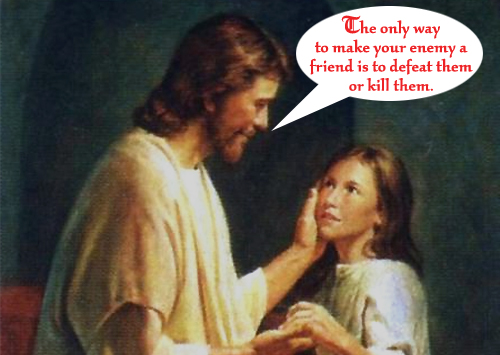
Sight Gag: “God’s Biblical Blueprint For an Ordered, Just, and Fair Society”

(Note: Click on the pic to find out who really spoke the quoted words.)

Credit: Tea Party Jesus

Sight Gags” is our weekly nod to the ironic, satiric, parodic, and carnivalesque performances that are an important part of a vibrant democratic public culture.  These “gags” may not always be funny or represent a familiar point of view, but they attempt to cut through the lies, hypocrisy, shamelessness, stupidity, complacency, and other vices of democratic life.  Of course, we invite you to comment … and to send us images that you think might deserve a laugh or at least a wry and rueful look by those who are thinking about the character of public life today.

 1 Comment