

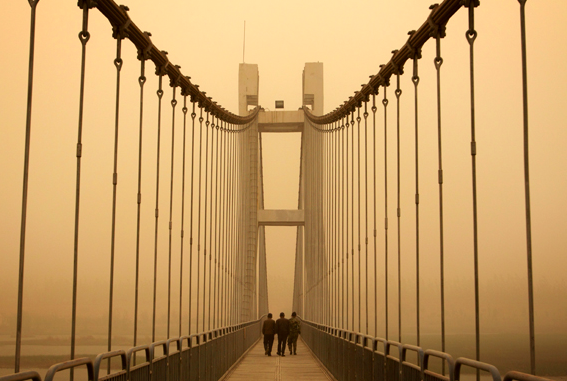
We are pleased to introduce NCN readers to Impact, an exploratory online exhibition site inaugurated by the Resolve collective of photographers and creative professionals and designed to feature the work of independent photographs as they address a common theme or topic. The initial theme is “On the Outside Looking In.” The photograph above is from Sean Gallagher’s “Desertification Unseen.”
The Politics of Anger
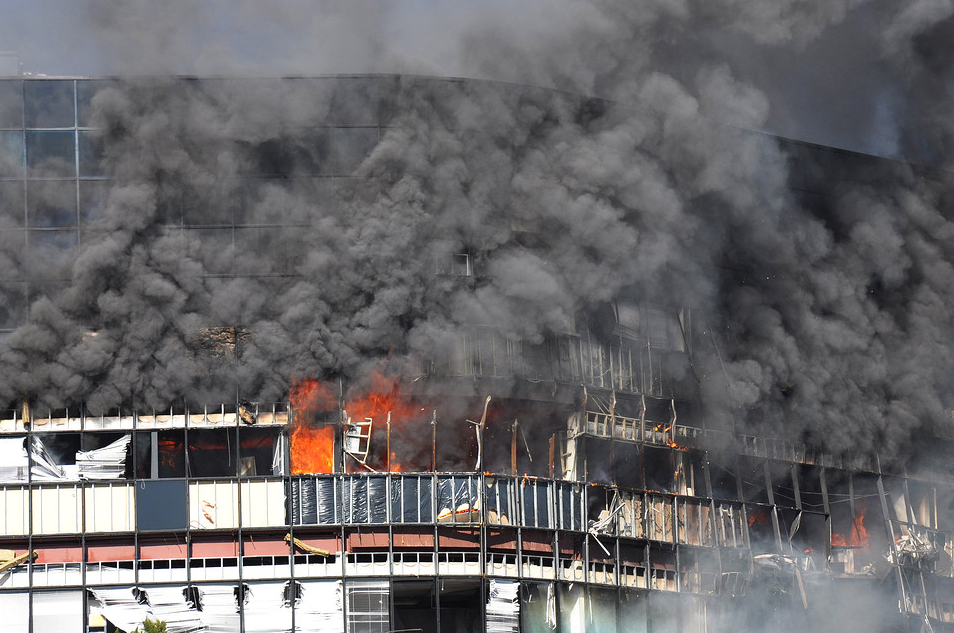
If you even saw this photograph you probably didn’t pay much attention to it. After all, it looks like many of the images that have come out of places like Lebanon and Iraq in recent years. One more terrorist, suicide bombing carefully planned and executed by a group of political extremists and religious fanatics. What more is there to say? Nothing, perhaps, until we discover that the explosion is in Austin, Texas, not the war torn Middle East, and it was caused by a lone U.S. citizen who flew a small airplane into a building that housed the IRS as an expression of his rage against corporate profits and the U.S. government in general.
The key thing to notice is how quickly the whole event seems to have slipped from national consciousness despite the sense in which it might be characterized as a small scale 9/11 attack: an airplane flown into a government building, animated by a dissident, vengeful desire to bring the political system down. That’s not the story we got, of course, as most reports focused on the bomber as a deeply disturbed, single individual animated by an inarticulate fury, despite the fact that he left behind a somewhat lengthy political manifesto explaining his long smoldering (and not irrational) anger at what he perceived to be an unjust political system. The above photograph is telling in this regard. Shot with a long lens and tightly cropped around the point of the explosion shortly after impact, the building is consumed by billows of smoke that shroud the intense flames that burn just below the surface awaiting to erupt. It is in its own way a picture of latent affect that serves as an allegory for the predicament of expressing anger in contemporary times: The smoke can serve as a screen to mask the raw affect for a time, but ultimately it is incapable of giving it a productive form or containing it for very long. The result is either dangerously explosive or sheer futility—and sometimes both.
Too often, it seems, we treat anger as an inherently irrational and inchoate expression of political engagement, typically representing it in the roar of an inarticulate mob. But as Aristotle made clear, anger is not madness. Indeed, it is and can be a legitimate and rational political emotion, quite necessary as a motivational resistance to the forces of injustice, and made effective in the careful and deliberate performance of the cultural norms of appropriate social and political recognition. The problem is that in contemporary times we lack useful models for the effective expression and enactment of productive political anger. Either we get the silly rants of groups like the “tea-baggers,” which function as little more than a parody of anger, or we get the truly irrational futility of individuals flying planes into buildings or going on shooting rampages. Neither serves the purposes of a robust democratic public culture.
What we need are exemplars of the performance of political anger that animate the demands for justice and restitution in pointed but measured ways. Where we will find them, it is hard to say, but in the meantime it is important to keep in mind that the political scenarios in which we frame enactments of anger carry a powerful normative force that should never go unmarked as transparent expressions of affect.
Photo Credit: Trey Jones/AP
Sight Gag: "And the Good News is …"
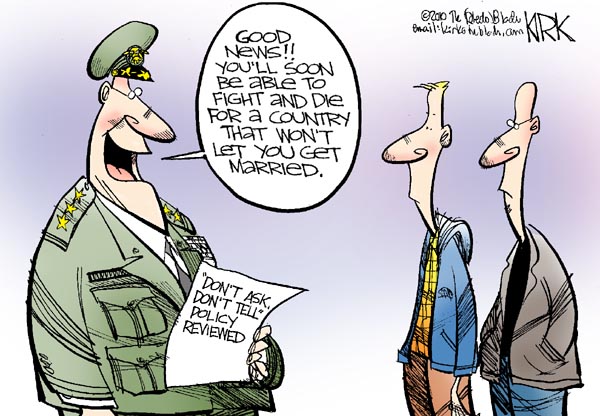
Credit: Kirk Walters, The Toledo Blade

Sight Gags” is our weekly nod to the ironic and carnivalesque in a vibrant democratic public culture. We typically will not comment beyond offering an identifying label, leaving the images to “speak” for themselves as much as possible. Of course, we invite you to comment … and to send us images that you think capture the carnival of contemporary democratic public culture.
Sight Gag: Happy Valentines Day – 2010
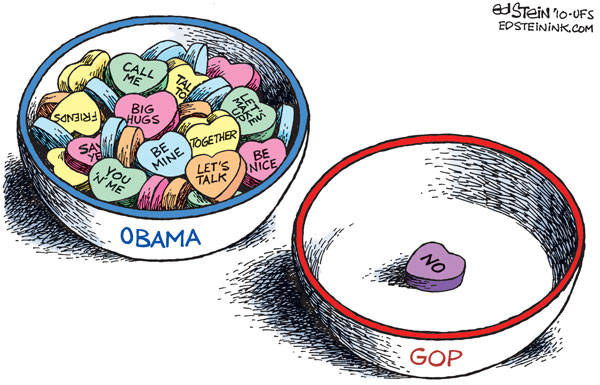
Credit: Ed Stein
Sight Gags” is our weekly nod to the ironic and carnivalesque in a vibrant democratic public culture. We typically will not comment beyond offering an identifying label, leaving the images to “speak” for themselves as much as possible. Of course, we invite you to comment … and to send us images that you think capture the carnival of contemporary democratic public culture.
Photographer's Showcase: "Haiti: Between Death and Life"
We welcome back our friend, humanist and photojournalist Peter Turnley, who has spent the past month in Haiti documenting the human struggle between life and death. The slide show “Haiti: Between Death and Life” is cross posted from The Online Photographer. To see the show click here or on the photograph below.
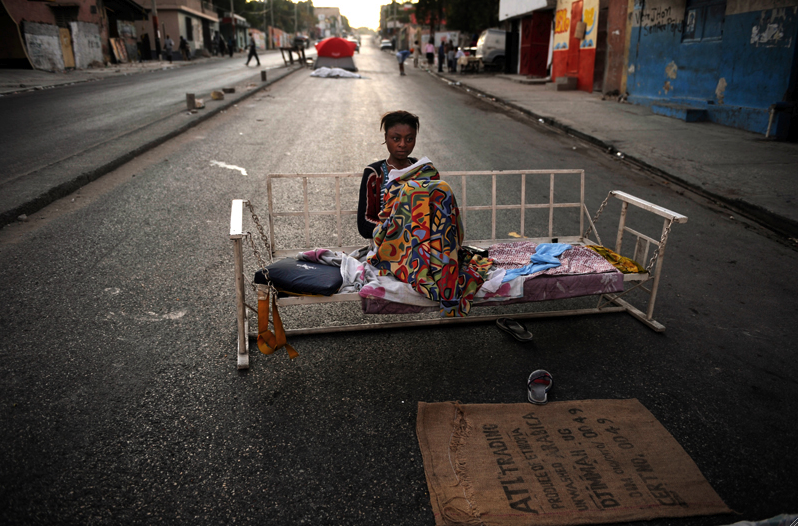
Photo Credit: © Peter Turnley/Corbis.
"Whooooo …. Are We?"
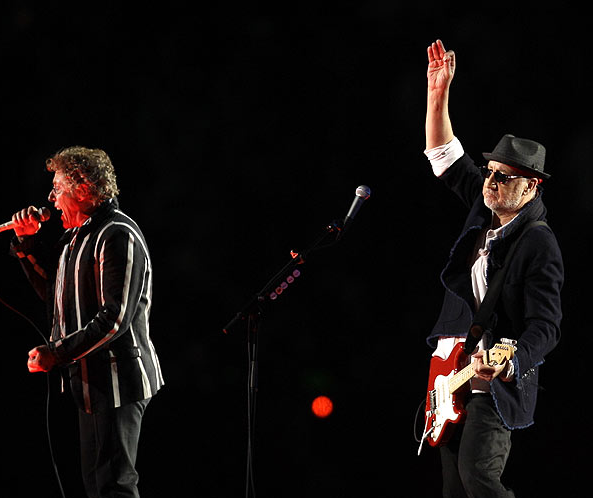
Okay, so the simple fact is that your NCN guys took the night off to watch the Super Bowl. Why? Maybe because one of us is from Indianapolis and wanted to root for the Colts … or maybe out of some primitive desire to remember what rock ‘n roll once was. We could say we were disappointed on both counts, but not really. The game was well played (despite the outcome), and even while Roger Daltry couldn’t hit all of his notes and watching an aging Peter Townsend prance about the stage was something of an embarrassment, the halftime show was nevertheless a reminder to us aging, academic baby boomers who too easily think of nostalgia as little more than an ideological problematic that … well … even we can be sucked in by its charms.
All of that aside, there is one other point to be made: As Carrie Underwood completed her rendition of the Star Spangled Banner there was an (almost) perfectly timed military fly over and no one seemed to notice. No one mentioned it on the CBS broadcast, the audience didn’t react, and I couldn’t even find a single photograph of it at any of the slideshows that appeared on various U.S., national media websites following the game. I’m not entirely sure what to make of that fact given how much hype as been given to the military presence at such events since 9/11, though my worry is that it is one more piece of evidence in support of the normalization of war thesis which suggests that we are altogether inured to the presence of the military in both our ritualized and everyday lives. Maybe that’s what accounts for this photograph that showed up at the Guardian (though nowhere else as far as I know):
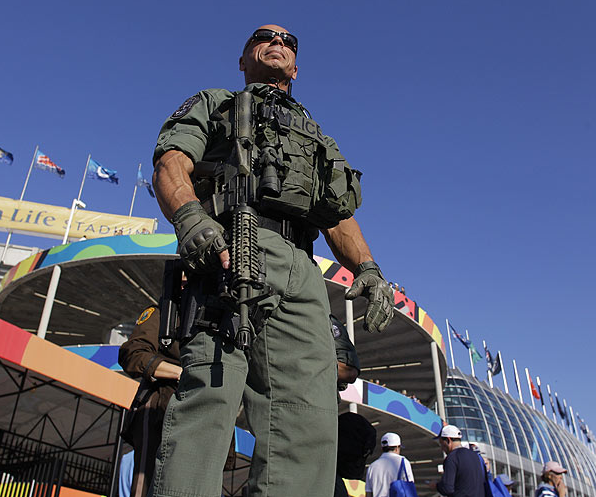
And so the question has to be, “Whooooo are we … who, who … who, who …?”
Photo Credits: Robert Carr/AP’ Charlie Riedel/AP
Sight Gag: "We the Peo …" Opps …
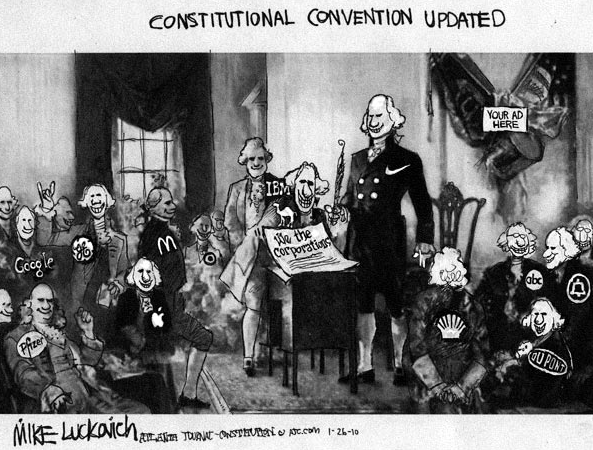
Credit: Mike Lukovich
“Sight Gags” is our weekly nod to the ironic and carnivalesque in a vibrant democratic public culture. We typically will not comment beyond offering an identifying label, leaving the images to “speak” for themselves as much as possible. Of course, we invite you to comment … and to send us images that you think capture the carnival of contemporary democratic public culture.
Ready to Do Violence: War Games or Simply Modern Warfare?
By guest correspondent Christopher Gilbert:
“People sleep peaceably in their beds at night only because rough men stand ready to do violence on their behalf.” —George Orwell
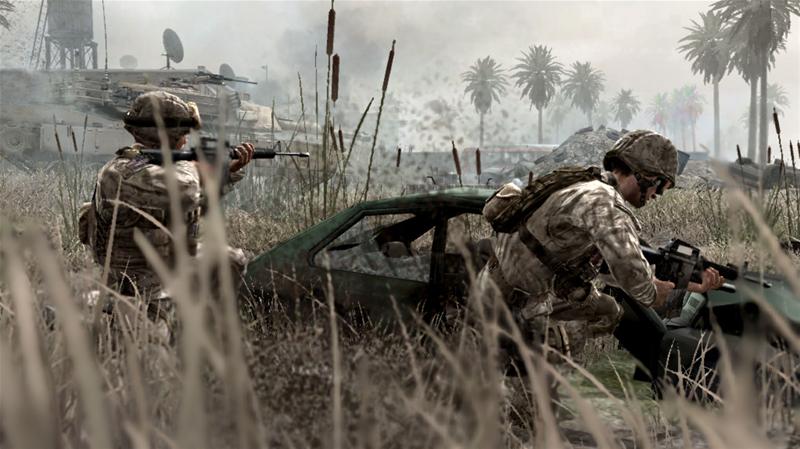
On December 1, 2009, President Obama deployed 30,000 troops to Afghanistan. Neither of the soldiers above is one of them. Indeed, neither is real, but rather digital representations found in the new video game, Call of Duty: Modern Warfare 2, released late last year, one day before Veteran’s Day. I wonder if, when you looked at the picture above, you thought it was an actual picture taken from the battlefield, as did I.
War has long been the shadow cast on the backdrop of American life, a part of us, varying in degrees of prominence the brighter or darker it becomes, so it chilled me to read a review of this game titled, “Modern Warfare 2 Kills Well With Others.” The implications of the title notwithstanding, the author of the review, Gus Mastrapa, reinforces an “us v. them” perversity, writing: “the game cribs its morality from post-Vietnam Hollywood: War is bad, except when it’s not. Soldiers who fight for freedom are good, except when they’re not.” At least he attempts to moralize the game. Yet a game itself has morals per se as much as war, capitalism, or even journalism, which is to say “not at all.” It is not the concept or pursuit or game that has the morality, but the human subjects who impel it, create it, and play it. And increasingly more individuals are playing these first-person shooter military simulations—whether for pleasure, recreation, catharsis, or even combat training—trying to “get a taste” of war. One commentator goes so far as to say that “[MW 2] makes you feel every ounce of [it]” as if “you are there, doing it all.” Not only is it violent and graphic, but “realistic,” capable of “building community,” while showing that “violence has a real cost.”
Modern Warfare 2 may be realistic, but it is absolutely not real. Indeed, as a genre video games are inherently detached from any obligation to represent reality. Despite the fact that digitized blood spatters across the screen when the gamer is shot, the game itself—and any violent game for that matter—is clean (as is much of our conception of real modern warfare, my own included). Thus, such virtual simulaitons can house the “perfect enemy,” since it is imaginary, and can be justified as such (especially against those who condemn it for its violence, realism, vulgarity, even pathology) insofar as it is “just a game.” Though it is graphic and realistic, it is merely a digital portrayal, a simulacrum—blips on a screen, pure fiction. As such, the only “real cost” that it incurs to the gamer is $59.99 paid to purchase it. In real-life images, too, we can see but a glimpse of the “costs of war,” of its materiality. Consider below:
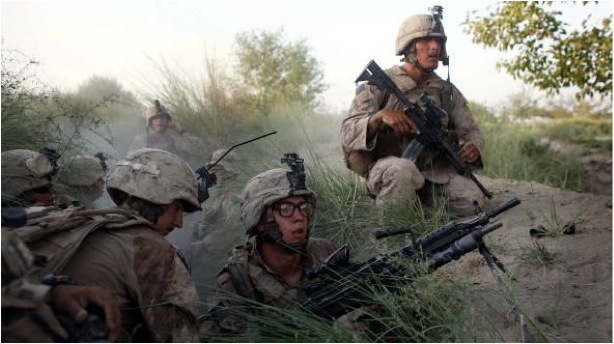
As numerous NCN posts have reminded us, we generally see relatively clean images of war. We also experience war from a distance. In the video game, the imagery is dirty (though you can “turn off the blood”), but the player is unsoiled. The images are close, but the horror is at a remove. Indeed, in an important sense the problem is not the video game per se, but that war/violence is not clean, and attempts to make it appear otherwise are inherently dissimulating.
The fact is that the video game player really loses nothing. At the end of the game, his or her violence is not real. He or she can simply turn off the device, feeling only satisfaction, disappointment, excitement, perturbation, or some other virtually induced emotion. The real soldier, however, stands to lose much, much more. You or I can play a video game or look at photographed soldiers, but we can never truly know the horror that is war. All the more reason that we renew and review our collective senses of community, of humanity, of war, while remembering what Kenneth Burke said: that getting along with each other—and not fighting, defaming, victimizing, or killing each other—is the essence of the good life.
Photo Credit: www.broadbandgenie.co.uk and Joe Raedle/Getty Images.
Christopher Gilbert is a graduate student in rhetoric and public culture in the Department of Communication and Culture, Indiana University. You can contact him at cgilbie@gmail.com
Sight Gag: The Flag of Our Fathers
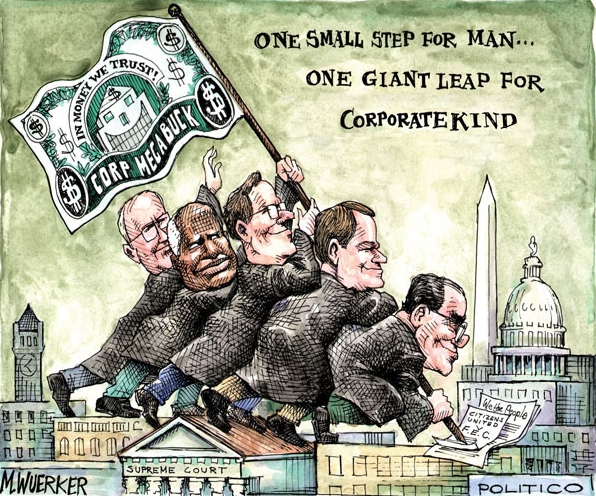
Credit: Matt Wuerker
“Sight Gags” is our weekly nod to the ironic and carnivalesque in a vibrant democratic public culture. We typically will not comment beyond offering an identifying label, leaving the images to “speak” for themselves as much as possible. Of course, we invite you to comment … and to send us images that you think capture the carnival of contemporary democratic public culture.
The War in Iraq and The Return of the Repressed
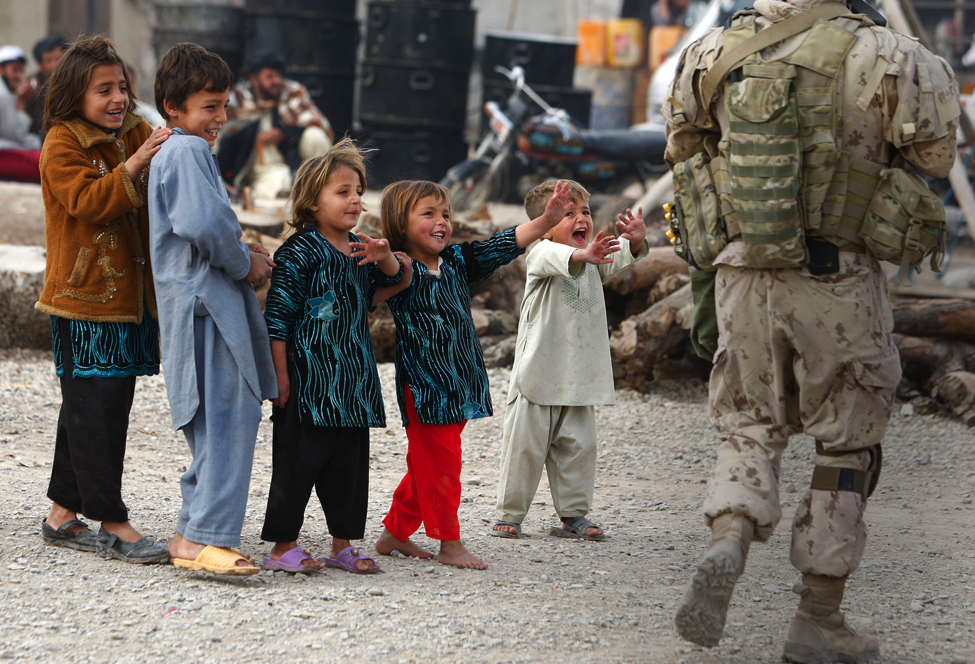
The war in Iraq has moved on to Afghanistan and the (relatively few) pictures we are being shown from there lately, such as the one above, tend to depict a somewhat ordered and ordinary, workaday world—at least for what we imagine everyday life in Afghanistan to be like. The U.S. military seem more like police officers than an occupying force—delighting local children, gathering information, searching out bad guys, and so on. And for the locals it seems like business as usual, with weekly Shura’s, sellers pedaling their wares in the marketplace, etc. The Taliban is still a threat, of course, and has to be sought out and neutralized, but all in all, things seem to be going well for our troops who take out time to exercise, help locals with development projects, and look forward to returning home once the job of security is turned over to local police—or so the photographic record would seem to suggest. Of course, this all ignores the nearly 600 US and allied soldiers who have died in Afghanistan in the past year, including more than 40 in the last month alone—or for that matter the nearly $300 billion dollars we anticipate spending to support the occupation in 2010 alone—but there is a different point to be made.
The photograph below appeared on the front page of the NYT. One might imagine that it records a severe car crash somewhere in the western world. The car is an SVU and the girl, bloodied and in distress, nevertheless bears all the markings of a western, middle-class or higher existence—notice the clean blouse, stylish sweat pants, and colorful sandals. But there’s the rub, for we would almost never see such a photograph of a U.S. citizen, at least not in the mainstream press, and not of members of middling or upper classes (and certainly not of children). That fact alone should clue us to locating the image in another world—distant and distinct from our own, both physically and culturally.
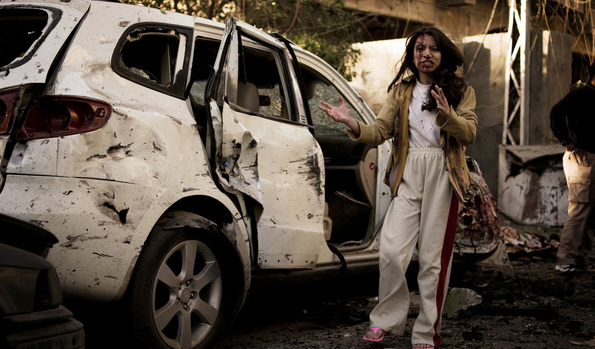
The caption solves the mystery, as it notes that “A girl sought help on Monday after three bombs exploded within about 10 minutes during Baghdad’s afternoon rush, killing her mother.” The bombing was the result of a regular and coordinated effort by the insurgency to undermine the state’s authority in the face of upcoming parliamentary elections. From whom the young girl is “seeking help” is not exactly clear, but the photograph’s oddly prominent position above the fold without an accompanying front page story makes it seem that somehow a visual demand is issuing forth from the national unconscious – a vivid reminder not only that all is not well in Iraq, but forever how much we would like to move on from involvement there, we simply cannot. And perhaps this is as it should be, for there is no question but the U.S. must bear a large portion of the responsibility for the current political instability and insurrection in Iraq. And that responsibility does not abate simply because we chose to leave, having declared our mission a success.
The repressed, it seems, always returns. And that should give us pause as we witness the photographic record of how well things seem to be going in Afghanistan.
Photo Credit: Kirsty Wigglesworth/AP; Ayman Oghanna