Aug 15, 2010
May 08, 2011
Feb 12, 2013
Mar 26, 2010
Jul 22, 2012
Aug 26, 2012

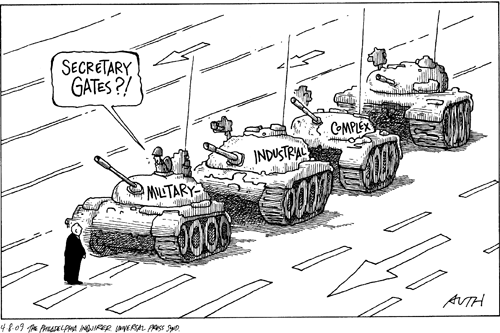
Sight Gag: Military Industrial Complex

;;

Credit: Tony Auth/Philadelphia Inquirer

The “Sight Gag” is our weekly nod to the ironic and carnivalesque in a vibrant democratic public culture. We typically will not comment beyond offering an identifying label, leaving the images to “speak” for themselves as much as possible. Of course, we invite you to comment … and to send us images that you think capture the carnival of contemporary democratic public culture.

 0 Comments

The Mechanical Icon

The Mechanical Icon

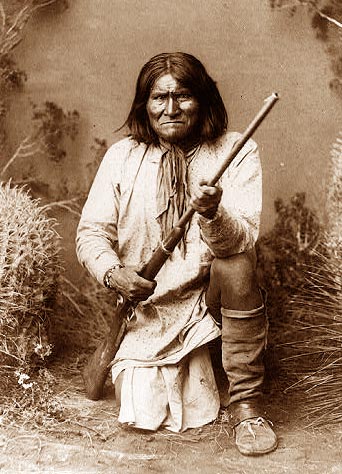
We are pleased to welcome Marshall Poe’s “Mechanical Icon” to NCN.  Mechanical Icons is an experiment in historical interpretation and dissemination.  Think of it as something like a “book” of video essays that seek to historicize many of those photographs we are all familiar with but probably know very little about.  When the site is completed it will have 200 videos.  To view the site go here or click on the image of Geronimo. To view the video essay on the famous image of Geronimo above click on the thumbnail of the image on the Mechanical Icon home page.

 2 Comments

"… the conquest of the world as a picture."*

The recent G-20 meetings were the occasion for thousands of anarchists, and anti-capitalist, anti-war, and pro-environmentalist protestors to converge upon London, as has become something of a ritual for such international events.  No one seems to know exactly how many protesters there really were, though various media reports range from 20,000 to 35,000.  The Guardian reported that 5,000 police were deployed for the event, most of them in the financial district.  By conservative estimates, then, the ratio of police to protesters was somewhere between 1:4 and 1:7.  Protesters, of course, are meant to be seen, why else show up!  And most of the pictures reported by the mainstream media obliged by toggling back and forth between images of the carnivalesque and the clash between protesters and police, often resulting in dramatic images of bloody violence.

We can find all of this at the Boston Globe’s “Big Picture” website, but we find there as well an additional set of photographs that points to a different and more interesting phenomenon: images that accent what Ariella Azoullay refers to as the “civil contract of photography.” The citizenship of photography that she calls attention to is animated by the logic of photography—an agreement as to the relationship between the photograph and “what has been” or what might be in the image—and the ways in which it functions as a mechanism of social interaction (and control).
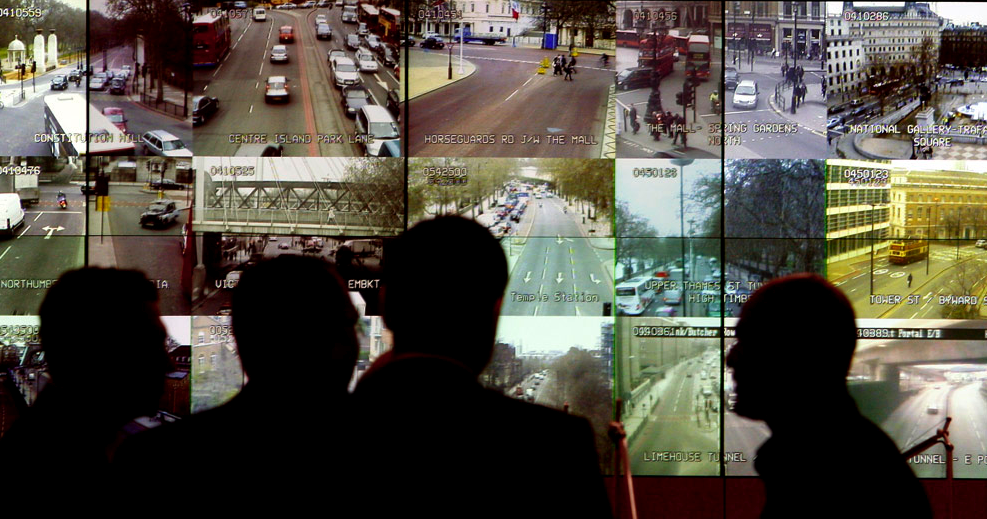
The scene above is a wall of CCTV screens in a command and control center in London from which the police can monitor live security feeds of “prominent areas” of the city.  It has an Orwellian quality to it, to be sure—Big Brother is watching—not least because the heads viewing the scene are back lit and thus cast in dark and foreboding shadows that provide a stark contrast with the daylight of the screens. As such, the image directs attention to its own technology, and thus the visual grammar that animates it; in short, what we are looking at is itself a photograph—a visual representation of the command and control center once removed—that relies upon the logic of photography as it displays a site for interpretive resistance to the mechanism of surveillance that is being exacted by the state precisely by making it transparent.

Nor are the broader implications of the civil contract of photography lost on the protesters themselves, who were armed not with guns or nightsticks or other riot gear (like the police) but with cameras.
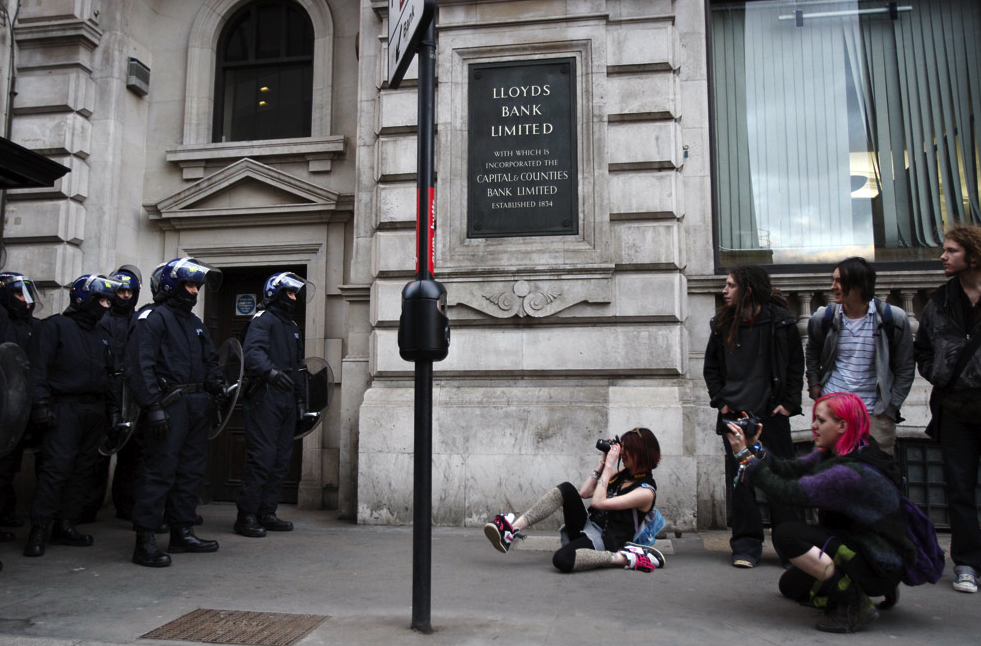
There are numerous photographs that make the point (see photos 11, 12, 19 and 20 at the Big Picture), but I like this image the most, in large measure because of how the police appear to react. Their purpose is to protect the bank from the protesters, and of course they are doing that, but it all seems so out of proportion: they are larger in number and size, and in any case they are girded for battle; the protesters sit and squat awkwardly on the ground as they take pictures or stand about nonchalantly with their hands in their pockets.  On the face of things they certainly don’t seem to be much of a threat.  Change the context just a bit and we might imagine them as tourists out for a day in the city.  And that is precisely the problem for the police who seem literally stopped in their tracks, as if they don’t quite know what to do.  Indeed, it could be a scene out of a Monty Python skit.  Should they pose for the camera or charge? Caught in the gaze of the lens—and thus the implied civic contract of the photograph—their power seems mitigated, if only for a moment.  But that moment is enough to shift the ground of agency and control, if not for the people in the image itself, then at least for those who see the photograph, i.e., those cast in the role of spectators who, by the virtue of the civic contract, are nevertheless called upon to render judgment.

*The fragment here is from Heidegger and reads in full, “The fundamental event of the modern age is the conquest of the world as picture.”  It appears in “The Age of World Pictures” published in Electronic Culture, ed. by T. Druckery. New York: Aperture, 1969.  I came across it in Ariella Azoulay’s “The Ethic of the Spectator: The Citizenry of Photography,” Afterimage, September/October 2005, 39. For a more detailed discussion of her ideas see The Civil Contract of Photography, MIT Press, 2008.

Photo Credits: Kirsty Wigglesworth/AP, Adrian Dennis/AFP/Getty Images

 3 Comments

Sight Gag: And You Thought O'Hare was Bad!

Click here or on the picture for the full story.

Credit:  The Onion (with thanks to Jessica Rudy)

The “Sight Gag” is our weekly nod to the ironic and carnivalesque in a vibrant democratic public culture. We typically will not comment beyond offering an identifying label, leaving the images to “speak” for themselves as much as possible. Of course, we invite you to comment … and to send us images that you think capture the carnival of contemporary democratic public culture.

 0 Comments

Conference: Seminar on Rhetoric and Politics in Contemporary Discourse

Persuasion: Seminar on Rhetoric and Politics in Contemporary Discourse

A seminar organized by the Goldsmiths’ Centre for the Study of Global Media and Democracy and the Centre for the study of Culture and Politics, University of Swansea

May 5, 2009, 2-5 pm

Small Hall Theater, Richard Hoggart Building

Goldsmiths, University of London

Persuasion is one of the most fundamental of democratic political activities. But it is also one of the most ambiguous. Does democratic development and expansion require the slow substitution of persuasion or rational conviction or, on the contrary, the proliferation of opportunities for rhetorical contestation? Where is the line between persuasion and force? Are there standards of truth or consent that guarantee the democratic character of a persuasive activity? What forms of rhetoric distinguish a democratic polity from tyranny? What happens to political persuasion in an economy and culture dominated by commercial persuasion? How can we best understand and analyse the forms, modes and locations of contemporary political rhetoric as manifested in visual and media cultures?

This interdisciplinary seminar explores the modes of democratic persuasion, the methods for its explication and interpretation and the prospects for rhetoric both in the academy and in the contemporary multifaceted polis.

Speakers: Aleatta Norval (University of Essex), Michael Carrithers (Durham University), Rochana Bajpai (SOAS), Alan Finlayson (Swansea University),  James Martin (Goldsmiths).

The event is free and open to all, but please contact James Martin (j.martin@gold.ac.uk) if you’d like to attend.  Seminar to be followed by a wine reception in the SCR.


 1 Comment

Sight Gag: Pun Intended

Credit: Craig Damrauer/NYT

The “Sight Gag” is our weekly nod to the ironic and carnivalesque in a vibrant democratic public culture. We typically will not comment beyond offering an identifying label, leaving the images to “speak” for themselves as much as possible. Of course, we invite you to comment … and to send us images that you think capture the carnival of contemporary democratic public culture.

 2 Comments

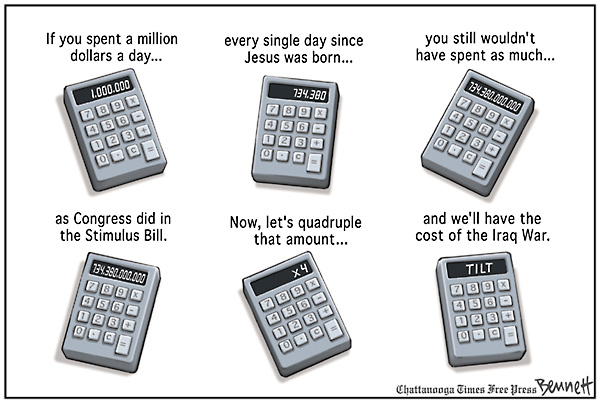
Sight Gag: Lest We Forget

Credit: Bennett at the Chatanooga Times Free Press

The “Sight Gag” is our weekly nod to the ironic and carnivalesque in a vibrant democratic public culture. We typically will not comment beyond offering an identifying label, leaving the images to “speak” for themselves as much as possible. Of course, we invite you to comment … and to send us images that you think capture the carnival of contemporary democratic public culture.

 1 Comment

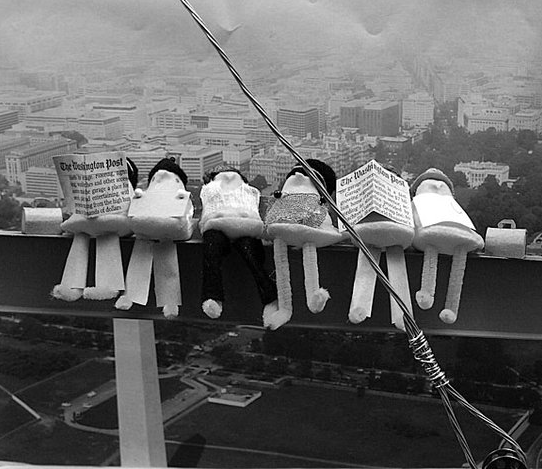
Sight Gag: Peeps Atop a Skyskraper (c. 1932)

Photo Credit:  Diorama Creater/Washington Post

The “Sight Gag” is our weekly nod to the ironic and carnivalesque in a vibrant democratic public culture. We typically will not comment beyond offering an identifying label, leaving the images to “speak” for themselves as much as possible. Of course, we invite you to comment … and to send us images that you think capture the carnival of contemporary democratic public culture.

 0 Comments

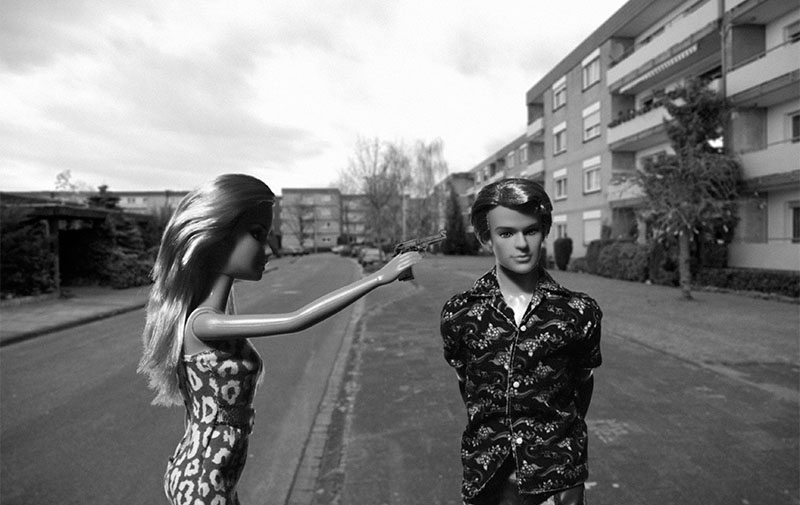
On Barbie's Fiftieth Birthday

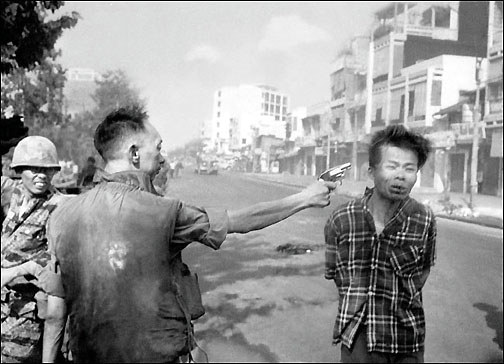
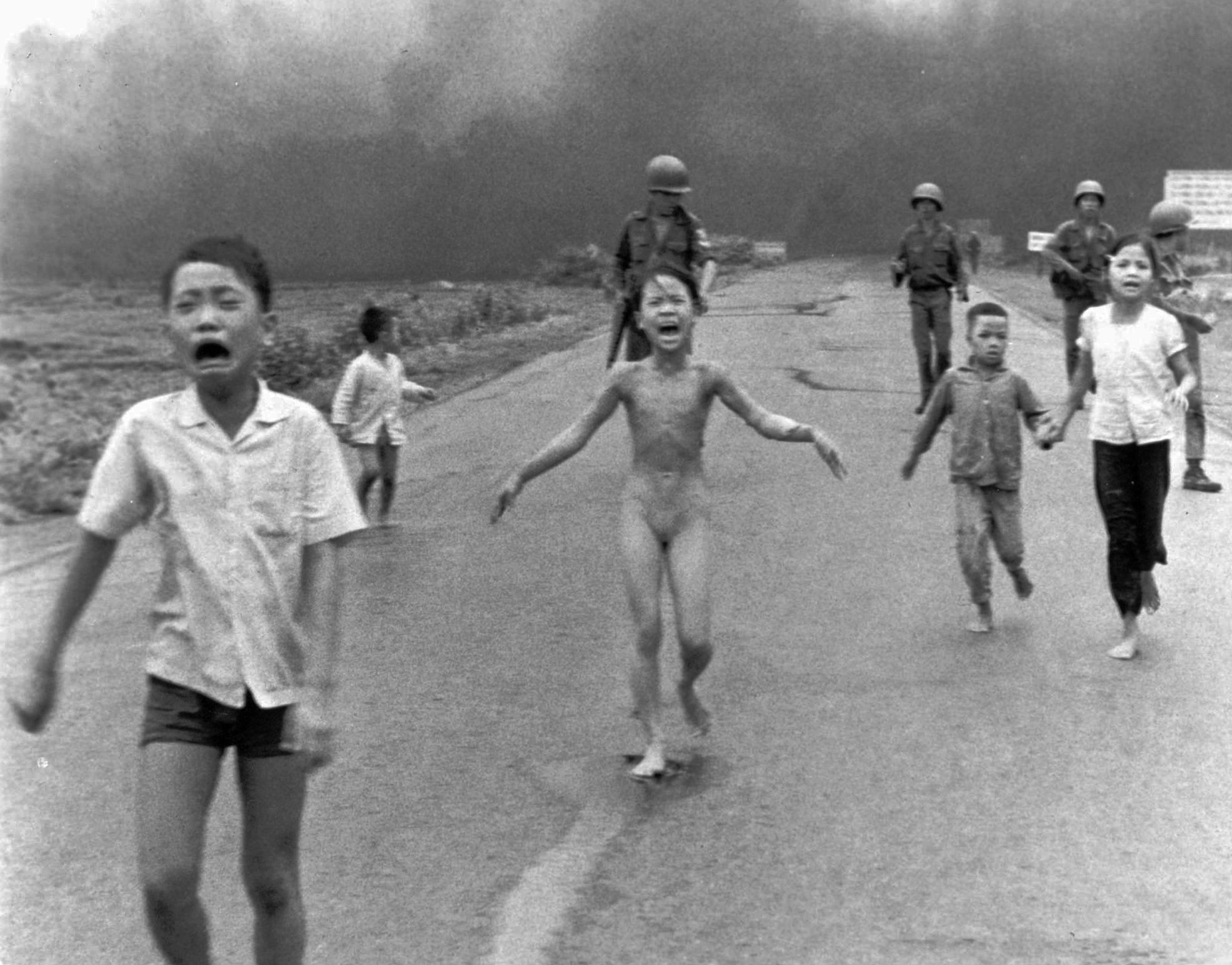
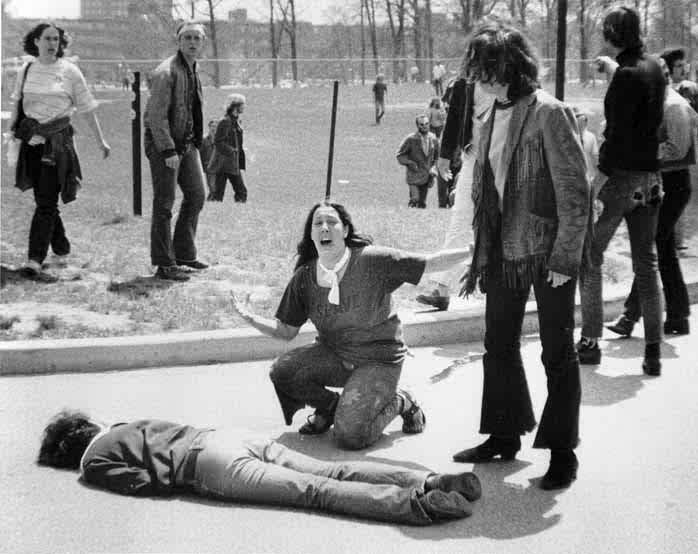
We have written about Eddie Adams’ infamous, Pulitzer Prize winning photograph of the execution of a Viet Cong prisoner in the middle of a street in Saigon before (here, here, and here) It is among a small handfull of photographs regularly referred to when one talks or writes about the Vietnam War—the others include most prominently the “Burning Monk,” “Accidental Napalm,” and the “Kent State Massacre.”

As with so many other iconic photographs, it retains its symbolic currency through mass circulation and reproduction, a process of distribution that animates it as an inventional resource for cultural commentary and critique as it is appropriated, performed, and parodied to particular cultural and political interests.  We were recently reminded of the ubiquity of such usages by a post at frgdr.com where a number of such efforts have been collected.  A quick google search turned up a number of others, including one by an artist named minipliman that appears to be joining the mass media celebration of Barbie’s fiftieth birthday:

We leave it to our readers to decide how the legend for this image should read … though on second thought, perhaps in this case “no caption” really is needed.

Photo Credit: Eddie Adams/AP; minipliman

 2 Comments

The Man Without a County

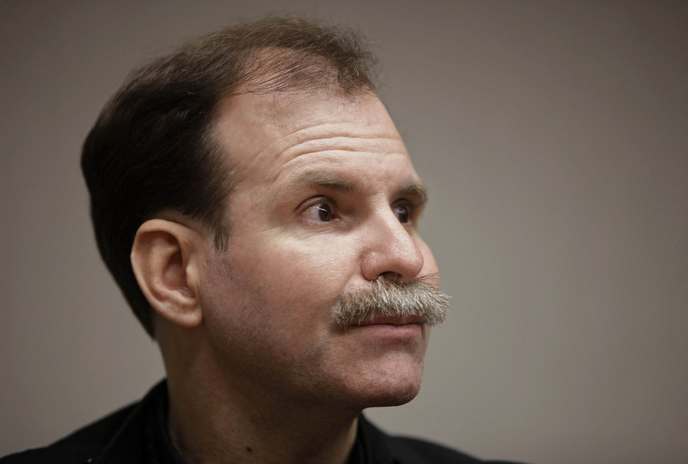
This photograph is altogether commonplace.  A simple headshot of an altogether ordinary, middle-aged, white guy.  He looks healthy.  His face is washed, his hair and mustache neatly trimmed. He is what we might call “clean cut.”  If you passed him on a street corner you probably would not give him a second glance.  There is something of an irony to this last statement, but more on that later.

His name is Daniel Fore.  He is a resident of Oak Park Village, a quiet suburb on Chicago’s west side famous for the many houses and other structures built by its number one son Frank Lloyd Wright.  Oak Park Village considers itself to be a small and friendly community fully committed to social and political diversity.  Indeed, Oak Park Village is so committed to diversity that in 1973 it issued a “diversity statement” that is now prominently featured in a sidebar on its website. That statement reads, in part:

“The people of Oak Park choose this community, not just as a place to live, but as a way of life … Ours is a dynamic community that encourages the contributions of all citizens, regardless of race, gender, age, ethnicity, sexual orientation, disability, religion, economic status, political affiliation or any of the other distinguishing characteristics that all too often divide people in society. . . . Oak Park recognizes that a free, open, and inclusive community is achieved through full and broad participation of all its citizenry.  We believe the best decisions are made when everyone is represented in decision-making and power is shared collectively.  Oak Park is uniquely equipped to accomplish these objectives, because we affirm all people as members of the human family (emphasis added).”

But back to Daniel Fore, the ordinary guy in the picture above—the guy who doesn’t appear to warrant a second look.  He has been living in Oak Park Village for at least the past twelve years, where he has regularly attended Village board meetings and is recognizable around the town as a community activist.  All of that turns out to be irrelevant, however, as his recent petition to run for the Oak Park Village Board (signed by 800 members of the community) was challenged because he listed his residence as “homeless” and the only address he gave was an Oak Park PO Box.  The challenge was upheld by a Cook County judge because he did not list a “home address” on his nomination application.  (Aside: The irony here is much too rich to ignore given the tales—perhaps apocryphal—of the numerous deceased voters on the Cook County voting rolls who nevertheless cast ballots in elections throughout the 1960s; of course, one can only assume that these voters did have home addresses).

The Court’s ruling is under appeal, but the point to note is that the commitment to a “free, open, and inclusive community” where “the best decisions are made when everyone is represented in decision-making and power is shared collectively” apparently doesn’t extend to the homeless who have been summarily excluded from the “human family.”  And the exclusion is doubly ironic, for just as we (shamelessly) avert our eyes from the homeless we encounter sleeping in alleys or panhandling on street corners, refusing to give them a second glance, so too now have the courts and our laws looked away.  As the unemployment rolls rise and as the number of house foreclosures add to what seems to be a growing “class” of homeless people—many, if not most who will look and be no more or less ordinary than Daniel Fore—one wonders how long we can continue to do that and lay claim to being a truly democratic society.

Photo Credit:  M. Spencer Green/AP in the Washington Post

 0 Comments