Feb 11, 2013
Aug 18, 2010
Feb 16, 2011
Mar 04, 2015
Feb 01, 2010
Apr 30, 2010

Sight Gag: Shedding the Veil


Click here or on the cartoon above.

Credit: Ann Telnaes/Washington Post.

The “Sight Gag” is our weekly nod to the ironic and carnivalesque in a vibrant democratic public culture. We typically will not comment beyond offering an identifying label, leaving the images to “speak” for themselves as much as possible. Of course, we invite you to comment … and to send us images that you think capture the carnival of contemporary democratic public culture.

 2 Comments

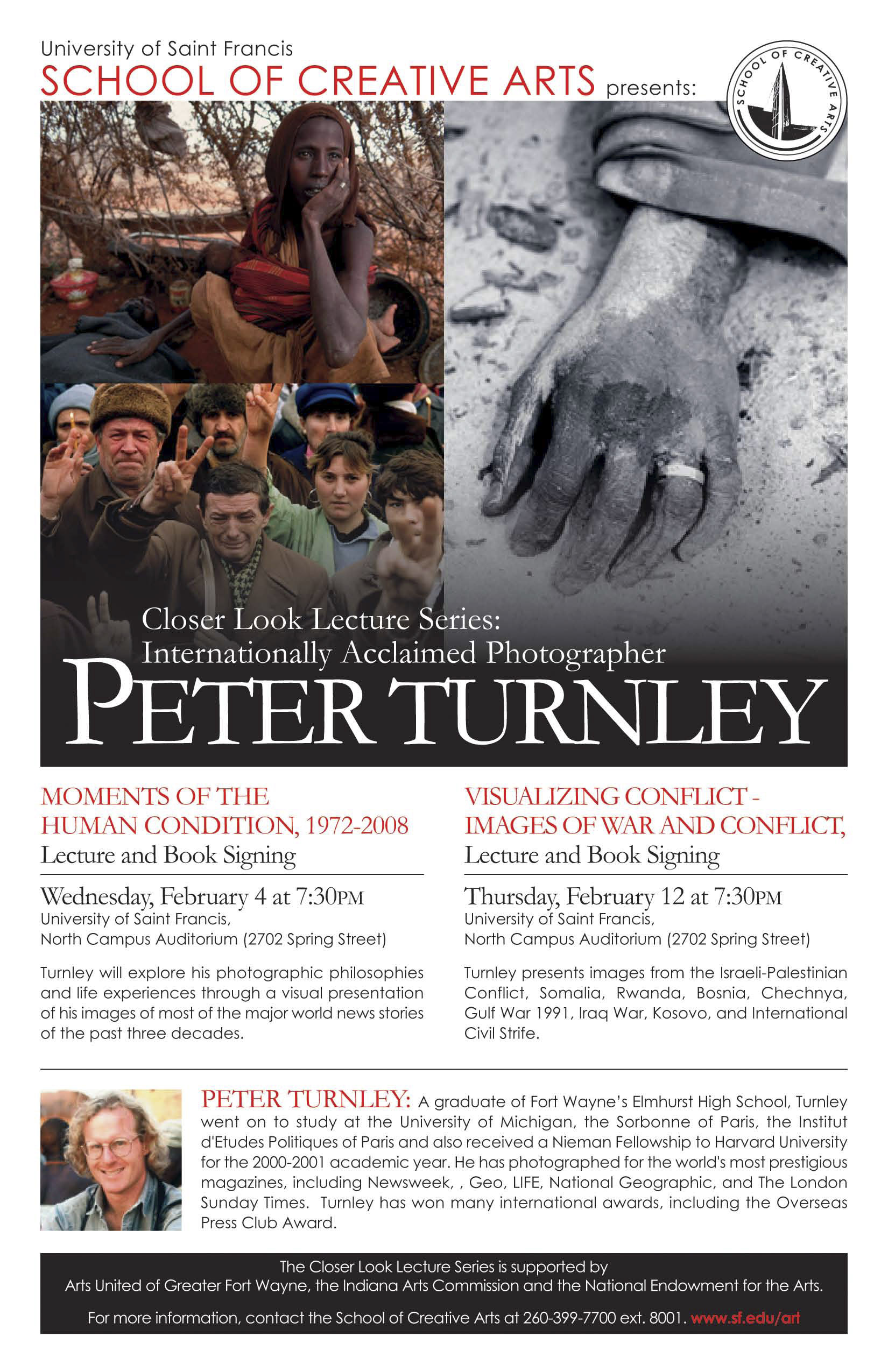
Announcement: Peter Turnley to Speak on Visualizing Conflict

Peter Turnley is one of our preeminent photojournalist.  His work has appeared regularly on the cover of Newsweek, as well as in places like Life, National Geographic, Harpers, and the London Sunday Times.  He covered both Iraq Wars (1991 and 2003) as an unembedded photojournalist.  We  are delighted to announce that in the next week or so we will be showcasing some of his recent work from the inauguration of President Obama. Today we want to call your attention to a series of lectures he will be presenting at the University of Saint Francis in Fort Wayne, Indiana,  as well as a series of workshops that he teaches regularly throughout the world.  

 0 Comments

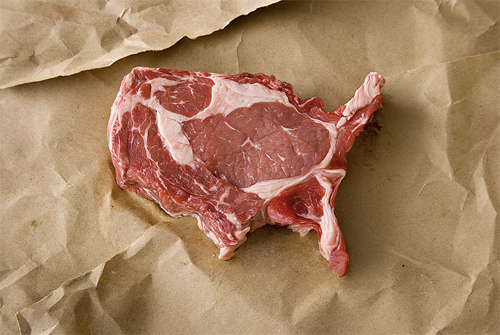
Sight Gag: United Steaks of America


Photo Credit: Dominic Episcopo with compliments to Amy Stein.

he “Sight Gag” is our weekly nod to the ironic and carnivalesque in a vibrant democratic public culture. We typically will not comment beyond offering an identifying label, leaving the images to “speak” for themselves as much as possible. Of course, we invite you to comment … and to send us images that you think capture the carnival of contemporary democratic public culture.

 1 Comment

"We the People …"

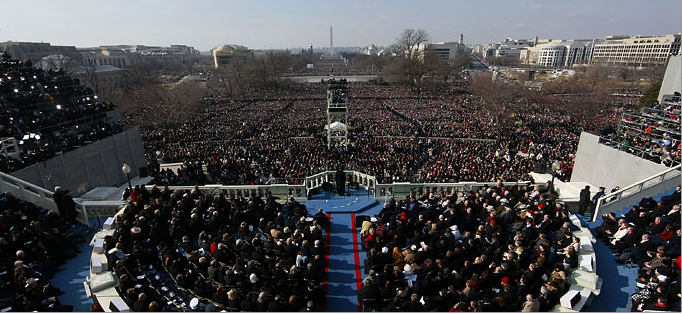
Yesterday we inaugurated the 44th President of the United States, but the inauguration did not belong to Barack Obama so much as it belonged to the American people.  The numbers are contested, but somewhere between 2 and 4 million people (nearly 1% of the entire population of the nation) made their way to Washington, D.C. for the ritual celebration of a truly historic moment.  And what it celebration it was!  As the photograph above can only begin to hint at (and as the roving and panning television cameras made all the more palpable) it was a spectacle of the first order.

Iconoclasts of all stripes, and many on the extreme left of the political spectrum, are cynical about political spectacles, and there is a point to be made about mindless rituals that animate an unreflective hero worship that can too easily  encourage quiescence and mitigate civic agency.  And truth to tell, we have seen a good deal of such spectacle and ritual in recent times.  But at the same time we need to remember that democratic life demands rituals of social and collective communion that work to build the trust necessary to effectively negotiate the competing interests that motivate us as individual members of the polity.  And the spectacle of this inauguration—a collecting  of “the people” not just to witness the peaceful transfer of power but to voice its endorsement of  a democratic polity predicated on the idea of national imperfection and the possibility of change and renewal guided by the “arc of justice”—was not just a passive or mindless acquiescence to the mass mediated display of bread and circuses to which, perhaps, we have become all too accustomed.  It was instead an incredible and joyful collection of “the people,” the likes of which we have rarely seen: Millions strong, braving freezing temperatures, sharing the public space in communion with a set of ideas and dedicating themselves to the hard tasks ahead.  It was their spectacle and their inaugural.

It would be a mistake, of course, to assume that the election of Barack Obama means that we have solved the problem of race in America, or to imagine that his presidency will recognize (let alone eliminate) all of the conditions of injustice (economic and otherwise) that plague our nation (and the world). But it would be equally mistaken to believe that rituals of communion and spectacles of national wholeness are unnecessary to the democratic way of life, or worse, necessarily undermine the path to a just and productive national solidarity. Ritualistic performances of  political feeling are necessary (though not sufficient) to that task, especially when we remember what the ritual is all about, and here it is in honor of “we, the people.”  The proof of the pudding, of course, is in the tasting, but from where I sit we are off to a good start.  

Photo Credit: Win Macnamee/Getty  Images

 2 Comments

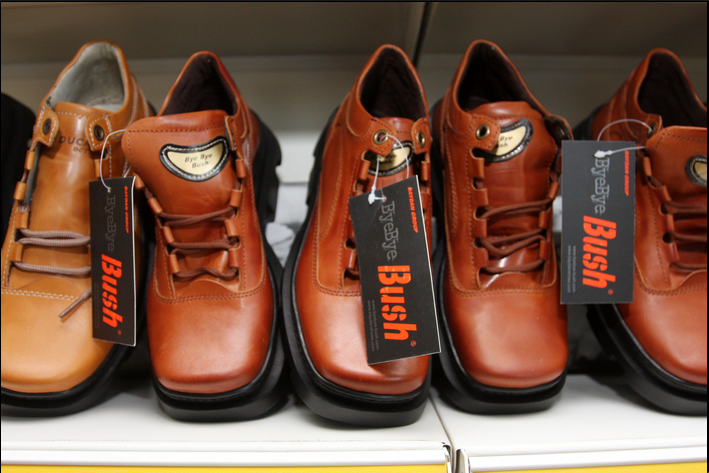
Sight Gag: Bye Bye Bush

Photo Credit:  Bulent Kilic-AFP/Getty Images

The “Sight Gag” is our weekly nod to the ironic and carnivalesque in a vibrant democratic public culture. We typically will not comment beyond offering an identifying label, leaving the images to “speak” for themselves as much as possible. Of course, we invite you to comment … and to send us images that you think capture the carnival of contemporary democratic public culture.

 0 Comments

Obama's People


Click here to see the full gallery of  “Obama’s People.”

“In December and early January, the photographer Nadav Kander shot 52 portraits of Barack Obama’s top advisers, aides and members of his incoming administraiton.  Kander and the Times Magazine’s directory of photography, Kathy Ryan, discuss putting those portrait sessions together and what happened behind the scenes.”

For a reflection on how such portraiture is reminiscent of Richard Avedon’s work, including his “The Family” project published in Rolling Stone in 1976, (and lest we forget, Mathew Brady’s “Gallery of Illustrious Men” from the antebellum period), see Gerald Marzorati’s editorial letter in the NYT here.

 0 Comments

The Portrait of a Future Citizen as a Young Boy

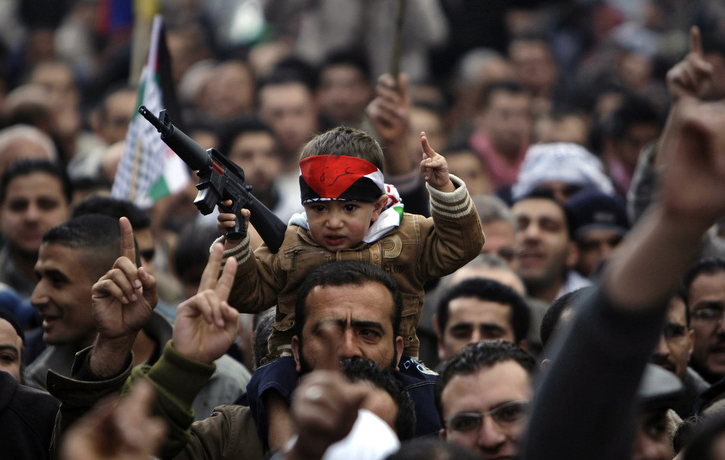
The image of Palestinian children (as well as Iraqi children) with “toy guns” has become such a cliché in recent times that I’ve almost stopped paying attention to them when they show up in journalistic slideshows.  But the photograph below, which appeared  recently on the Washington Post website, warrants a close look despite what might seem initially as a weary stereotype.

What distinguishes this image from the many others in the “toy gun” genre is that the young boy is not with other children playing with his fake weapon, nor is he being watched over by a small group of approving adults.  Rather, he is part of what appears to be a fairly large crowd of men raising their hands in protest, and notwithstanding the gaze of the camera, he does not receive any special attention from his fellow Palestinians.  He is simply one among many. And from this perspective, it is not so much the toy gun that stands out in the picture (a marker of his childhood), but rather his left hand raised in protest and civic solidarity (a harbinger of his impending adulthood). 

What we are witnessing, in short, is the process of political socialization. There is nothing all that surprising about the young boy’s gesture as he imitates his elders, nor would it be all that troubling but for the historical and  geo-political contexts in which it occurs.  But therein lies the rub.  For what the image depicts is not just the coming of age of a new citizen—Palestinian or Israeli, it really doesn’t matter—but the guaranteed perpetuation of the current crisis as each subsequent generation is sucked up within an extended, perverse, and inexorable vortex of hatred and fear that has become normative. 

The conflict between Israelis and Palestinians has been going on for so long, and there have been so many dips and turns, that I truly don’t know where the blame resides, though my strong suspicion is that there is plenty to go around and that there are few parties—if any—who are altogether blameless.  And I don’t know what the solution is as long as each of the many sides remains stubbornly entrenched in its positions and oppositions.  But the photograph above makes me want to weep as I imagine the many future generations consigned to the same culture of violence and suffering animated ultimately by their own diplomatic incompetencies.  Surely there is a better way.

Photo Credit:  Eliana Aponte/Reuters

 3 Comments

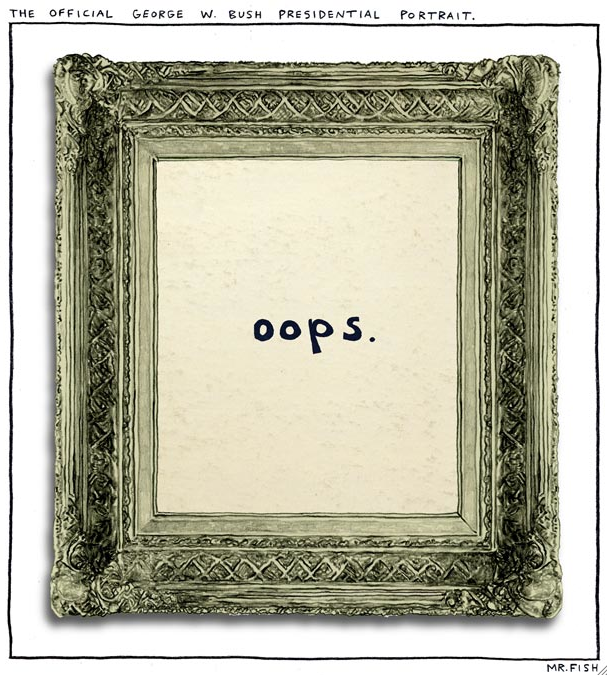
Sight Gag: Presidential Portrait

Credit:  Mr. Fish, LA Times, January 8, 2009

The “Sight Gag” is our weekly nod to the ironic and carnivalesque in a vibrant democratic public culture. We typically will not comment beyond offering an identifying label, leaving the images to “speak” for themselves as much as possible. Of course, we invite you to comment … and to send us images that you think capture the carnival of contemporary democratic public culture.

 1 Comment

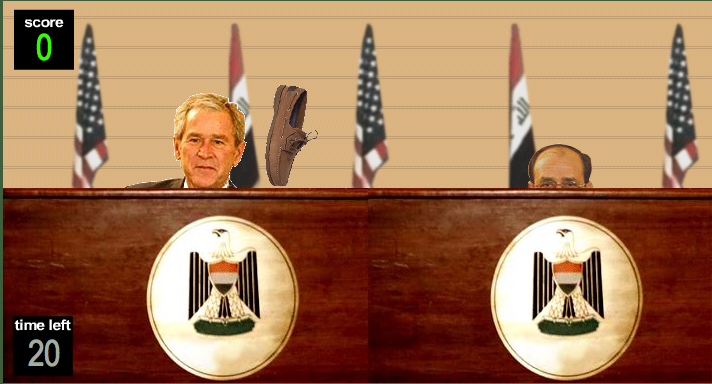
Sight Gag: Sock and Awe

To play the game click on the image.

The “Sight Gag” is our weekly nod to the ironic and carnivalesque in a vibrant democratic public culture. We typically will not comment beyond offering an identifying label, leaving the images to “speak” for themselves as much as possible. Of course, we invite you to comment … and to send us images that you think capture the carnival of contemporary democratic public culture.

 1 Comment

Patrick Andrade at the Crossroads of the World

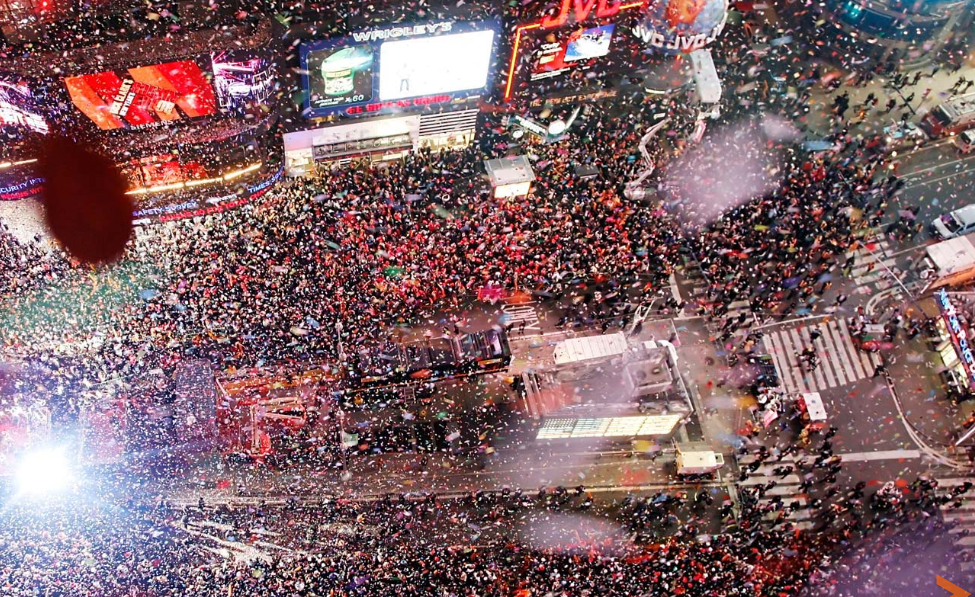
NCN is very pleased to end the year with a stunning slide show by photographer Patrick Andrade.  The small island of concrete sidewalk at New York City’s Times Square is most commonly known as “Military Island”. This year the island has witnessed the bombing of a military recruitment station, anti-war and pro-war demonstrations, several promotional events, and the election of a new president. The following photographs were all made during 2008. To see the slide show click on the image below.

 0 Comments