May 19, 2008
Feb 25, 2015
Sep 27, 2013
Oct 19, 2009
Sep 20, 2009
Mar 18, 2009

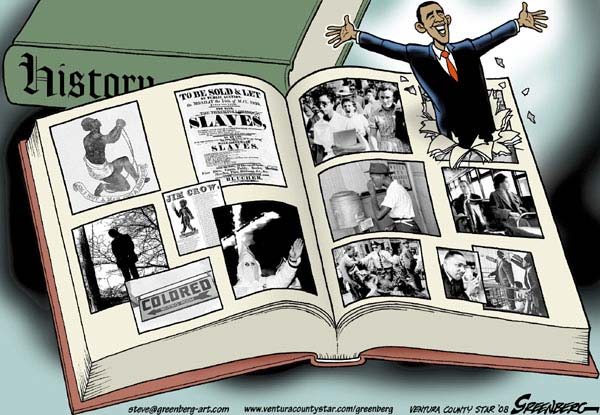
Sight Gag: A Visual History of the United States

Credit: Steve Greenberg

“Sight Gags” is our weekly nod to the ironic and carnivalesque in a vibrant democratic public culture. We typically will not comment beyond offering an identifying label, leaving the images to “speak” for themselves as much as possible. Of course, we invite you to comment … and to send us images that you think capture the carnival of contemporary democratic public culture.

 1 Comment

The Visual Codes of Racism

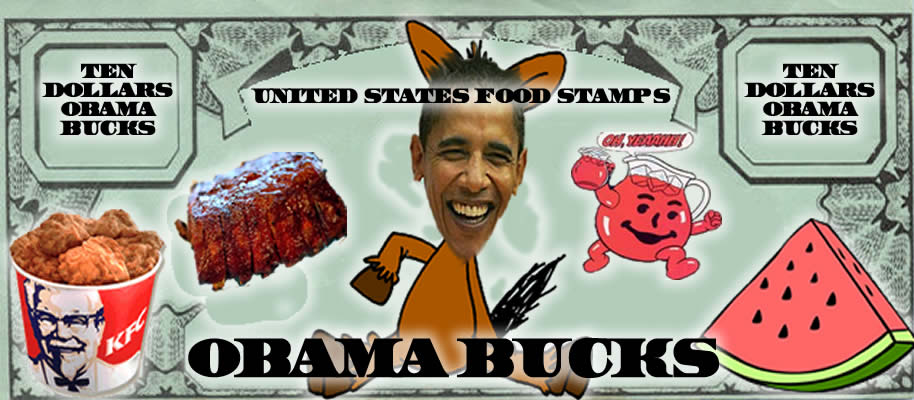
Racism is the American tragedy, and as the current political campaign reminds us, it comes in many shades and colors.  Sometimes it is explicit, as when a Georgia bar owner visually compared Senator Obama to a playful monkey, or more recently when a San Bernadino Republican group distributed Obama Bucks adorned with visual racist stereotypes linking African Americans with watermelon and fried chicken.  At other times it is a bit more subtly coded, as when a nationally syndicated political pundit emphasizes “blood equity” rather than “race or gender” as a sign of one’s fitness to be president, or when the current housing crisis is blamed on the efforts of ACORN, a “community organizing group,” to facilitate mortgages for “low income groups” and  “inner city” residents rather than, say, on those within the financial industry who targeted such communities for subprime loans in the first place.  All forms of racism are troubling, especially for a nation dedicated to social and political equality, but in some respects these more subtly coded versions are all the more pernicious because they operate under a thin veil of interpretive ambiguity that enables such advocates to absolve themselves of the responsibility to acknowledge (let alone to justify) the insidious implications of the views that they espouse.

Consider, for example, this photograph published in an online slide show at the Washington Post this past week:
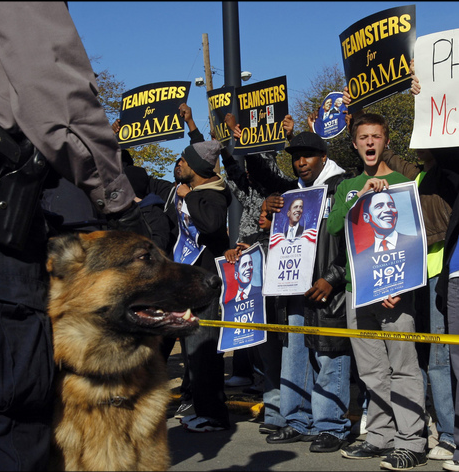
The caption reads: “Police officers accompanied by police dogs, stand guard near supporters of Democratic presidential candidate Barack Obama outside a campaign stop of U.S. Republican presidential candidate John McCain in Sandusky, Ohio.”  At first blush, everything seem reasonable enough.  After all, presidential candidates need security, and crowd control is a valid concern for local police departments, even when the purpose of a large event does not engender the high visibility of a hotly contested political campaign. The presence of the police at such an event is a legitimate usage of state authority to maintain public order that should not even raise our eyebrows.  But of course there is something disturbing about the scene captured by this photograph and it warrants our careful attention.

A defender of the scene might argue that the photograph clearly marks the tension between “security” and “liberty” that is symptomatic of political culture in a liberal-democratic polity. The pivot point, one might note, is the yellow police line that marks the often tenuous division between public order and chaos. Shot from an oblique angle, the image distantiates the viewer from easily aligning with either the police officer and dog (the signs of public order) or the Obama supporters (the signs of potential disorder); it thus invites and implies a degree of viewer objectivity that encourages us to treat such tensions as regular and ordinary: protest is legitimate within bounds, but so too is the exercise of state authority, and as long as the two operate in careful equipoise all is well.  But, of course, such an analysis begs the larger question:  Why the guard dogs?  What is about this particular event that warrants the presence of dogs trained to kill upon command to guard the public welfare against what appear to be peaceful and orderly Obama supporters? 

There are no doubt answers to this question that deny any racist implications to the image or the scene it records, but as with those who invoke specific racial stereotypes only to deny any racist implications to their comments, such responses willfully  ignore the history and symbols of American racism writ large.  And one prominent symbol of that racism has been the use of dogs to manage and control African American populations.  Dogs were regularly used to hunt down escaped slaves or to otherwise keep unruly slaves “in their place” in the 18th and 19th centuries, and in our own era they have been used by the police to intimidate and control nonviolent black marchers and protestors as during the civil rights movement of the 1950s and 1960s.  The presence of the dogs at this rally thus function, at least in part, as an altogether insensitive symbolic reference to the “unruly” slave and the “rabble” of  black protesters, particularly as the protestors/supporters are divided from the forces of order by a police line that implies that they stand on the other side of the law.  But lest I be accused of a too simple “political correctness,” there is more, for the presumed legitimacy of the very presence of guard dogs—and why else would the police use them but for the belief that they were necessary to maintain the peace—contributes to a culture of racial fear and anxiety that manifests itself in comments like those reported recently on NPR by concerned white citizens who worry that if Senator Obama loses the election there will be race riots across the nation.

Of course, the presence of a single symbol of racism at one political rally will not, by itself, animate or sustain a culture of racism and racial anxiety—or at least not for very long.  The problem is that at some point the accumulation and concatentation of such symbols, explicit and subtle alike, reinforce and eventually naturalize one another.  And when that happens it becomes increasingly difficult to resist the power and appeal of their “common sense” pretensions.  The only antidote is to develop the verbal and visual literacy necessary to understand and interpret such codes for what they are and to be guided, in the end, by what Martin Luther King referred to as the “true meaning” of our national creed that “all men are created equal.”  

Photo Credit:   Brian Snyder/Reuters

 2 Comments

Sight Gag: The Eyes of Alaska Are Upon You (Vote!)

Photo Credit: Pat Wellenbach/AP

“Sight Gags” is our weekly nod to the ironic and carnivalesque in a vibrant democratic public culture. We typically will not comment beyond offering an identifying label, leaving the images to “speak” for themselves as much as possible. Of course, we invite you to comment … and to send us images that you think capture the carnival of contemporary democratic public culture.

 0 Comments

Sight Gag: Breaking the Glass Ceiling


Credit: Anonymous (brought to our attention by Cara Finnegan)

“Sight Gag” is our weekly nod to the ironic and carnivalesque in a vibrant democratic public culture.  We typically will not comment beyond offering an identifying label, leaving the images to “speak” for themselves as much as possible.  Of course, we invite you to comment … and to send us images that you think capture the carnival of contemporary democratic public culture.

 3 Comments

In Search of the "Real Economy"

The recent economic “downturn” is being treated as a world historical event and that means that photo editors have been searching furiously to find the iconic image of the event, a problem made somewhat difficult by the fact that economic traumas are not nearly as easy to visualize as wars or natural disasters.  And the result is somewhat amusing as one after another the various newspapers emphasize an almost endless parade of images of stock brokers and fund managers from around the world depicted in various degrees of emotional distress, mute witnesses to a roller coaster of numbers scrolling across black and green screens and monitors. Elsewhere, and at the same time, news stories wonder when the effects of the most recent “bubble” to burst will be felt in the “real economy.”  To be sure, the effects of the current economic situation are palpable; many who don’t deserve it face serious financial hardships in the years ahead, and I don’t mean to diminish the significance of that in any way. And yet, two photographs that appeared in tandem as part of a slide show at The Seattle Times this past week (10/17/08) put it all in a perspective that it would be good for us to think about.

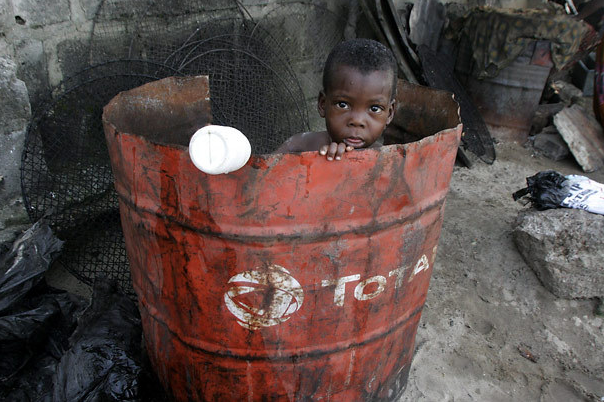
The first image is of a young child in Lagos, Nigeria playing in a dirty and rusted out oil drum in what appears to be a garbage dump of some sort.  The picture is used to promote World Poverty Day and it channels all of the pathos of images commonly used by NGOs to encourage charitable contributions—perhaps you can’t solve all of the poverty in the world, such ads typically intone, but surely you can save this child for only pennies a day.  The power of the appeal is simple and direct: the child is looking directly at the camera in the manner of a demand and all we have to do is substitute the image of our own child (real or imagined) to understand the pattern of identification that is being encouraged.  

The problem, of course, is that we encounter such images so frequently that it is easy to become inured to their appeal or simply to look past them as if they were not their at all.  And I might have done exactly that but for the photograph that followed it:

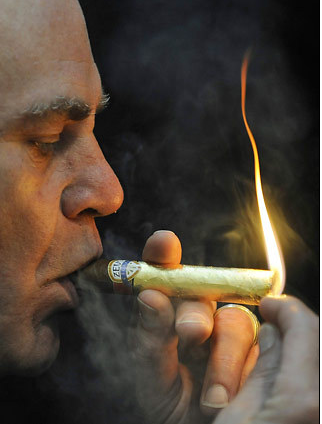
What we are looking at is a man smoking a “Golden Zeus,” a cigar that has been dipped in pure gold and is “on display” at the Millionaire’s Fair—a luxury goods and trade show “open to the public”—being held in Munich.  Unlike the photograph of the child in Lagos, there is no demand made here upon the viewer; the smoker is completely self-absorbed in his own private desires, a decadent pleasure offered up to the “public” (by some accounts over 40,000 people paid the $50 admission fee to attend the show and we can only assume that most were not millionaires) for its own perverse consumption.  It is, in a phrase, an exhibition of “class voyeurism.  Left on its own, the photograph would operate in a pornographic symbolic economy, but of course when placed in direct contrast to the earlier photograph it is hard to imagine it as anything but obscene.

We could go on at some length about the fundamental contradictions of global capitalism captured in the opposition between the two images, and there certainly would be some value in doing that.  But there is a slightly  different point to be made, for the juxtaposition of these photographs at this moment in time stands as a potent reminder of two key facts: (a) for all the bubbles that burst in the financial sectors, and for all of the claims that capitalism will be fundamentally transformed in the process (and it might well be), nevertheless, the desire that animates the underlying value system of a capitalist economy is far from diminished—and no amount of government regulation is likely to change that; and (b) while much has been lost by many as a result of the current crisis, and while more still is likely to be lost, the  measure of that loss is best calibrated against how much we actually had to lose.

As we search out the impact of our current economic woes on the “real economy” it is perhaps prudent to keep both facts in focus.

Photo Credit:  Sunday Alamba/AP; Christof Stache/AP


 1 Comment

Sight Gag:The Fall of Wall Street

Credit: J.D. Crowe, Alabama, Mobile Register

“Sight Gag” is our weekly nod to the ironic and carnivalesque in a vibrant democratic public culture.  We typically will not comment beyond offering an identifying label, leaving the images to “speak” for themselves as much as possible.  Of course, we invite you to comment … and to send us images that you think capture the carnival of contemporary democratic public culture.

 0 Comments

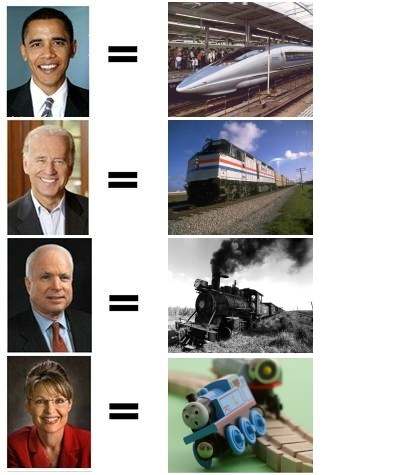
Sight Gag: If You Were A Train, What Would You Be?

Photo Credit: Anonymous E-Mail (With thanks to Maurice Charland who brought it to our attention).

“Sight Gags” is our weekly nod to the ironic and carnivalesque in a vibrant democratic public culture.  We typically will not comment beyond offering an identifying label, leaving the images to “speak” for themselves as much as possible.  Of course, we invite you to comment … and to send us images that you think capture the carnival of contemporary democratic public culture.

 6 Comments

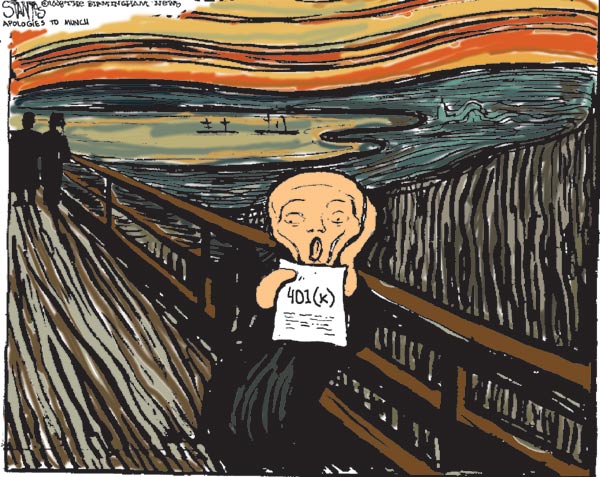
Sight Gag: The Free Markets Survive

Or for an alternate take, click on the cartoon.

Credit: Scott Stantis, Birmingham News

“Sight Gags” is our weekly nod to the ironic and carnivalesque in a vibrant democratic public culture.  We typically will not comment beyond offering an identifying label, leaving the images to “speak” for themselves as much as possible.  Of course, we invite you to comment … and to send us images that you think capture the carnival of contemporary democratic public culture.

 0 Comments

Underground Democracy

Guest post by Aric Mayer.

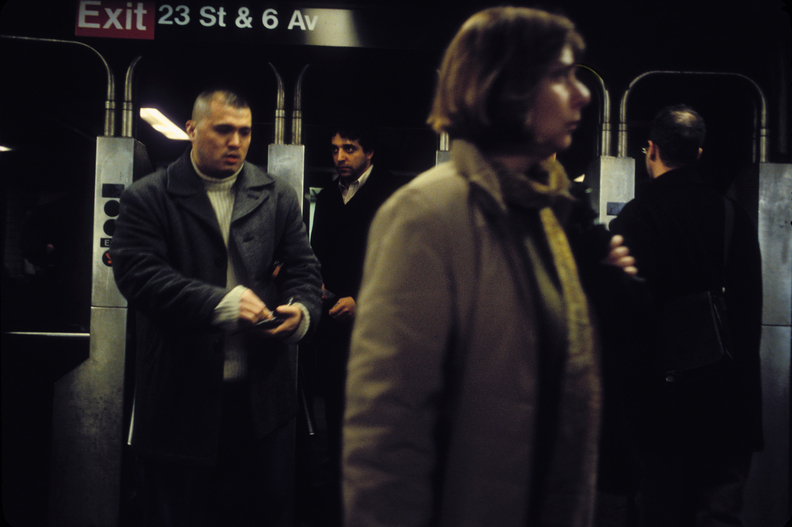
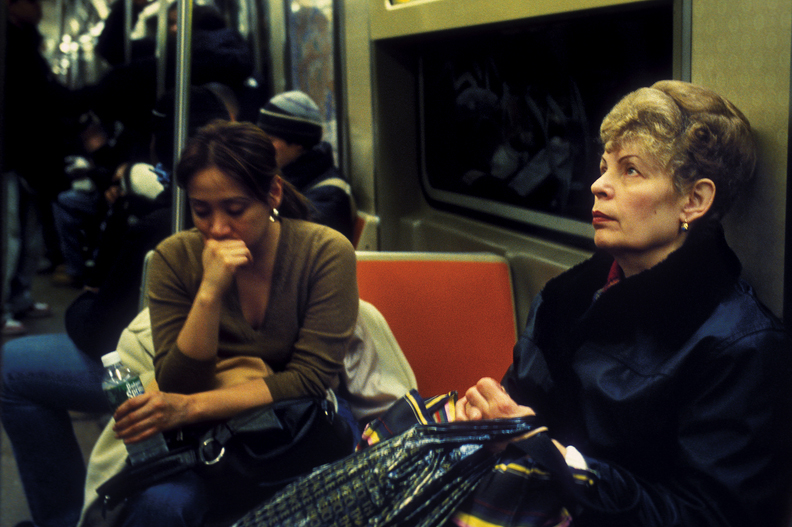
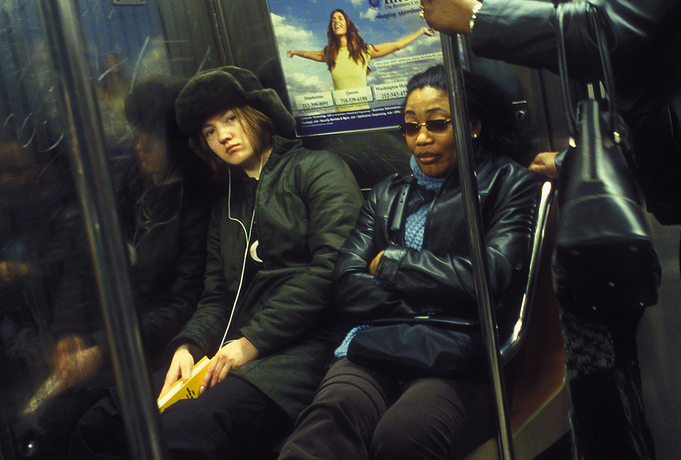
New York City is one of the greatest cities of the world, and certainly is one of the most integrated and diverse.  Here you can find all cultures and all ethnicities practicing their own heritages side by side.  People who in their homelands are at war with one another here manage to find ways to coexist.  This coexistence is exhibited best in New York City’s Subway.

When the train doors close, instance and ephemeral communities are formed.  Status and power do not buy you a seat at rush hour.  On an average weekday five million riders board the train, and whether rumbling along in the darkness of the tunnels or the daylight above, community standards are created and enforced by proximity.

In an age of internet associations across geographic lines, it is becoming easier and easier for communities to form, communicate, share ideas and reinforce each other’s belief systems. The internet has the promise of a great Athenian experiment in civic discourse. Unfortunately the trend seems to be that people are increasingly able to seek out and congregate only with others who are like them, and diversity, once the great possibility of the internet and the fundamental promise of democracy, suffers, replaced by a stultifying homogeneity.

And yet, by contrast, the New York City Subway is the great leveler of class, ethnicity, and virtually any other form of difference and distinction.  It encourages the daily practice of tolerance and cohabitation among millions of users.  And by doing so  it has become a gritty sort of civic square where all, for a time, are mostly equal.

Many pictures of democracy in action will be offered over the next weeks as we lead up to one of the most important presidential elections in recent memory.  And many of these will be grand visions of power and triumph.   In the midst of this, let us not forget what a great jumble of people we are.  And democracy is a messy business, worked out in the daily act of differing peoples coming together to work out their differences — or just to live with them.

 0 Comments