Feb 13, 2008
Jun 01, 2012
Sep 01, 2007
Mar 05, 2008
Aug 16, 2009
May 12, 2010

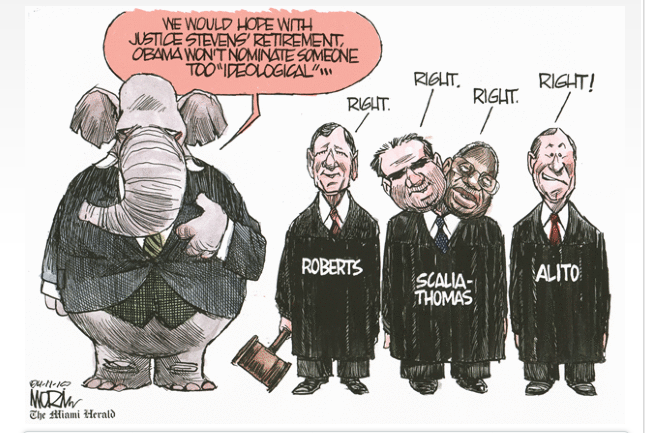
Sight Gag: Look to the Left, Look to the Right, Right, Right, Right

Supreme Court Objectivity 2010-04-17 at 4.50.17 PM

Photo Credit: Jim Morin/Miami Herald

Sight Gags” is our weekly nod to the ironic and carnivalesque in a vibrant democratic public culture.  We typically will not comment beyond offering an identifying label, leaving the images to “speak” for themselves as much as possible.  Of course, we invite you to comment … and to send us images that you think capture the carnival of contemporary democratic public culture.

 0 Comments

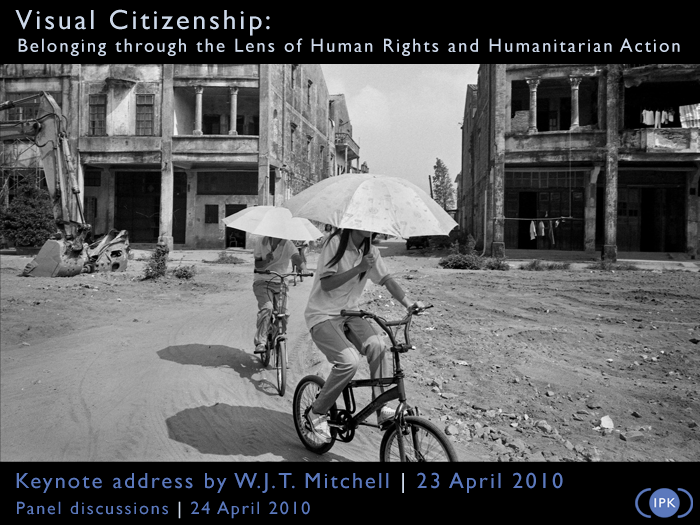
Conference: Visual Citizenship – Belonging Through the Lens of Human Rights and Humanitarian Action

c_4_5190595884bb241c821122

In addition to keynote speaker W.J.T. Mitchell others speakers include Ariella Azoulay, Nicholas Mirzoeff, Richard Sennett, Susan Meiselas, Craig Calhoun and NCN’s very own Robert Hariman.  The conference addresses the question, “What does it mean to be a visual citizen–for those who are seen, for those who witness what is seen, and for those who capture what is seen in public? … In what ways do visual practices condition who belongs and who does not belong to a political community.”  For a detailed schedule of presentations, click here.

 0 Comments

"The Children's Crusade"

American Soldier Boy

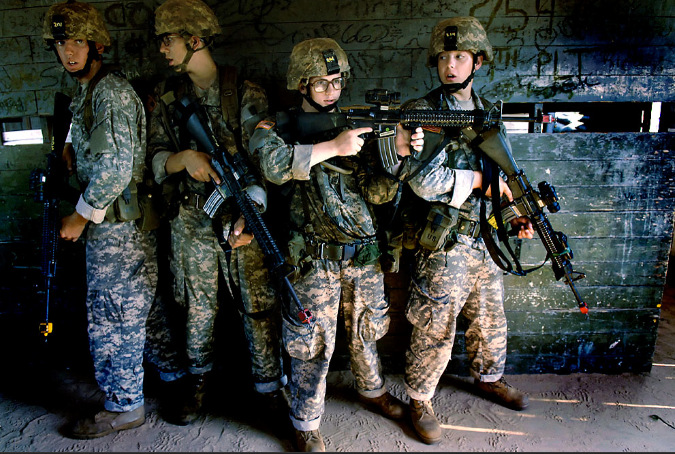
I don’t know what the average age of the American soldier is, but the typical photograph we have seen in recent times suggests that “he” is in his mid-twenties or later. And what such photographs show us are young men who have completed their training as fighting machines; indeed, many such images show us soldiers who have already seen battle and so, as young as they might be, they appear as veterans and far older than their years.  What such photographs fail to show us—and in the process allow us to forget—is how much going to war robs such men of their youth and innocence … and no doubt much more as well.

When I first came across the photograph above I thought I was looking at a group of adolescents “playing” at being soldiers.  Indeed, the shooter in the middle of the image looks rather like “Ralphie,” the young boy from Jean Shepherd’s classic A Christmas Story who pines for a Red Ryder BB Gun only to have a department store Santa tell him, “You’ll shoot your eye out, kid!”  And those around him don’t seem much older as they all look awkwardly out of place in their clean camouflage uniforms and wielding what at first glance appear to be toy versions of automatic weapons.  But of course they aren’t toy weapons, and these apparently prepubescent adolescents are actually recruits in basic training, “prepar[ing] to clear and secure a room.”

The photograph is part of Craig F. Walker’s 2009 Pulitzer Prize winning, eight part photo-essay “Ian Fisher: American  Soldier,” a report which tracks seventeen year old Ian Fisher (he’s the one on the far right above) from high school through basic training to a tour of duty in Iraq and back home again—a veteran warrior who will carry this experience with him for the rest of his life.  Walker’s photographs are a stark and poignant reminder that those who carry the weight of our military efforts too often (far too often) go off to war as naïve and wide-eyed children—that they only become the adult warriors and heroes we remember in myth and movie after the fact—and those who are fortunate enough to return home will have paid a devastating and incalculable price.

Photo Credit:  Craig F. Walker/Denver Post; The title “The Children’s Crusade” is drawn from the subtitle of Kurt Vonnegut’s Slaughterhouse Five, or The Children’s Crusade and commented upon in an earlier NCN Post titled “What Peace Looks Like.”

Cross-posted at BAGnewsNotes.

 3 Comments

On the Continuing Presence of Davids and Goliaths

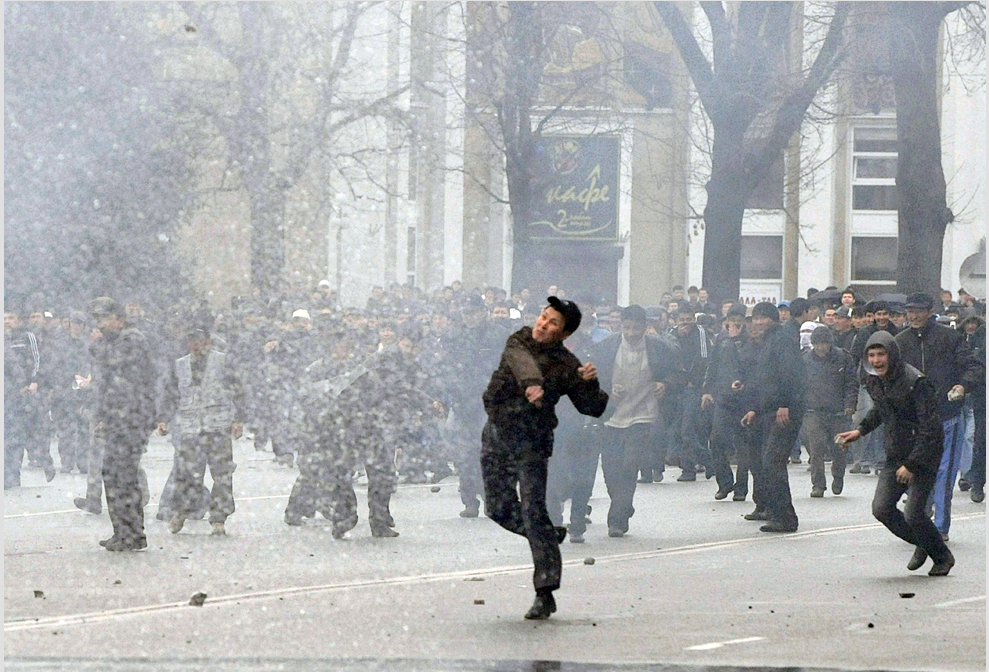
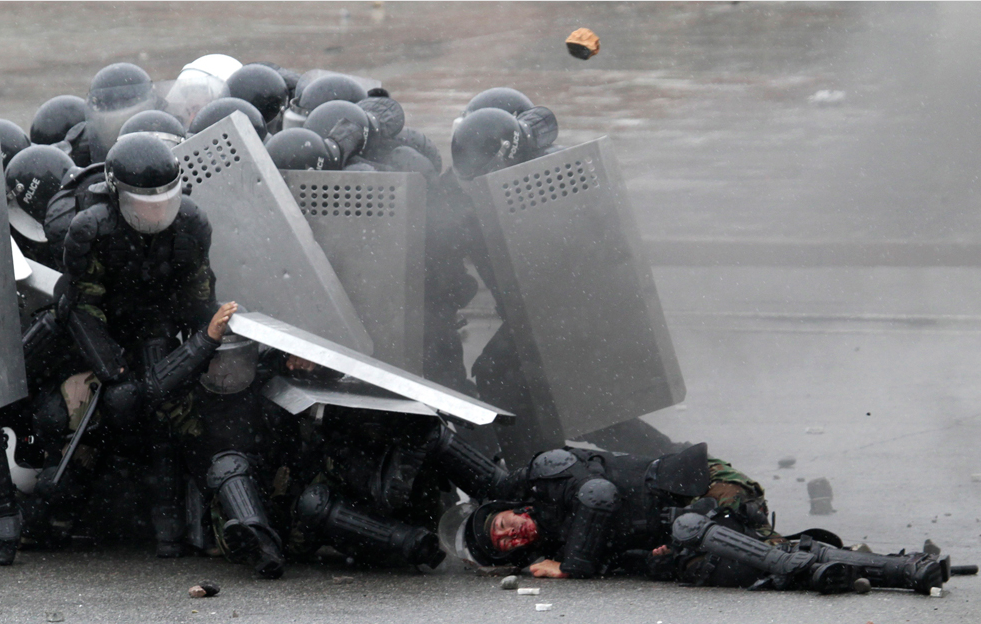
It seems like barely a week goes by that we don’t see a photograph somewhere in the mainstream press of individual Palestinian youth twirling a sling or hurling a stone at an Israeli military patrol, usually somewhere in or around Gaza.  The images have become so regular and ordinary that the biblical irony seems to have lost all resonance.  What was once a potentially poignant comment on a tragic situation has become something of a pitiable commonplace.  And yet the visual trope of the stone thrower persists as a common representation of  political unrest throughout the nonwestern world.

Screen shot 2010-04-11 at 10.05.09 PM

The most recent examples come from anti-government protests in Thailand and, as above, in Kyrgzystan.  The particular issues at stake don’t usually matter—or at least they are typically not featured or explained—as the point of such photographs seems to be to dramatize the difference between a more or less disorganized group of grassroots protestors—“the people”—and a rationally organized and heavily armed and armored military or riot police. The odds against the success of the protestors under such circumstances is enormous, almost incalculable.  But of course in the West we “know” that when “the people” arise as if with one voice and a common will to challenge the military might of the state with little more than stones and brickbats that a serious challenge to political legitimacy has been tendered.

And therein lies an important moral.

Screen shot 2010-04-11 at 10.40.40 PM

No matter how rationally organized or far better equipped the military arm of the state might be, and no matter from where it derives its political authority, it cannot succeed without huge costs—or maybe succeed at all—when the will of the people it would fetter and control is enraged.

Photo Credits: Vyacheslav Oseledko/AFP/Getty Images; Ivan Sekretarev/AP

 2 Comments

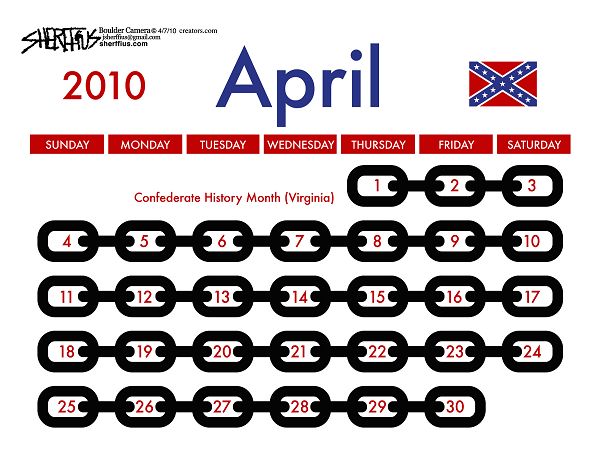
Sight Gag: Confederate History Month

April 2010

Credit: John Sherffius/Boulder Camera

Sight Gags” is our weekly nod to the ironic and carnivalesque in a vibrant democratic public culture.  We typically will not comment beyond offering an identifying label, leaving the images to “speak” for themselves as much as possible.  Of course, we invite you to comment … and to send us images that you think capture the carnival of contemporary democratic public culture.

 0 Comments

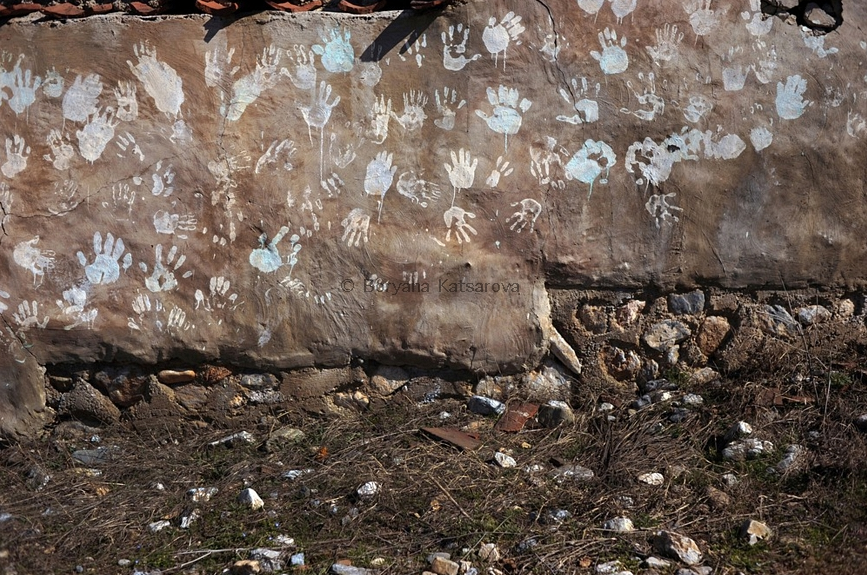
Photographer's Showcase: Handprints of Peace

Handprints of Peace

During the 1998-1999 Kosovo/Serbian conflict more than 45,000 displaced Kosovar Albanians were saved in a refugee camp in the Macedonia town of Cegrane—that is more than three times the size of the town itself.  As they were leaving the camp to return to their homes in Kosovo the refugees left their handprints on the outer walls of the town that protected them as a sign of “freedom, peace, and gratitude.”  Subsequently, the meaning of the handprints have been forgotten in the town and the walls are slated for demolition. Boryana Katsavora’s photo gallery “Handprints of Peace” seeks to recover and to memorialize a humanist moment in history at which strangers reached out to help one another at great risk to themselves.

We are pleased to introduce  Boryana Katsavora, a Bulgarian-Russian documentary photographer, and her work to the NCN audience. To view “Handprints of Peace” click on the image photograph.  To sample Katsavora’s other work click here or visit her blog.

 0 Comments

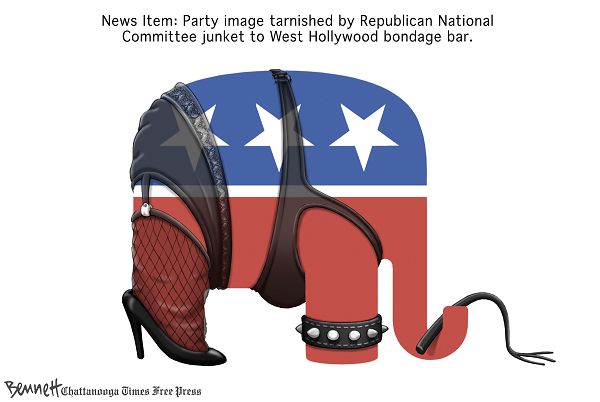
Sight Gag: Getting Dressed For the Party

Bennett editorial cartoon

Credit: Bennett, Chattanooga Times Free Press

Sight Gags” is our weekly nod to the ironic and carnivalesque in a vibrant democratic public culture.  We typically will not comment beyond offering an identifying label, leaving the images to “speak” for themselves as much as possible.  Of course, we invite you to comment … and to send us images that you think capture the carnival of contemporary democratic public culture.

 0 Comments

Public Lecture: The Necessity to Discuss Photographs That Were Never Taken

Screen shot 2010-04-01 at 10.00.50 AM

Professor Ariella Azoulay, professor of visual culture and contemporary philosophy at the Program for Cultural Interpretation, Bar-Ilan University, Israel is presenting a  lecture at Northwestern University (April 2) and Indiana University in Bloomington (April 6) titled, “The Necessity of Discussing Photographs That Were Not Taken.”  The lecture and related events listed below  are  free and open to the public at both Northwestern and Indiana Universities.

The lecture at Northwestern University takes place on Friday, April 2, 2010, 4-6 pm in the Annie May Swift Auditorium.

The lecture on  the Bloomington campus of Indiana University takes place on Tuesday, April 6, 2010, 5:30-7:30 pm in Student Building 150. On Monday, April 5, 2010, 7 pm,  there will be a screening of Professor Azoulay’s documentary film, “The Angel of History” in Fine arts 102.

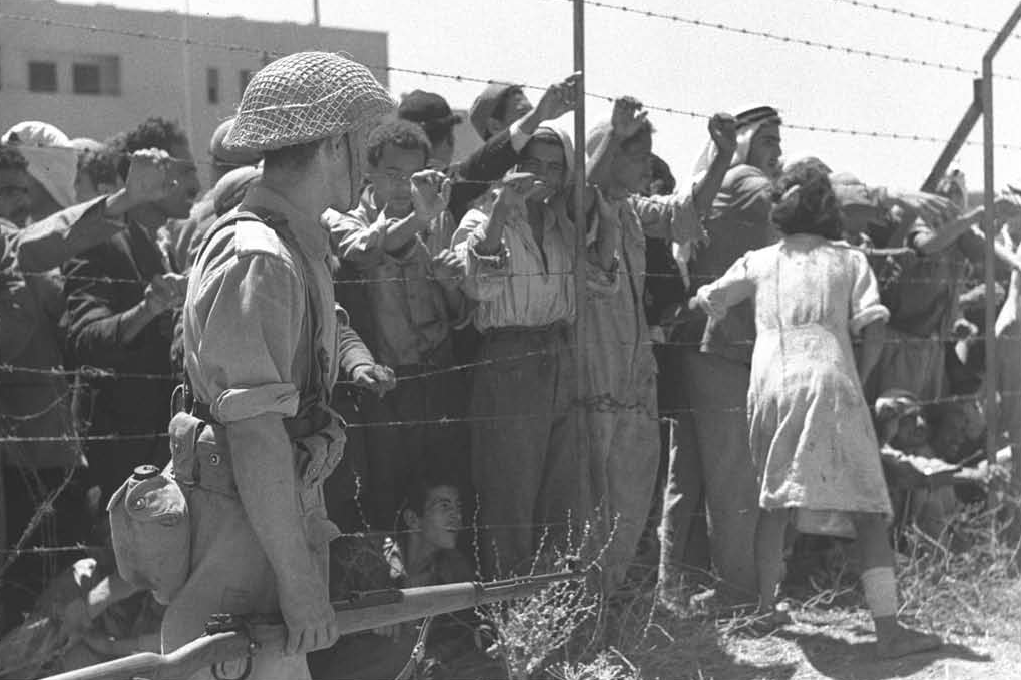
Professor Azoulay’s lecture discusses the ontology of photography (and of the photograph) drawing a basic distinction between the event of photography and the photograph which is only one of its products.  The photographic examples will be drawn from the exhibition Constituent Violence 1947-1950 that Professor Azoulay curated in Israel in March-June 2009.  The exhibition provides a genealogy of the transformation of the Palestinian disaster into a “disaster from their point of view.”  Among her publications are Death’s Showcase (2001) and The Civil Contract of Photography (2008).

The lectures are sponsored at Northwestern University by the Program in Rhetoric and Public Culture and the Center for Global Culture and Communication.  At Indiana University it is sponsored by the Institute for Advanced Study and the Branigan Lecture Series.    For more information at Northwestern University contact Daniel Elam (jdelam@u.northwestern.edu) and at Indiana University Jon Simons (simonssj@indiana.edu) or Ivona Hedin (ihedin@indiana.edu).

 0 Comments

… The Third Time as Kitsch

The Afghan Girl is a photograph deeply etched within the western collective consciousness.  Most probably cannot identify the photographer (Steve McCurry) or the girl’s name (Gula). Perhaps more to the point, I doubt that most who easily recognize the photograph cannot recall the specific circumstances that led to its being taken and featured on the cover of National Geographic, not once but twice:  The first time as the representation of an orphan of Soviet bombings in Afghanistan in the mid-1980s; the second time, seventeen years later, after the once young girl was rediscovered in a refugee camp as a middle-aged woman, the focus being on how her identity was confirmed with “certainty” by state of the art biometric technology which matched the iris patterns in her eyes with the original image.

Marx amended Hegel’s notion that history repeats itself by adding, “the first time as tragedy, the second time as farce.” But what about the third time?
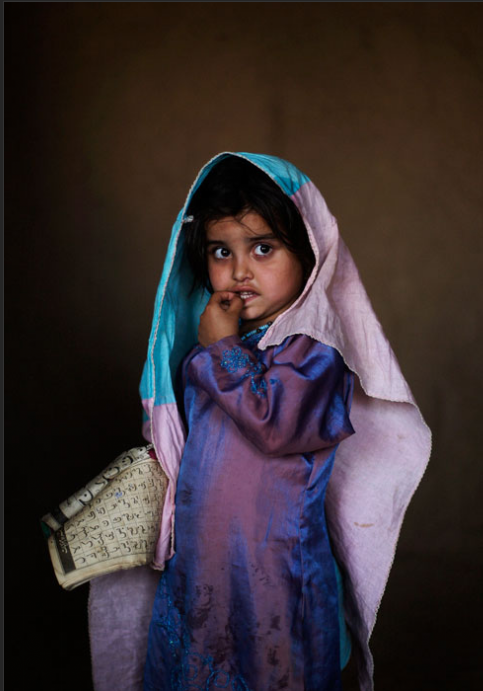
AG Girl II

The above photograph appeared recently in a NYT slide show under the title “An Afghan Voice for American Troops.”  The title does not appear to have been crafted to refer to this specific photograph—referring instead to the first image in the slide show of a female Afghani interpreter working for the US military … perhaps that is who this young girl will become when she grows up—but the presence of the image halfway through the slide show with the title hanging over the photograph makes that a little bit ambiguous.

The resonance between the current photograph and the original Afghan Girl photograph cannot be easily scanted, though differences abide.  Shot here in middle distance rather than close up, the eyes are less pronounced and less haunting, and the effect is to alter slightly—but significantly—the affect of the demand that they issue.  By making the eyes the center of attention in the original photograph the point of identification is with the girl herself—as much a woman as a child—and the depth of her humanity.  By pulling back the camera in the second photograph to show most of the body—as well as the Arabic alphabet primer she appears to be carrying around with her—the locus of identification is shifted from the plight of refugee women to this girl, from the universal to the particular.  No longer a girl on the verge of becoming a woman, we have a child in need; and not just any child, but one rooted in a non-western ideology. And the result is palpable.  The original photograph evokes a clear sense of the depth of human tragedy, but here the structure of feeling inclines more to the conventional sense of pity and compassion one finds in any sort of philanthropic venture designed to help the abject.  While the original McCurry photograph demands that we identify with the tragic affect of the circumstances of Afghan women qua their humanity, this image seems to ask us to donate to the cause.

But what exactly is that cause?  What “voice” does she speak to American troops?  Part of the problem, of course, is that as the war in Afghanistan drags on into its ninth year it is increasingly difficult to remember why exactly we are there (note: it was originally in response to the 9/11 bombings and in an effort to hunt down Osama bin Laden) or what exactly we hope to accomplish.  And in the meantime we have spent nearly 300 billion dollars and counting, suffered over 1,000 U.S. casualties, and inflicted over 12,000 civilian casualties among the Afghanistan population.  The photograph of the new Afghan girl would seem to suggest that we are there to protect her, even though that was never part of the deal in the first place (and since her refugee status is in some part animated by a military occupation its hard to know what positive  effect we’ve actually had here).

It would of course take a great deal of cynicism to imagine some sort of “Wag the Dog” sensibility operative here as a rationale to support our continuing involvement in a war that never seems to end.  But having said that I find myself at a loss to explain the photograph that immediately followed the image above in the NYT slide show in which it was featured:
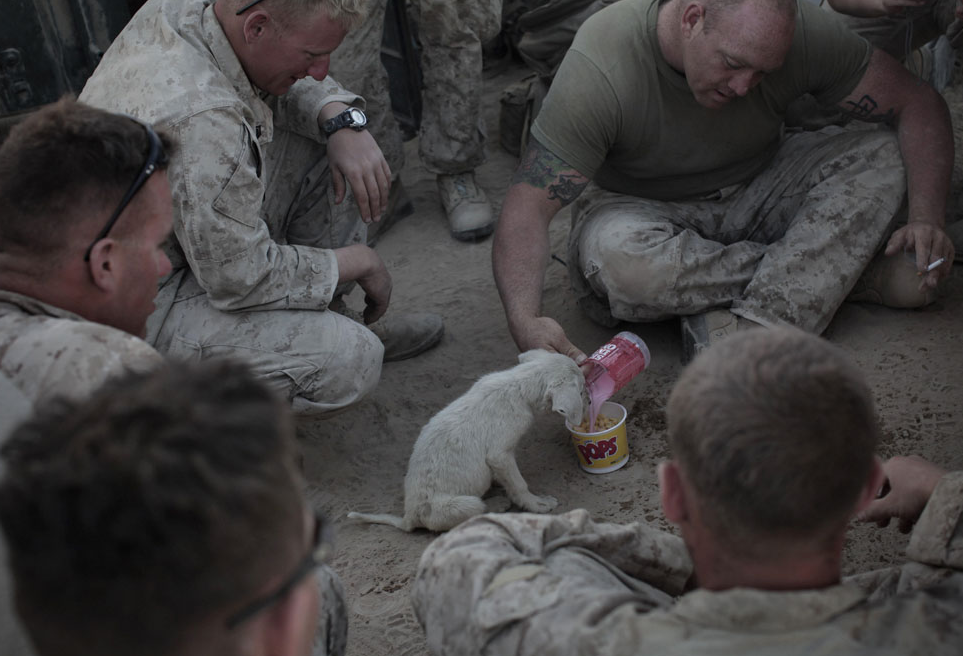
Wag the Puppy

The caption reads, “A marine gave cereal to a stray puppy at an outpost in northern Marja, Afghanistan.  An Afghan man was detained after being suspected of links to a series of recent roadside bomb attacks against American troops the area.”

The first time as tragedy … the third time as kitsch.

Photo Credits: Muhammed Muheisen/AP; Mauricio Lima/Agence France-Presse—Getty Images

 4 Comments

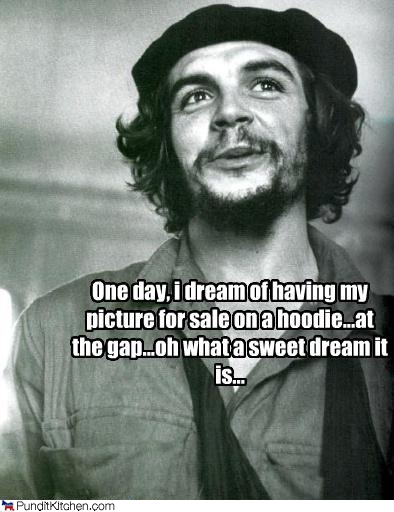
Sight Gag: Che's American Dream

political-pictures-che-guevara-dream-hoodie

Credit: PunditKitchen.com

Sight Gags” is our weekly nod to the ironic and carnivalesque in a vibrant democratic public culture.  We typically will not comment beyond offering an identifying label, leaving the images to “speak” for themselves as much as possible.  Of course, we invite you to comment … and to send us images that you think capture the carnival of contemporary democratic public culture.

 0 Comments