Aug 11, 2008
Nov 14, 2011
Oct 18, 2013
Dec 02, 2013
Jun 01, 2011
Jan 13, 2014

Learning What to See

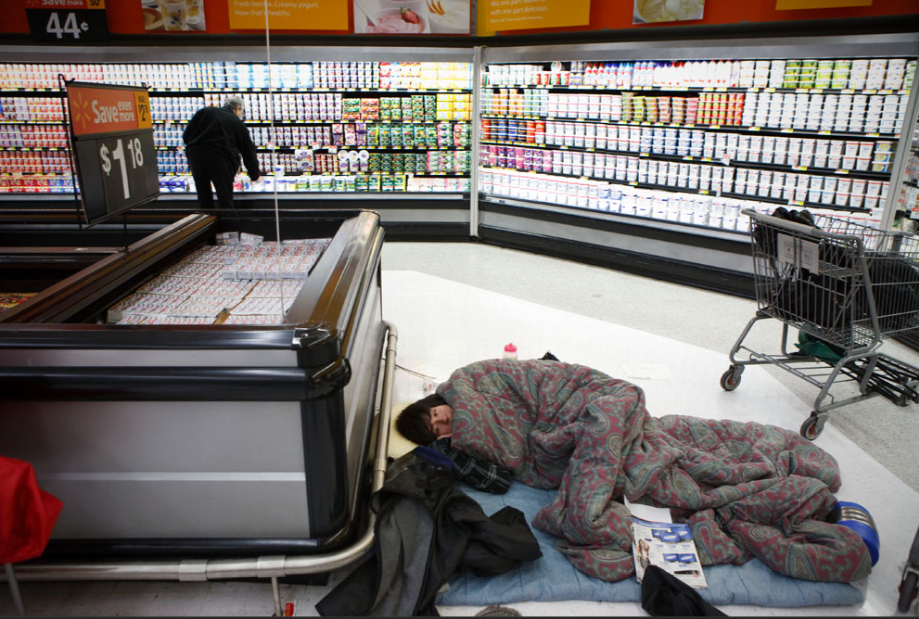
Homeless at Walmart

A few weeks ago I stumbled upon the movie At First Sight, a story about a man, blind from the age of three, who recovers his sight. Because he had spent most of his life sightless his brain never learned how to translate the chemical and electronic impulses transmitted to it from his eyes in a meaningful fashion.  Like a child initially learning how to read has to figure out how to translate squiggles on a page into meaningful words and then sentences, the movie’s protagonist literally has to learn how to see: colors, shapes, textures, shadows, reflections … all the of the visual aspects of the world that sighted people take for granted, he had to learn, one dimension and one image at a time.  The most pertinent moment in the film occurred for me during a scene in which the now sighted man is walking around the streets of New York City with his girl friend, reveling in the cornucopia of images  available to him.  They come across a homeless person sleeping on a door stoop and he doesn’t quite know what to make out of it; his bewilderment is compounded when his girl friend fails to even see the person laying there.  When he points the homeless person out to her she admonishes him as if he were a child, “you’re not supposed to look at that.”  The scene is a poignant allegory of the the myriad ways in which we must learn to see, including the complex  network of social norms and conventions concerning what can and cannot (or should and should not) be seen.

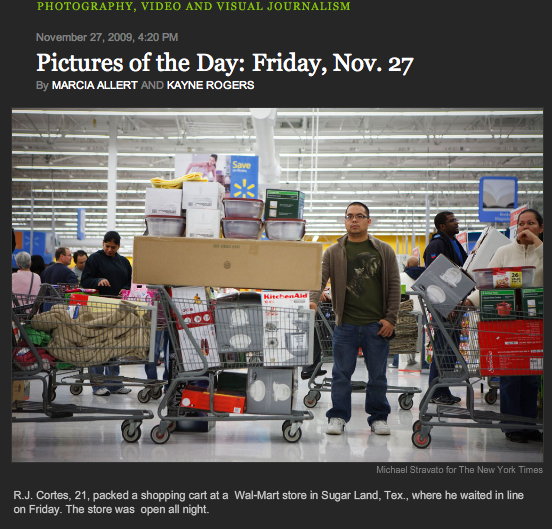
I was reminded of this moment from the movie when I came across the above photograph in a NYT slideshow on November 27th, the day after Thanksgiving  also known as “Black Friday.”  Cued by a number of symbolic markers, my first thought was that the camera was encouraging me to see seeming that was indecorous to look at: a homeless person—a barely recognizable individual sleeping in a public space, his face obscured and his body wrapped up in what appeared to be a grey and dirty blanket; surrounded by his few worldly goods, including the signature shopping cart, the only other person in the scene dutifully ignores him as if he isn’t there and shouldn’t be seen.  The awkwardness of the moment dissipated upon closer inspection, however, for there were things that didn’t make much sense, not least that we don’t typically see homeless people sleeping on the floor in grocery stores—after all, it’s not good for business.  And then I read the caption:  “Brian Garcia, 17, tried to nap on Friday at a Wal-Mart in Sugar Land, Tex., where he was first in line for a greatly discounted  plasma TV.”

It is possible that this photograph was intended as something of a visual irony, particularly when we consider that it was juxtaposed with other pictures in the same slideshow that implied something like an unrepentant, consumerist version of gluttony.  But there is a different and perhaps more important point to be made.  Stories and photographs about the frenzy of activity that took place in our stores and malls on Black Friday were ubiquitous across local and national media.  And for the most part what we were being invited to see was the world of commerce doing what it does.  Individual shoppers might be portrayed as going overboard in buying too much, or as being unduly cautious as they wait for “deep discounts” before they make their holiday purchases.  But in either case we were being encouraged to seeing consumers and businesses doing what they do.  What we didn’t see were those incapable of being consumer-citizens.  And most of all, we didn’t see the homeless.  To make the point take note of the fact that every year the week before Thanksgiving is National Hunger and Homeless Awareness Week.  This year that would have been November 15-21. If you rely on the major news outlets for your information—print or broadcast—you probably wouldn’t know that since, as far as I can tell, not a single national newspaper or network carried a story about it.  Not a one!  Apparently its not something we are supposed to see … or look at.

Photo Credit:  Michael Stravato/New York Times
 1 Comment

Sight Gag: Standing Up For Human Rights

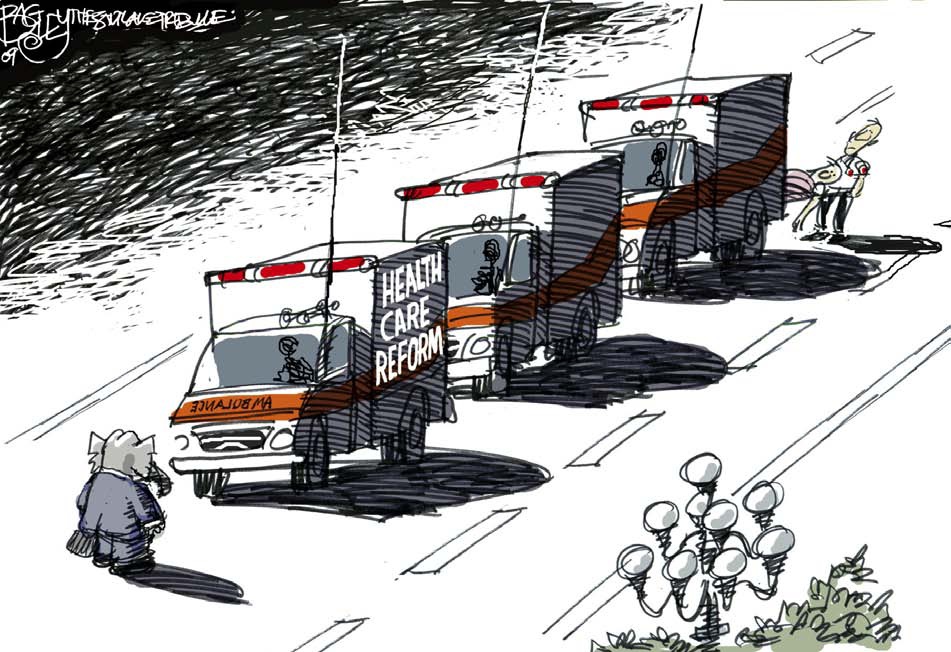
tiananmen Health Care

Credit:  Pat Bagley, Salt Lake Tribune (Note:  The cartoon is this week’s Cartoon for the Classroom “Caption Contest”  run by NIE and the Association of American Editorial Cartoonists).

“Sight Gags” is our weekly nod to the ironic and carnivalesque in a vibrant democratic public culture.  We typically will not comment beyond offering an identifying label, leaving the images to “speak” for themselves as much as possible.  Of course, we invite you to comment … and to send us images that you think capture the carnival of contemporary democratic public culture.

 2 Comments

Photographer's Showcase: The Fall of the Berlin Wall

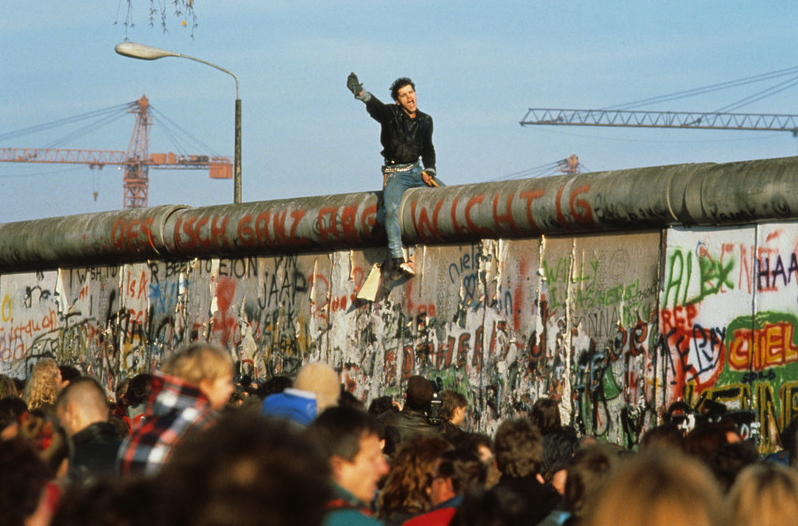
This week we feature a CBS report that celebrates the twentieth anniversary of the fall of Berlin Wall by drawing upon the work and reminiscences of photojournalist (and longtime friend of NCN) Peter Turnley.  Click on the image to view the video, or click here to read his column on the fall of the Wall at the Digital Journalist and here to see a stunning gallery of his photographs that includes both the fall of the Wall and the Velvet Revolution in Czechoslovakia.

Turley, Fall of the Berlin Wall

Photo Credit: Peter Turnley/Corbis

 1 Comment

The March of the Flag

war hearse

November 11th was originally proclaimed Armistice Day by President Wilson in 1919 as a day for remembering those who sacrificed their lives in the first “war to end all wars.”  In 1926 the U.S. Congress passed a joint resolution in which November 11th was designated as a day for commemorating “with thanksgiving and prayer exercises designed to perpetuate peace through good will and mutual understanding between nations.”  In 1954 Armistice Day was renamed “Veteran’s Day” by President Eisenhower in order to acknowledge and honor all veterans in the wake of World War II and the Korean conflict. The movement from commemorating a “war to end all wars” in the name of peace, good will and mutual understanding to a day for honoring Veterans of all wars without prejudice is not subtle, although we rarely if ever seem to acknowledge the difference.  The point to be made here, however, is that this very shift in meaning correlates in no small way with the difficulty we have had in recent times in judging any national military aggression lest we risk doing harm to those who actually do the fighting.

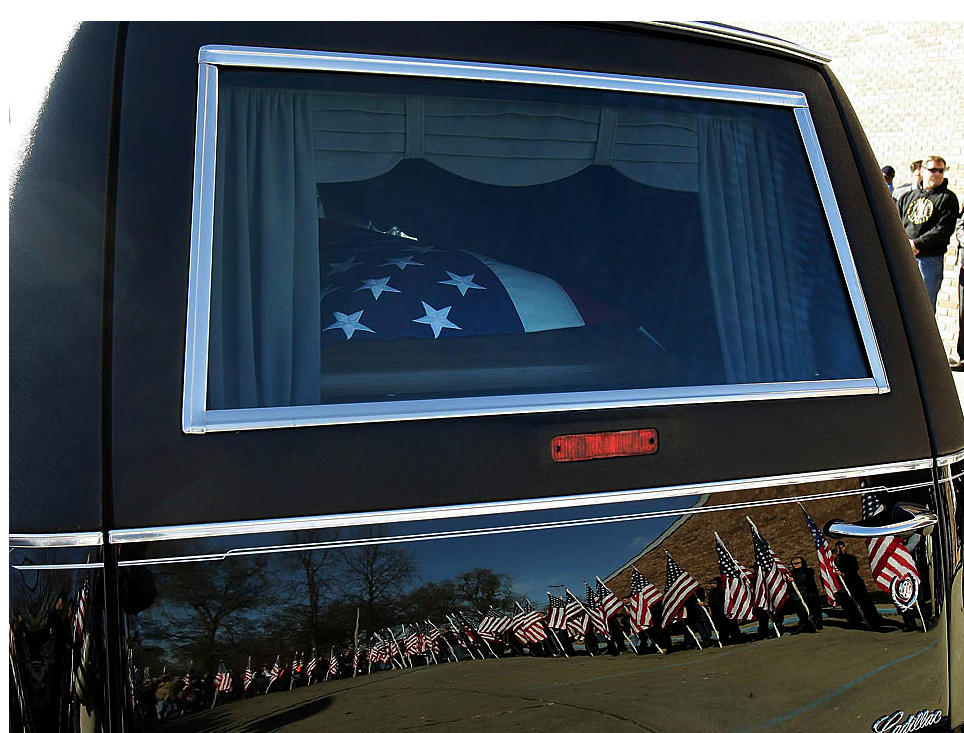
The many slide shows at mainstream journalistic websites marking Veteran’s Day this past week make the point, as photograph after photograph presents visually eloquent and decorous displays of the sacrifices of those who nobly served and often died in the service of their country without any specific reflection on the particular wars being fought. This battle, that invasion, it doesn’t really seem to matter, as the reasons for fighting are visually trumped by an abstract, visual display of national sacrifice that, in the end, reduces the individual to the nation-state.  The photograph above from the Wall Street Journal is a case in point. The hearse carries the flag draped remains of a soldier recently killed by a roadside bomb in Afghanistan.  There is nothing in the image that marks that fact, although the caption does give the deceased’s name and rank, but notice how the photograph itself works to deflect attention from the particular sacrifice inside the hearse to the wall of flags that extends to infinity reflected on the vehicle’s highly polished, exterior surface.  The hearse is thus cast as a mirror, and as the photograph invites us to view it as such, what we see—as with any mirror—is a reflection of ourselves.  And what that reflection reveals is not the individual per se, but the nation signified by an inexorable march of the flag.  Whatever specific cause took the life of this soldier seems to pale in comparison, and certainly is not subject to question.

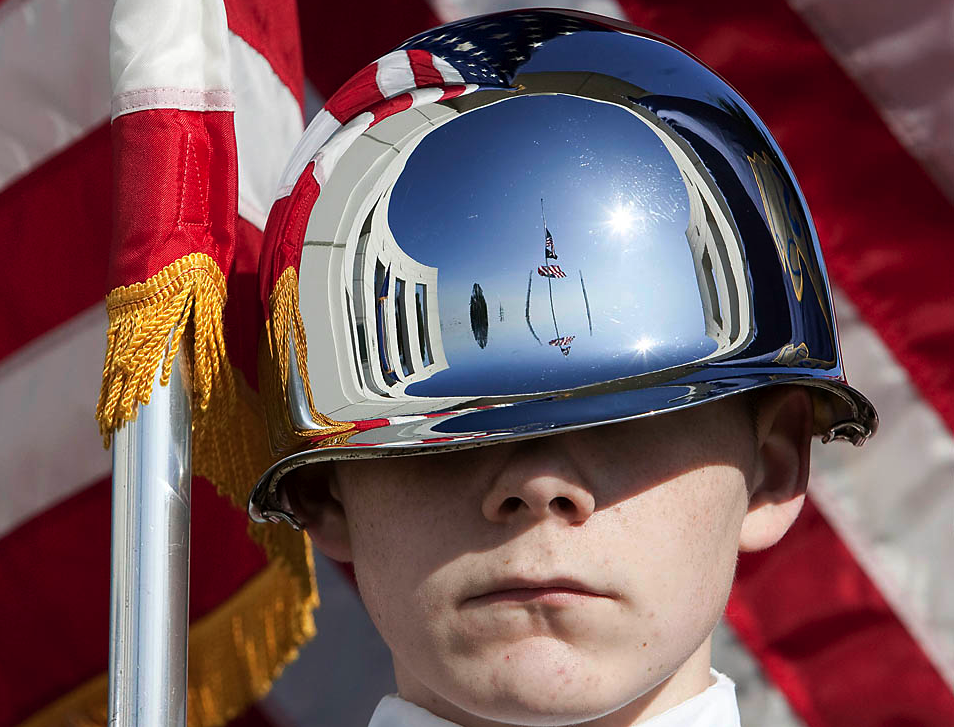
A second photograph from the same paper on the same day underscores and extends the nationalist implications of the first image above.

Junior Officer

Here we have a boy who is described without a name as a “Junior Reserve Offices Training Corps honor guard” participating in a Veteran’s Day ceremony.  Lacking a name, he takes on the quality of a individuated aggregate—an individual cast in the role of a collective.  He stands for something more than himself.  But what?  The eyes, we are told, are the windows to the soul.  But here, notice that his  eyes are hidden from view; if he has an individual soul it is not accessible to us.  What we have instead is his serious countenance defined by the set of his jaw balanced against the bright, mirror-like surface of his highly polished helmet, an instrument of war turned to ceremonial purposes.  The helmet reflects both the deeply saturated colors of the national flag that he appears to be holding, and which shrouds his head and shoulders, as well as another flag, more difficult to make out, that appears to be in his line of vision.  There is no hint of the boy here, let alone the individual veteran, but a connection between past (behind him) and future (in front of him) defined only by the national colors.  His (and our) present is defined  by  a direct line from past to future and the trajectory is … well, fated.  And once again, the flag marches on.

We can and should remember those who sacrifice their lives for the common good.  But in doing so we are well advised to recognize and reflect on what is being sacrificed to what, and to avoid the temptation—however comforting it might be—to make a fetish of the flag and what it represents in the process.

Credit:  Darron Cummings/AP; Nati Harnick/AP

 2 Comments

Sight Gag: Going Rogue

Palin the Rogue

Credit:  All Hat No Cattle

“Sight Gags” is our weekly nod to the ironic and carnivalesque in a vibrant democratic public culture.  We typically will not comment beyond offering an identifying label, leaving the images to “speak” for themselves as much as possible.  Of course, we invite you to comment … and to send us images that you think capture the carnival of contemporary democratic public culture.

 3 Comments

On the Road to …

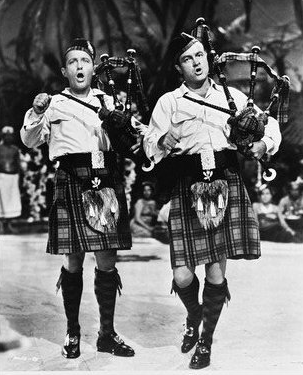
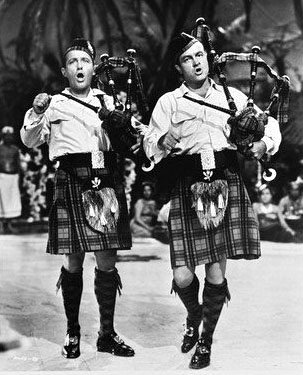
Like Hope and Crosby, your NCN guys are on the road this week. Unfortunately its nothing as exotic as Bali, or Rio, or Zanzibar … but who knows what mayhem we will create.  We’ll be back next Sunday with a new sight gag as we get ready to wind down another year.

HOPE

 1 Comment

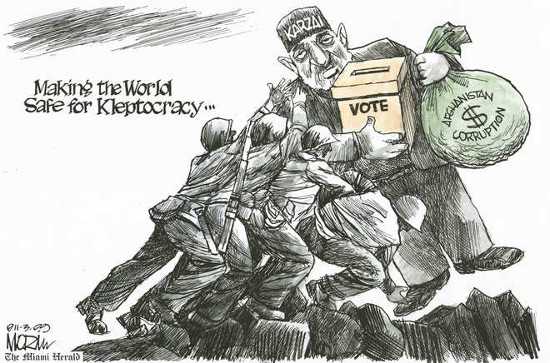
Sight Gag: "Making the World Safe …"

jm110309

Credit: Jim Morin, Miami Herald

“Sight Gags” is our weekly nod to the ironic and carnivalesque in a vibrant democratic public culture.  We typically will not comment beyond offering an identifying label, leaving the images to “speak” for themselves as much as possible.  Of course, we invite you to comment … and to send us images that you think capture the carnival of contemporary democratic public culture.

 2 Comments

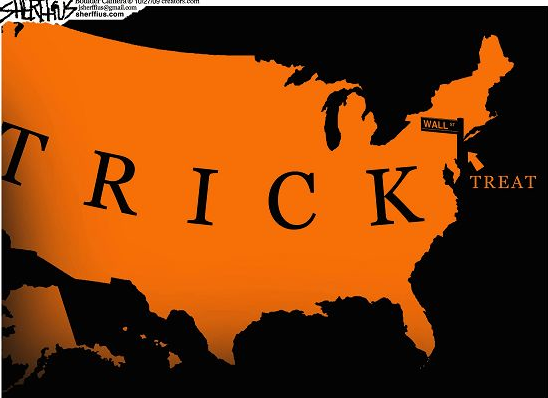
Sight Gag: Happy Halloween

sherfj2009

Credit: John Sherrfius

“Sight Gags” is our weekly nod to the ironic and carnivalesque in a vibrant democratic public culture.  We typically will not comment beyond offering an identifying label, leaving the images to “speak” for themselves as much as possible.  Of course, we invite you to comment … and to send us images that you think capture the carnival of contemporary democratic public culture.

 2 Comments

Visual Ironies

Our language is fettered with visual clichés. “Seeing is believing,” but also “don’t believe everything you see.” And don’t forget that “a picture is worth a thousand words.” Of course, our very favorite visual cliché here at NCN is “No caption needed.” As the title of both our book and blog, some readers often assume that we mean to be arguing that photographs speak for themselves and that captions are truly not necessary. In point of fact, our use of the phrase is meant to be ironic (it would actually be in quotes in the title of our book so as to call attention to it as a cultural saying and thus to set ourselves apart from it, but our publisher insisted that using quotation marks would confuse search engines and make it harder for people to find the book). The irony points in two directions. On one hand we mean to argue that in most instances captions are very much needed, and on the other hand, we mean to argue that whether needed or not, they are virtually unavoidable.

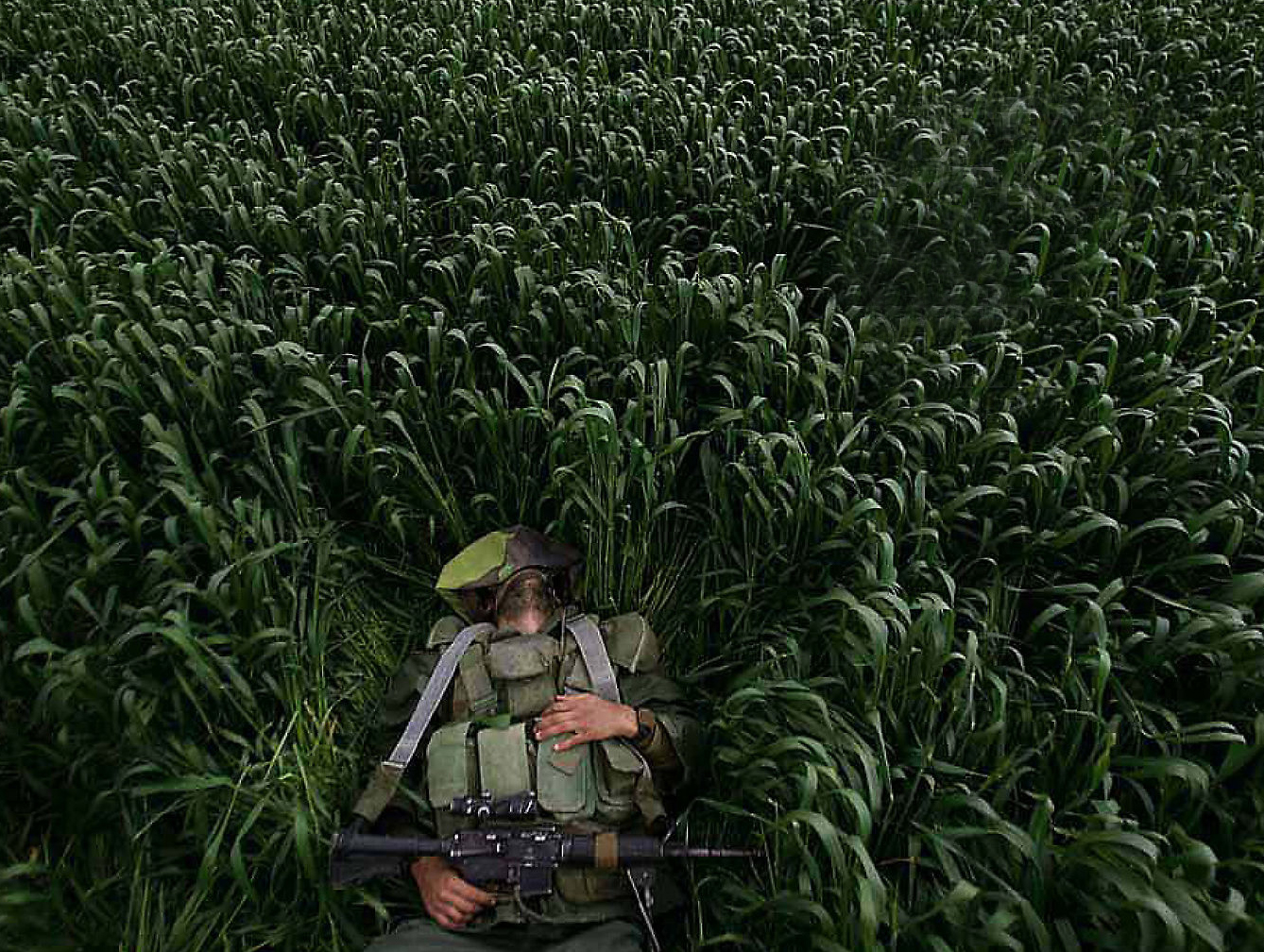
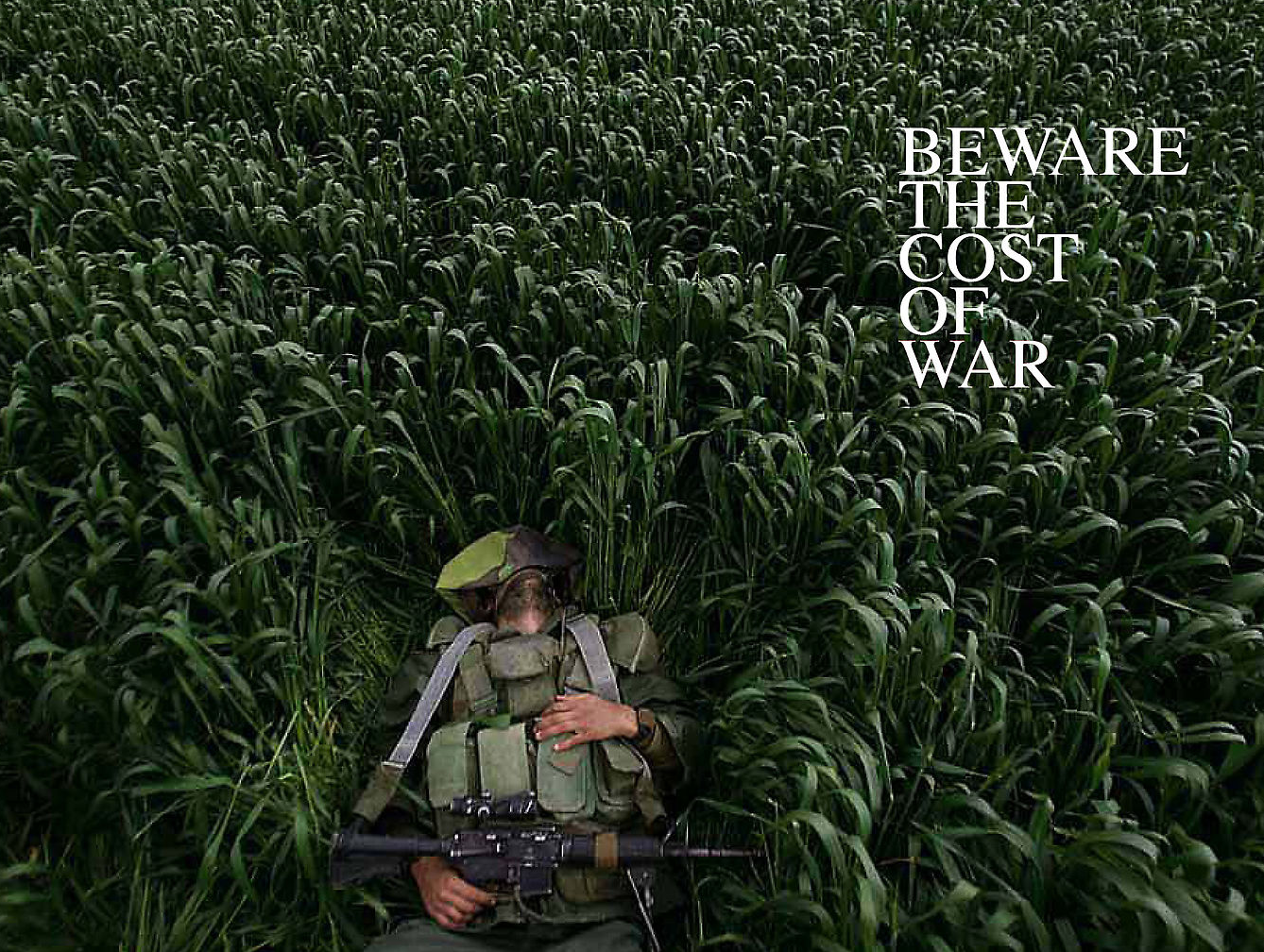
Both points are driven home by a recent NYT Lens showcase titled “Stirring Images, No Names.” The showcase reports on a photographic exhibit about to open in London titled “Beware the Cost of War.” The exhibit consists of violent and often gruesome images from the Israeli-Palestinian conflict taken by both Israeli and Palestinian photographers. And what makes the show unique is that it “lacks captions and credits next to the images.” The point, according to Yoav Galai, the photographer who curated the exhibit, was to “tear [the photographs] away from their narrative” under the assumption that (according to the NYT reporter) “without words, the pictures will be freer to speak for themselves.” The problem, of course, is that a “picture is worth a thousand words” but without some minimal narrative framing to guide and contextualize image for the “hearer,” it may as well be speaking in tongues.

The first image in the exhibit is a case in point.

uriel-sinai

It is really hard to know what this is a photograph of, let alone to have any sense of what it might mean or say. The person laying in the field appears to be a soldier. That much we can presumably tell from his uniform and gun. But can we be sure? And if he is a soldier who does he represent? Why is he alone? Or is he alone? After all, we cannot see outside of the frame. Perhaps he has friends (or enemies) surrounding him. Is he fighting a battle? Did he dessert his unit? Is he asleep or dead? And how did he come to be in this place? And where is this place? And on and on … There are no doubt a thousand things—or more—that the photograph could be saying. But apart from some narrative it is hard to know what the point might be. Of course, there is nothing wrong with that as art should be evocative in ways that speak to each viewer differently. But even there, no viewer comes to a picture as a blank slate to absorb the pure sense of the image without some baggage—some narrative frame—that directs their attention and guides the understanding.

That leads to my second point, which is that like it or not, captions (and the narrative frames that they impute) are unavoidable, even when a curator decides that he wants to tear the image “away from its narrative.” Look at the above image a second time, now as it is actually displayed in the exhibit and as viewers encounter it for the first time:

cost-of-war

The title superimposed over the photograph is, of course, a caption. And it very clearly directs the viewers attention to a specifically normative interpretation of the image. That interpretation, guided by a warning, is reinforced by a prior warning that precedes the photograph to announce that the images in the exhibit are “graphic.” Taken together, the two warnings function as a less than subtle vector for guiding the viewer to “hear” what the image has to say in a very specific voice.

But even if the narrative framing here was not so obvious—and so explicitly verbal—there are a multitude of other ways in which the photograph is more subtly and effectively captioned and framed. For one thing, it is featured in a photographic exhibit in a London gallery, which if nothing else marks it as a special artistic or documentary artifact and guides our engagement with it. Were we to encounter it in a newspaper or on a billboard or in a Soldiers of Fortune magazine the specific meaning of the form of mediation would be different, but the general effect of its form as a mode of captioning and framing would still be palpable. Additionally, the many images in the exhibit (as with the selection reproduced by the Lens) are placed in a spatial and temporal relationship to one another so as to create a flow or montage effect according to which the meaning and force of any individual image is accented and implicated by the images that surround it.

One can withhold credits and specific captions from individual images, to be sure, but to believe that doing so allows the pictures to “speak for themselves” in any pure sense is simply mistaken—more a fantasy than a real possibility. The problem here is not that we might not learn something by valuable by bracketing or withholding the specific captions that name or frame a particular image—and indeed, the power of “Beware the Cost of War” is really quite valuable in this regard as it evocatively underscores the human tragedy of the Israeli-Palestinian conflict … and maybe of all human conflict; rather, the problem is in the risk that we might be fooled into forgetting that photographs are artistic creations—not ideologically neutral or wholly transparent windows on the world—and in that register they never entirely speak for themselves.

Photo Credit: Uriel Sinai

 6 Comments