May 26, 2008
Dec 14, 2011
Nov 26, 2007
Sep 02, 2007
Apr 08, 2012
Oct 03, 2007

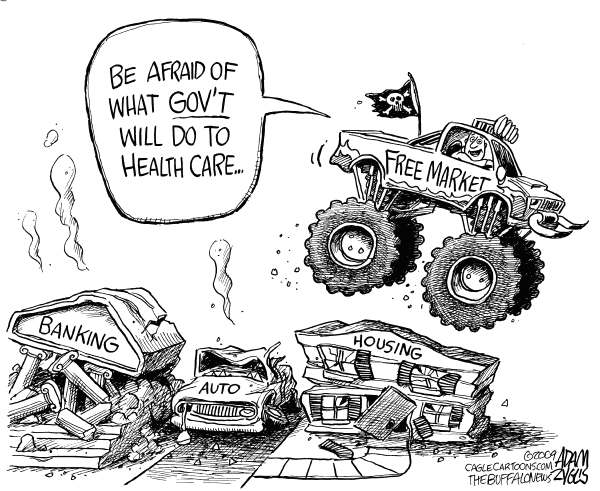
Sight Gag: In The Name of Free Markets

ef88d6d9-b531-4160-a519-b91c5687ca2egif

Credit: Adam Zyglis, Buffalo News

“Sight Gags” is our weekly nod to the ironic and carnivalesque in a vibrant democratic public culture.  We typically will not comment beyond offering an identifying label, leaving the images to “speak” for themselves as much as possible.  Of course, we invite you to comment … and to send us images that you think capture the carnival of contemporary democratic public culture.

 0 Comments

Kid Stuff

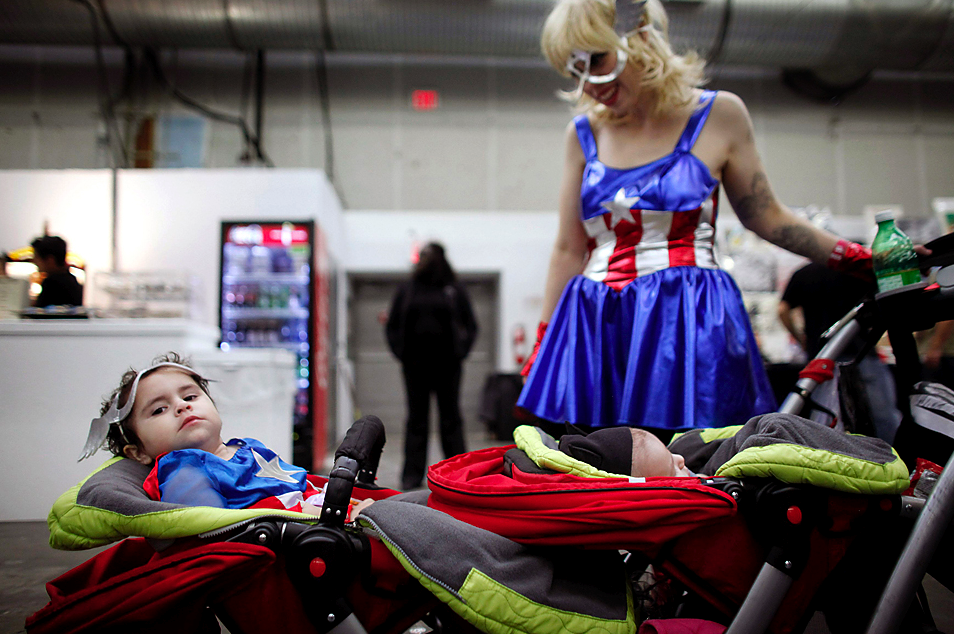
Kids have been in the news a good bit lately. A few months back you may recall the big flap when President Obama delivered a speech before school aged children and was accused of attempting to indoctrinate them with his “socialist ideology”: stay in school and work hard. Children, it seems, are especially susceptible to the siren song of presidential eloquence and need to be protected. Since then I’ve taken notice of the fact that children—much like animals—appear to show up more or less randomly in lots of the “pictures of the day” slide shows one finds on the websites of most national newspapers. What I mean by “randomly” is that such images oftentimes seem to have no direct connection to stories or events otherwise being reported. And yet it happens so regularly that it seems reasonable to assume that something is being communicated. But what? Consider three images that showed up this past week at the Wall Street Journal.
super-hero

Here we have a mother and her son dressed up in super hero costumes for the “Big Apple Comic-Con.” If you don’t know what that is, well, neither do I, and there is nothing in the WSJ that gives us a clue. And it is probably besides the point anyway. But what is the point? The picture seems to lack any real drama. The costumes seem altogether out of place—notice that no one around them seems to be in costume—and thus direct attention to the one thing that stands out: facial expressions. The mother, whose face is partially veiled by glasses and hair, smiles possessively at her child who in turn stares at the camera with what can only be described as a measure of both skepticism and resignation.

A second picture offers a point of comparison.
pakistan

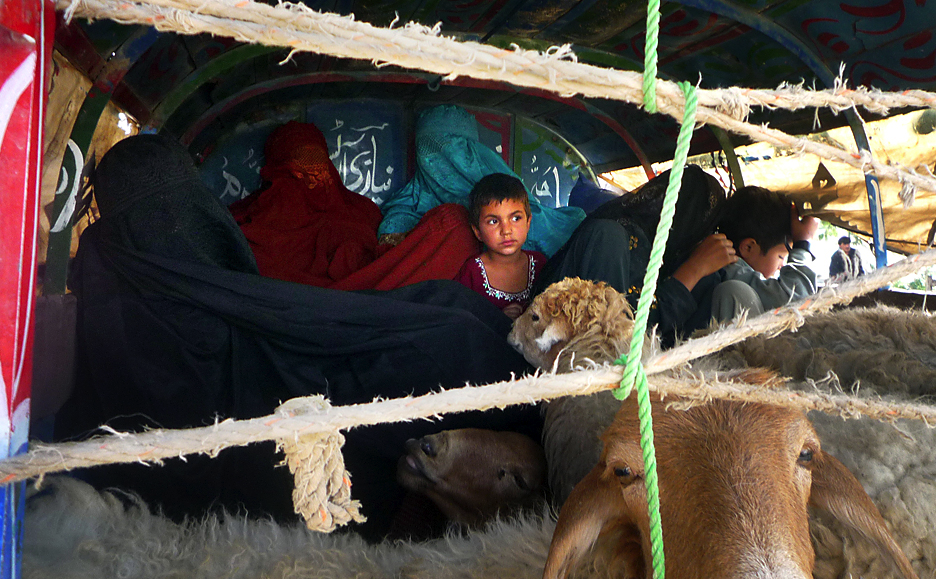
The photograph is of a “tribal family” fleeing a military attack against militants in South Waziristan, as they approach a checkpoint near Dera Ismail Khan, Pakistan. There is a bit more context here as the military assault against the Taliban leading to over 100,000 refugees was actually covered in the paper, but the affective meaning of the image itself is hard to read. All of the adults are women and their faces are veiled according to the local custom. What draws our attention once again is the face of a child, and once again the child bears the countenance of skepticism and resignation. The difference here, of course, is that the child is not looking directly at the camera—more in the manner of an offer than a demand—even as his countenance seems channeled by the goat in the lower right of the frame who does appear to be looking directly at the viewer.

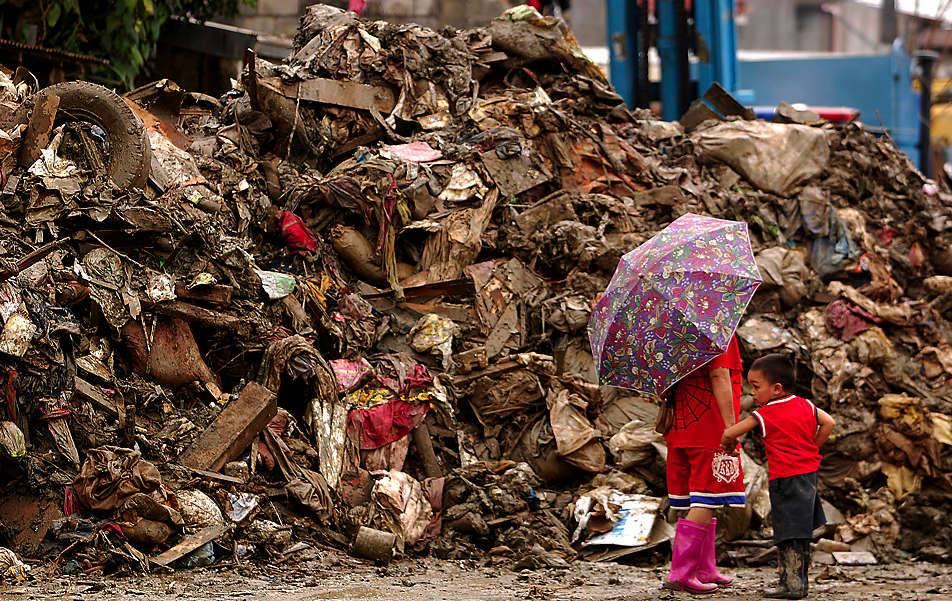
A third photograph of a mother and her child walking past a pile of debris left by a series of storms in the Philippines provides an additional point of comparison.
phillipines

Here, the scene is overwhelmed by what appears to be a mountain of rubble. Once again the face of the adult is veiled as our attention is directed to the face of child which channels the affect of the image. Once again that affect is difficult to read. It doesn’t quite seem to repeat the resignation of the first two images, but there does seem to be evoke a sense of discernment as something in the pile has captured his attention, even if he is not so concerned about it that he seems likely to disconnect from his mother and seek it out

I’m not entirely sure what to make out of this collection of photographs, but even though they are separated from one another in the slide show by other unrelated images, it is hard not to see some point of consonance. There is a degree to which the photographs animate a “Family of Man” sensibility as they direct us to something like the fundamental humanity of children from all around the world—New York, Pakistan, and the Philippines. But there seems to be something more going on here as well, as the affective force of each image emanates from the face and facial expression of a child that belies the presumption of their childlike innocence and intellectual naiveté in a way that suggests that children may be a bit more savvy than some think.

“Out of the mouths of babes” is an old proverb that reminds us that children are capable of knowing far more than we can imagine they know. Perhaps here we have something like the visual complement to that old saying that invites us to see the acumen that even the youngest of children can bring to the world.

Photo Credits: Natalie Behring/Reuters; Ishtiaq Mahsud/AP; Noel Celis/Agence France-Presse/Getty Images

 1 Comment

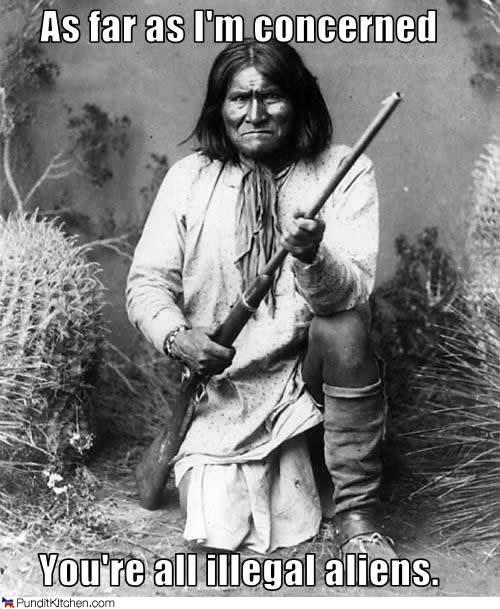
Sight Gag: Illegal Aliens

political-pictures-geronimo-illegal-aliens

Credit: punditkitchen

“Sight Gags” is our weekly nod to the ironic and carnivalesque in a vibrant democratic public culture.  We typically will not comment beyond offering an identifying label, leaving the images to “speak” for themselves as much as possible.  Of course, we invite you to comment … and to send us images that you think capture the carnival of contemporary democratic public culture.

 0 Comments

Sight Gag: War or Welfare … You Choose

healthcare

Credit: Oldamericancentury.org

“Sight Gags” is our weekly nod to the ironic and carnivalesque in a vibrant democratic public culture.  We typically will not comment beyond offering an identifying label, leaving the images to “speak” for themselves as much as possible.  Of course, we invite you to comment … and to send us images that you think capture the carnival of contemporary democratic public culture.

 1 Comment

Photographer's Showcase: A Cinema of Possibility

This week we welcome Stefano Boscutti to NCN.  Stefano articulates photojournalism with the genre of the newsreel to create what he calls “a cinema of possibility” designed to animate our “moral imagination.”  To see him discuss his work you can click on this interview.  Otherwise, click here or on the picture below to view one of his contemporary “newsreels.”  For his daily archive  of newsreels click here.

boscutti-newsreel-11

 1 Comment

The 800 Yard Stare

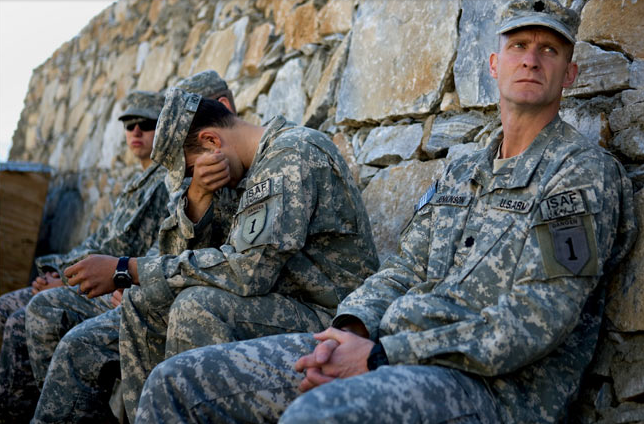
It is generally referred to as the “1,000 Yard Stare,” the blank, “no one is home” expression on the face of a combat veteran who has simply seen and done too much. No longer capable of adapting to the stresses and utter insanity of a troglodyte world of violence, the soldier becomes emotionally detached and disaffected, his humanity apparently leached from his body which remains something of an empty shell. It is arguably as old as war itself, but it was made popular by a Tom Lea painting that appeared in Life magazine during WW II and has become something of a visual trope for the devastating psychological effects of combat ever since (here, here, and here).

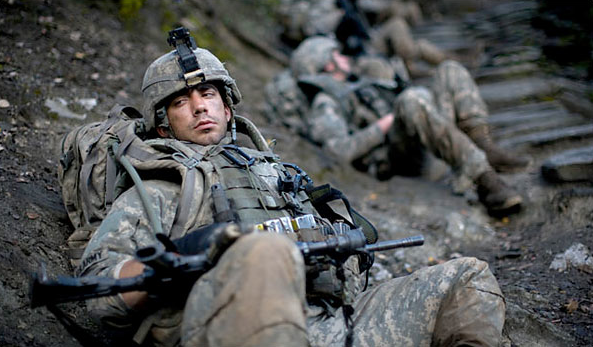
I was reminded of the 1,000 Yard Stare this weekend when I came across several photographs in the NYT that accompanied a story which wondered how high a price Americans were willing to pay in order to defeat the Taliban in Afghanistan. The article itself was characteristically balanced while failing to point out the minimum costs we have already expended since 2001, including 440 billion dollars, as well as 869 U.S. military fatalities. But the pictures themselves seem to tell – or show – a different story, posing the question in a slightly different register.

afghan-stare

The first picture was captioned with a simple and somewhat abstract legend, “Tough terrain: Americans on a break from patrolling the Korengal Valley last April.” The look on the soldier’s face is not quite the 1,000 Yard Stare, but one can see that it might not be too far into the future. We might call it the 800 Yard Stare. The photograph is shot from a low angle and with a wide aperture that visually accents his physical separation from the rest of his patrol, a visual harbinger perhaps of an impending, emotional detachment. And notice too that he shows signs of extreme fatigue while remaining tense and alert to the risks of the moment. “On break,” he can nevertheless not relax. The expression on his face makes it clear that he is “on edge.”

That the photograph is identified as having been taken in April might at first seem insignificant, a comment that functions little more perhaps than to mark the image as a file photo that has been hauled out of the archive to depict a somewhat ordinary and regular event. The real significance of that fact only becomes clear when we see the second photograph.

afghan-grief

The caption here reads “Grief: Eight days after he died in the patrol depicted at the top of the page, Pfc. Richard Dewter’s patrol held a memorial service for him.” It is not clear if the soldier featured in the top image is Pfc. Deweter or not, but in one sense at least it really doesn’t matter as the caption to the second image directs us to the pronounced, tragic pathos of the first image that now has the quality of an “about to die” photograph. But more than that, the second image repeats—and in repeating regularizes—the affect of the first. Once again we see a soldier somewhat physically detached from his patrol, with them and yet apart from them. Note too that while the expression on his face is not quite yet the 1000 Yard Stare, neither is it the “grief” towards which the caption directs our attention and which is clearly expressed by others in the image. And once again we see a soldier whose body is apparently incapable of responding to the natural demands of the moment as he gazes off into what would seem to be an almost certain future. The visual analogy between the two photographs, invoking another 800 Yard Stare, suggests the inevitable, tragic conclusion: here too is a soldier about to die.

And the question remains. What price are we willing to pay in order to defeat the Taliban in Afghanistan?

Photo Credit: Tyler Hicks/NYT

 1 Comment

Sight Gags: American Vice – The Seven Deadly Sins


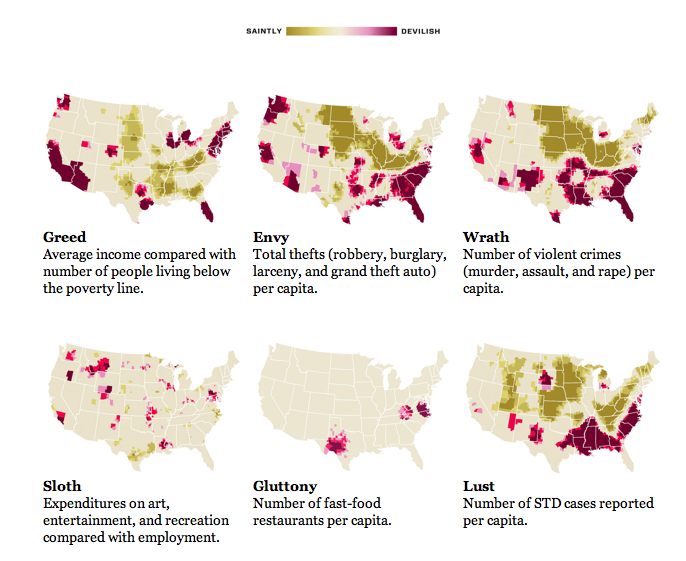
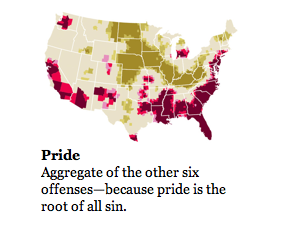
The folks at Wired Magazine have reported on a team from Kansas State that has generated a national map of the seven deadly sins by plotting per-capita status on things like theft (envy) and STDs (lust). They note that Christian clergy, no doubt concerned about the way in which the maps locate “Wrath Central” in the heart of the Bible Belt,  question the “science.” You decide.

7-sins

pride

Credit: Wired Magazine, 17.09

“Sight Gags” is our weekly nod to the ironic and carnivalesque in a vibrant democratic public culture.  We typically will not comment beyond offering an identifying label, leaving the images to “speak” for themselves as much as possible.  Of course, we invite you to comment … and to send us images that you think capture the carnival of contemporary democratic public culture.

 0 Comments

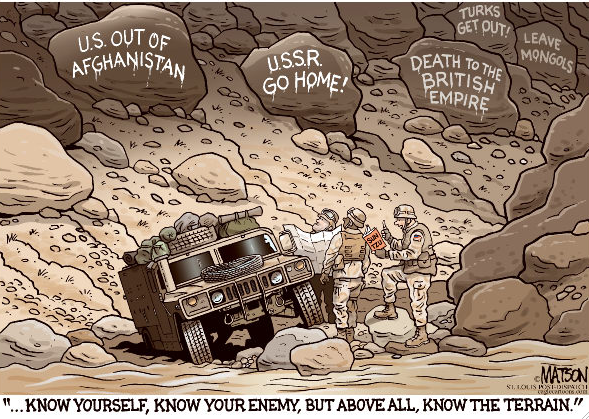
Sight Gag: "Those Who Cannot Remember the Past …"

know-yourself

Credit: Matson

“Sight Gags” is our weekly nod to the ironic and carnivalesque in a vibrant democratic public culture.  We typically will not comment beyond offering an identifying label, leaving the images to “speak” for themselves as much as possible.  Of course, we invite you to comment … and to send us images that you think capture the carnival of contemporary democratic public culture.

 0 Comments

The Bag Lady Wears Prada

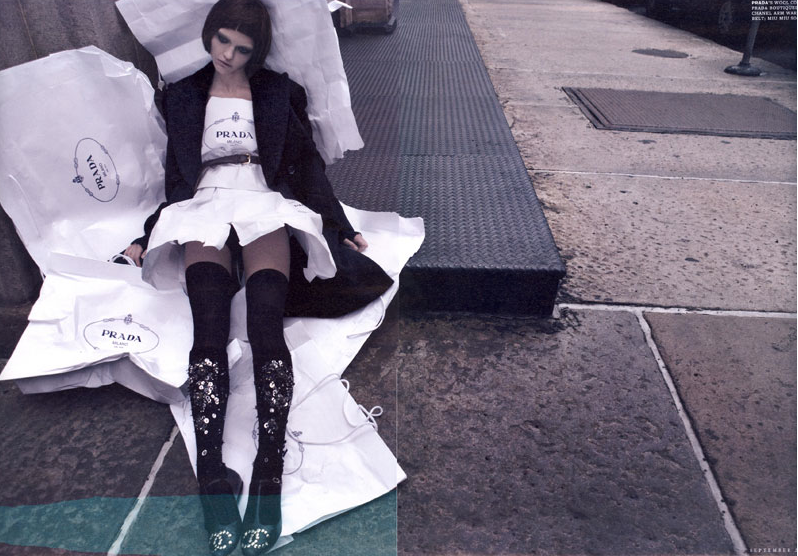
I admittedly know very little about the ultra chic world of haute couture, but I nevertheless was struck dumb by a recent story in the NYT which reported that the high fashion magazine W had published a 28 page photo spread animated by the theme of “homeless chic.” It has been over a week now and I still find myself somewhat speechless.

the-homeless-wear-prada

The world of high fashion is a fantasy world and I’m fine with that. We all have fantasies—equipment for living—that help us to buffer the demands and stresses of everyday life; and truth to tell, human existence in general would be poorer without the imagination that fuels and is in turn fueled by the world of fantasy. There is a little bit of Walter Mitty in all of us, and it’s a good thing too. But, of course, there are limits. Sometimes those limits are driven by material and objective realities—either WMD existed in Iraq or they did not—and sometimes they are driven by a moral sensibility—either claims to racial superiority are socially acceptable or they are not. And sometimes both. But in any case, when our fantasy life exceeds the common sense—and more, when it takes advantage of the less fortunate or puts others at risk—we need to step back and question the implications of the world we imagine.

The photograph above is the eighth of fourteen images that appeared under the title Paper Bag Princess. It shows an “urban waif … all wrapped up in designer wear—and wares.” More specifically she appears to be asleep in an alleyway and the caption tells us that she is wearing a Prada wool coat and belt, Chanel arm warmers, and Miu Miu socks. But of course, she is wearing more than just designer clothes. Her stylish dress, which seductively reveals her skinny, alabaster thighs, is made from a white paper shopping bag that sports the Prada logo. And more, she has “fashioned” a bed and pillow out of five or six other similar shopping bags. Apparently relegated to sleeping in a back street alley, she is nevertheless stylish. Who says the homeless and forsaken can’t live in fashionable comfort!

The photograph—and indeed the entire photo spread—is morally callous. Unlike other attempts in the world of fashion and elsewhere to romanticize the homeless, casting them in various registers as noble or tragic figures, or in some instances as the eccentric and lovable bag lady, here the representation is a visual irony that operates at an odd and disconcerting intersection between empathy and disgust, invoking an affect—“homeless chic”—that conflates the frivolous with the grotesque. What makes it especially problematic is how it reduces homelessness to what in the title of the layout it calls “street style,” as if living on the street was an entirely and freely chosen identity or mode of being; operationalizes that street style in terms of our cultural stereotype of the “waif”; and then visually mocks the stereotype as if its representation bears little or no moral consequence.

One can only wonder what is really being peddled here. Surely not clothing. In the 1980s Rosalyn Carter gave an interview in which she accounted for the public adoration of then President Reagan by noting that “he makes us feel comfortable with our prejudices.” In no small measure this photo layout seems to be doing something similar as it invites the audience that might identify with the world of high fashion to don the fantasy that homelessness is a cosmetic problem that can be solved with just the right sense of style and vogue.

Would ‘twer that it were true.

Photo Credits: Craig McDean/W Magazine

 9 Comments