Jun 12, 2009
May 25, 2009
Jul 15, 2009
Mar 07, 2012
May 15, 2011
May 18, 2011

Of Totems and Taboos

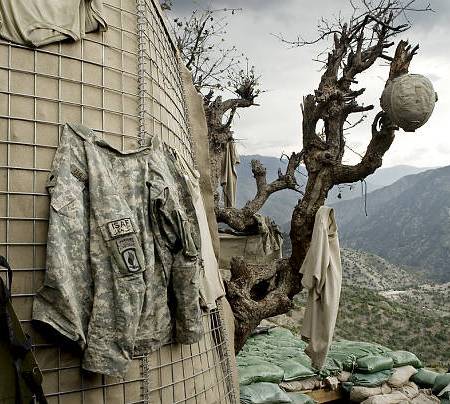
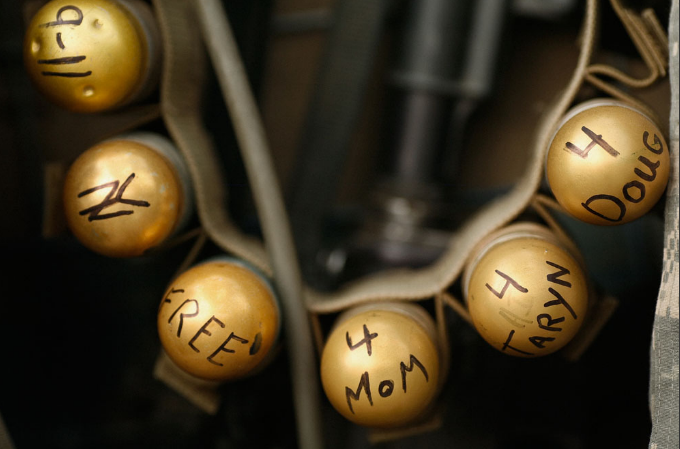
I have spent countless hours the past few days reading the many remembrances of and testimonials to the work of Chris Hondros and Tim Hetherington.  I knew neither of them except by their work, but that work touched me deeply, as it has many, many others, worldwide, and for me their loss is both tragic and palpable.  In addition to reading about them I have also been staring at the massive archive of images that they left behind.  There are so many photographs worth lingering over that it does both men a disservice to focus on only one, but the truth is that one image—by Tim Hetherington—has haunted me ever since I first encountered it in the Fall of 2007 and I feel the need to comment on it here in eulogium.

The photograph was taken in Afghanistan while Hetherington was attached to a platoon in the Korengal Valley. It showed up at the time in a number of mainstream photographic slideshows and I believe that it was included in his 2010 book Infidel (although I don’t have a copy handy so I can’t confirm that).  More immediately, it has been included in many of the retrospectives of his work that have appeared in recent days (e.g., see here and here).

The power of the image is borne in some measure by its apparent simplicity as a still life photograph—an aesthetically beautiful rendering of the form of mundane, everyday objects.   But of course, there’s the rub, since for those who live outside of a war zone a bandoleer of grenades is not an everyday object … let alone a mundane one.  The photograph is thus dialectical in the sense that it calls attention to two different worlds, the one where the image accents the irony between form and content as if to call attention to a taboo, and the one where the image functions as something of a totem that lends order and structure—social meaning—to the community for  which it serves as an emblem.

If this was simply a photograph of a bandoleer of grenades it would an unsettling, artistic rendering of the weapons of war.  But what makes this an especially disturbing photograph—operating exactly at the point of  tension between totem and taboo— is that the grenades are not represented as mere instruments of death and destruction, but are in fact personalized so as to identify their usage as tokens in an economy of righteous indignation and vengeance.   “War,” writes Chris Hedges, “is a force that gives us meaning.”  And here, we see that meaning expressed in a totemic ritual by those who are actually asked to do the fighting—the killing and the dying.

Such totemic marking is not uncommon, nor is it unique to the U.S. military, but acknowledging as much serves only to underscore the somewhat primal force that perhaps animates, and in any case unleashes, the blood lust of war. And the markings in this photograph are revealing in this regard.  “9/11”and “NY” are obvious and the most easily understandable as they call attention to the somewhat iconic cause of the war, functioning in their way as “Remember the Alamo” or “Remember the Maine” might have at an earlier time. “4 Taryn” and “4 Doug” are a bit more difficult to decipher, but one might assume that they are friends or comrades whose lives had been lost either on the fateful day of 9/11 or subsequently.  But what is important to note here is how such a dedication of the ordinance shifts the meaning of the war from that of an international geopolitical conflict fought between nations—or between nations and terrorists—to that of a more private, personal motivation.  No longer fighting just for the nation, we fight for Taryn and Doug.  “4 Mom” is the most disquieting of all, for it seems to locate the casus belli outside of specific events (9/11) or the deaths of particular individuals (Taryn and Doug) and situates it in a more fundamental cultural difference between “us” and “them” defined here as familial and generational.

It bears attention as well that one grenade is marked “free,” as if to indicate that it is not yet clear in whose name it will be used, but to imply that it is not just a technology of physical death and material destruction, but that indeed its force is no less symbolic and no less powerful and damaging for being so.  And note too that the slot in the upper right hand corner is empty, the absent grenade a reminder that the photograph is not just a representation of potential power, but the marker of an active force that has already been expended.

In WW II the Office of War Information commissioned a series of documentary films designed ostensibly to answer the question “Why We Fight” as a motivational tool for supporting the war effort.  Here, in a single image, Tim Hetherington seems to have raised the question once again, albeit with a different purpose.  And the answers we divine should surely give us pause.

Tim and Chris, RIP
 

 1 Comment

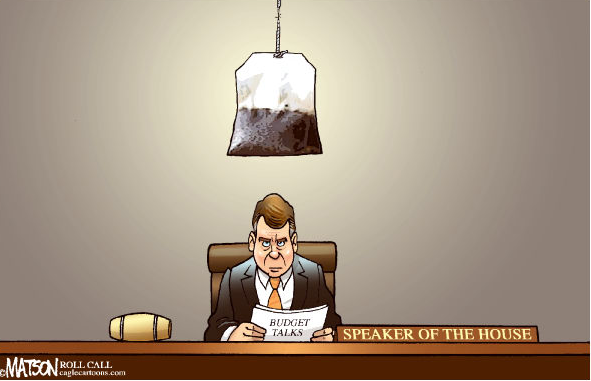
Sight Gag: The Tea Bag of Damocles

Credit: R. Matson/Roll Call

Sight Gags” is our weekly nod to the ironic, satiric, parodic, and carnivalesque performances that are an important part of a vibrant democratic public culture.  These “gags” may not always be funny or represent a familiar point of view, but they attempt to cut through the lies, hypocrisy, shamelessness, stupidity, complacency, and other vices of democratic life.  We typically will not comment beyond offering an identifying label, leaving the images to “speak” for themselves as much as possible.  Of course, we invite you to comment … and to send us images that you think might deserve a laugh or at least a wry and rueful look.


 0 Comments

In Memoriam: Tim Hetherington and Chris Hondros

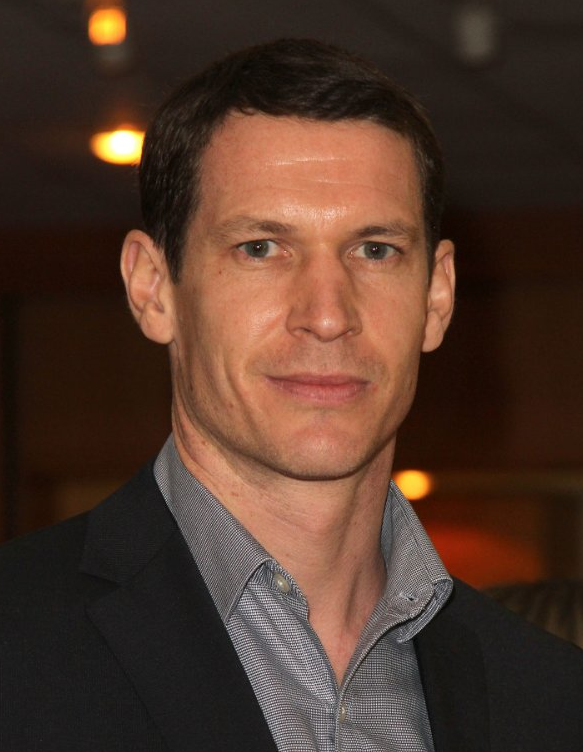
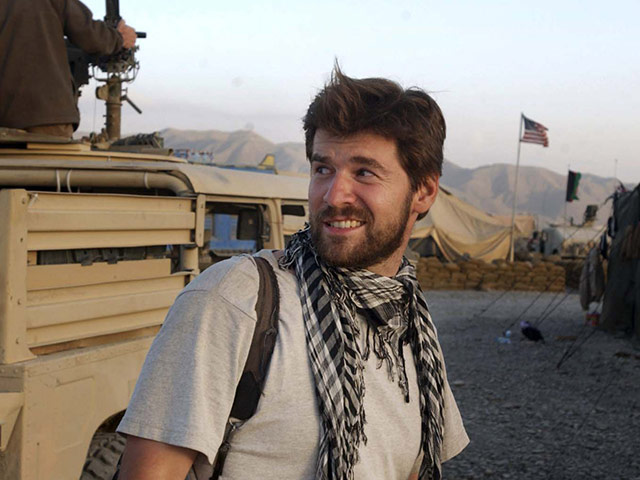
He could have had it all, if he had just played it safe.  Instead, Tim Hetherington had this crazy idea that he might help others, even at the risk of his own life.  He could have cashed in on his looks and talent, but instead he took his camera and went into one war zone after another so that the world would know what was really happening behind the abstractions and the lies.  And then, on Wednesday, the photographer paid the full price for his commitment to conflict photography.

And the same can be said again.  Chris Hondros was killed in the same attack.  Hetherington may get more press as he was the producer and director of Restrepo, the award-winning documentary film from the Afghan war, but they both could have had easy lives far away from the front lines.   Hondros also won awards, and he also got inside the news and then grabbed your attention so that you could no longer see categories instead of people.  Galleries of his work are here and here.  We have posted on images by both photographers, and wish we had done more.

Photography is used for everything from astronomy to porn to selling vegetables, but photojournalism has an inescapable compact with violence.  Without documentary photos of aggression and suffering, a society’s moral sense would be enfeebled and its capacity to behave ethically would be diminished.  Photojournalism, for all its limitations, continually confronts us with two brutally intertwined facts: humans destroy one another, and we are bound to one another nonetheless.  The individual photographers will go into the war zone for many reasons, including the high it offers (as Chris Hedges has admitted), but the most important reason is that they are trying to be agents of conscience.  The risks they take to do so can be extreme.  All they ask in return is that we pay attention: that is, really look at the world and recognize the people living there.

The violent world; our world.  A world that just became a bit emptier.

Photographs from Valerie Macon/Getty Images, public domain, and Tim Hetherington/Panos Pictures.

Update: An excellent archive of articles, commentary, and interviews is at Photojournalism Links.

 0 Comments

A Second Look: The Family of Man

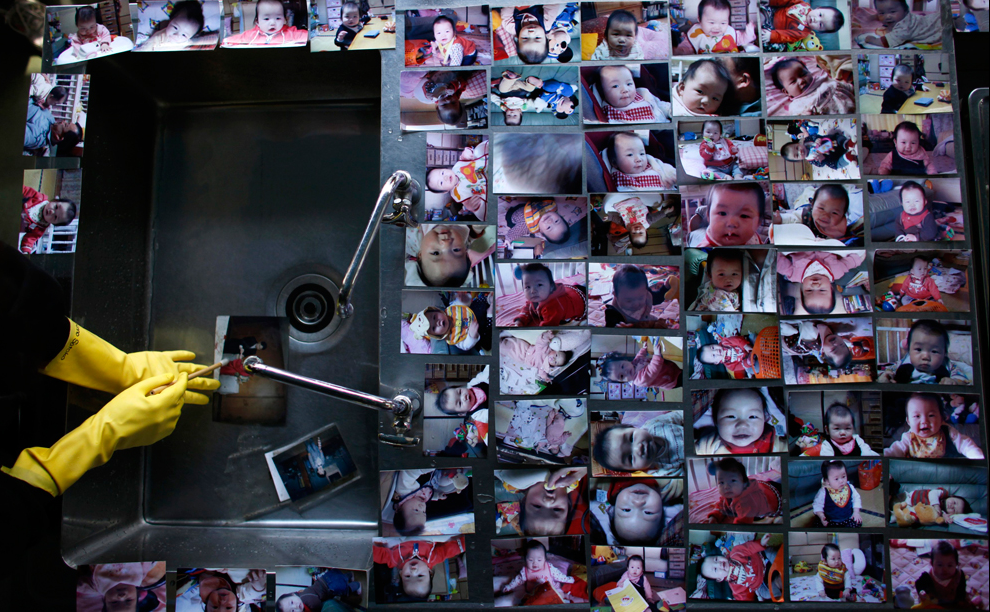
Last month I commented on the profusion of photographs showing up in slideshows reporting on the discovery of snapshots and family photo albums in the detritus left in the wake of the earthquake and tsunami in Japan.  The title of the post, “The Family of Man,” was borrowed from the most famous photo exhibition ever, curated by Edward Steichen in the 1955 and viewed by more than nine million people throughout the world.  The point of the exhibit was to call attention to a common humanity that presumably transcended cultural differences worldwide, and the point of my post was to underscore the way in which the snapshot or family photo album was a modern affectation that marked something of a common humanity designed to activate a powerful stranger relationality.  On reflection, however, I believe that I was only partially correct and there is much more to be said.

The photograph above appeared on the front page of the NYT this past week (4/13/11), occupying the top half of the page above the fold.  Prime space!  It was not connected to any front page story.  The caption notes that they are photos that had been damaged by the March Tsunami and had been recovered, cleaned, and left to dry.  And indeed, the image indicates both the magnitude of the task and the almost surgical care with which it is being executed.  These photographs, snapshots that one might find in any family photo album, clearly matter.  And it should not escape notice that they are all photographs of beautiful young children, markers of both the modern family and the national future.  There are many other similar photographs of such snapshots floating about the web and I probably would have ignored this one but for the prominent placement in the newspaper and the second sentence of the caption: “The nuclear alert level was raised on Tuesday.”  The apparent non sequitur notwithstanding, I was struck by how a  people ravaged by a devastating natural disaster and facing a continuing and dangerous nuclear emergency nevertheless have the time and resources to recover and preserve the family photographic record.    And I was struck too by the fact that the NYT would feature it without connecting it to an apparently relevant news article.  My original point about the importance of representing a common humanity and a powerful stranger relationality seemed secure.

But then this week I learned that three WP photographers had just won the Pulitzer Prize for their work on last year’s earthquake in Haiti.  The photographs focus on bodies.  Many of the images are grotesque and the overall affect is gut wrenching.  But more to the point, they collectively evoke a sense of pity, rather than a common humanity or stranger relationality. One doesn’t find such photos in any of the slide shows reporting on the disaster in Japan, where the emphasis is on destruction to infrastructure and advanced technology—a point vaguely gestured to by the caption for the photograph above concerning the nuclear alert level.  And when one does see pictures of bodies in the archive of Japanese images they are invariably treated with a profound funeral respect.  One might feel sorrow in the face of such images, but not pity. More to the point, not a single one of the WP photographs includes an image of a lost or found snapshot or photo album.  And lest the sample seem too small, a search of the hundreds of photographs of the Haitian disaster that appeared in the NYT, or in slideshows at websites like the Boston Globe’s Big Picture or totallycoolpix.com, confirms the point.

There may be reasons that explain this, to be sure.  Japan is a modern society with a technologically advanced infrastructure, Haiti is an economically undeveloped country mired in massive poverty. In short, all Haiti had to lose were bodies.  And yet for all of that, the disparity of visual representation is telling.   When we look West to Japan we see something rather like ourselves, and the themes and conventions of dignity and decorum that we employ in such representations are the ones that we would employ in representing ourselves.  When we look beyond our borders to the South, however, we see something altogether different, an otherness marked by a shift in both theme and the stylistic tokens of propriety.  And, oddly enough, the distinction here between looking West and South is signified correspondingly by the presence and absence of snapshots and family photo albums, cultural artifacts which, in the end, are less about the family of man and the powerful stranger relationality it purports to animate, and more about the conventions of a narrow and particular kind of economic and technological modernity.

Photo Credit:  Toru Hanai/Reuters


 1 Comment

Documenting Life on the Verge of Catastrophe

Sometimes a mundane photograph can capture historical conditions that usually are obscured by powerful habits of denial.

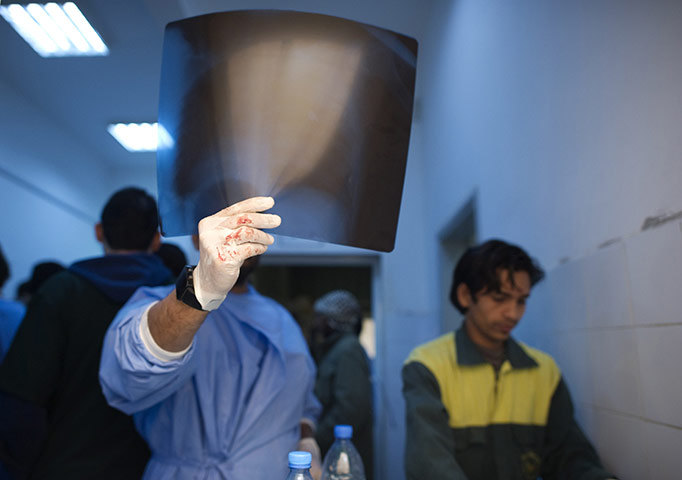
This image of a doctor reading an X-ray certainly seems part of the mundane world: that is, a world of cinder-block walls, florescent lighting, bottled water, and people standing around waiting.  The trick of having the film replace the doctor’s face does add a touch of aesthetic flair, and the caption, which tells us that he is treating a rebel fighter in Libya, suggests that the scene is part of a larger historical drama, but all that is muted by the blue tone, the static figures, and the matter-of-fact demeanor of the orderly on the right.  Even in an emergency room, there can be business as usual.

Except for the blood on that white glove.  What could in fact also be a typical feature of medical practice here acts as a punctum, in the sense introduced by Roland Barthes in Camera Lucida.  It pierces our complacent response to touch us emotionally and awaken a more critical engagement with the photograph.  Is that blood fresh?  Even if not, why hasn’t he changed gloves?  How dire is the situation?  (It feels almost as if he has pulled that X-ray film out of the body cavity of the patient.)  And why is he reading it in the hallway?

The last question begins to peel back the familiar response to the photo to expose something else.  What kind of medical facility is this, where water has to come in bottles, where orderlies aren’t in uniform, where X-rays have to be read by the rude light of a corridor, and where the doctors are having to do diagnostic work amidst people milling about?

In The Civil Contract of Photography Ariella Azoulay uses the concept of being “on the verge of catastrophe” to describe the condition of a population that is deprived of resources and otherwise injured to the point where it is just above becoming a humanitarian disaster.  Azoulay argues that Israeli  governing techniques keep the Palestinians in the occupied territories and Gaza in this condition indefinitely.  (Corroborating evidence includes Wikileaks documents quoted here.)

Her argument need not be limited to that single case, however.  These controlled catastrophes appear banal enough that their visible harms fall short of the urgency and drama required for the intensive news coverage that might prompt outrage and action.  Consider Azoulay’s first example of how this works, which is a photograph of a doctor reading an X-ray in Me’in village: “bare, dusty walls, a dirty space, the use of the natural light coming from the door due to the lack of electricity, the absence of proper equipment for examing X-rays, the conspicuously detached encounter between doctor and patient, the improvised clinic in which medical examinations are made amid people who are having a makeshift picnic after waiting for hours at the checkpoints” (p. 69).  As you can see, it is not the same photograph and yet is it the same photograph as the one above, right down to what you can’t see here: the center of that photo dominated by a hand holding a blurry X-ray.

That film, at once opaque and yet capable of still being read by someone with suitable training and dedication, can stand for the photographs themselves.  The conditions for response are less than ideal, but we can see what is there if we will but make the effort in solidarity with those who have been injured.

These photos are being taken all around the globe: photos of situations that are not and yet are the same.  Libya may have a better future than the Palestinian past, but don’t count on it.  Africa is littered with broken villages, regions, and states from decades of warfare and anarchy, and the larger forces at work in the Libyan war have much of the Middle East locked into political and economic stagnation.  Libya may have been on the verge of catastrophe for decades, and it now may be trading one form of sustainable disaster for another.

What we can’t say, however, is that we never saw it coming.

Photograph by Odd Andersen/AFP-Getty Images.

 0 Comments

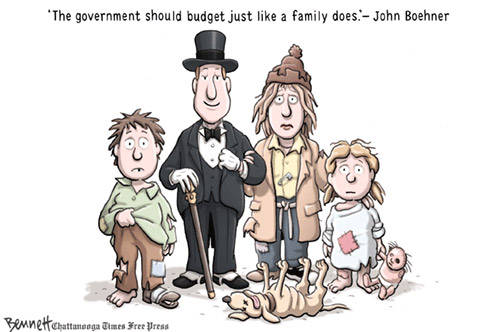
Sight Gag: GOP Family Values


Credit: Clay Bennett

Sight Gags” is our weekly nod to the ironic, satiric, parodic, and carnivalesque performances that are an important part of a vibrant democratic public culture.  These “gags” may not always be funny or represent a familiar point of view, but they attempt to cut through the lies, hypocrisy, shamelessness, stupidity, complacency, and other vices of democratic life.  We typically will not comment beyond offering an identifying label, leaving the images to “speak” for themselves as much as possible.  Of course, we invite you to comment … and to send us images that you think might deserve a laugh or at least a wry and rueful look.

 0 Comments

What is a Veil, if You are not in France?

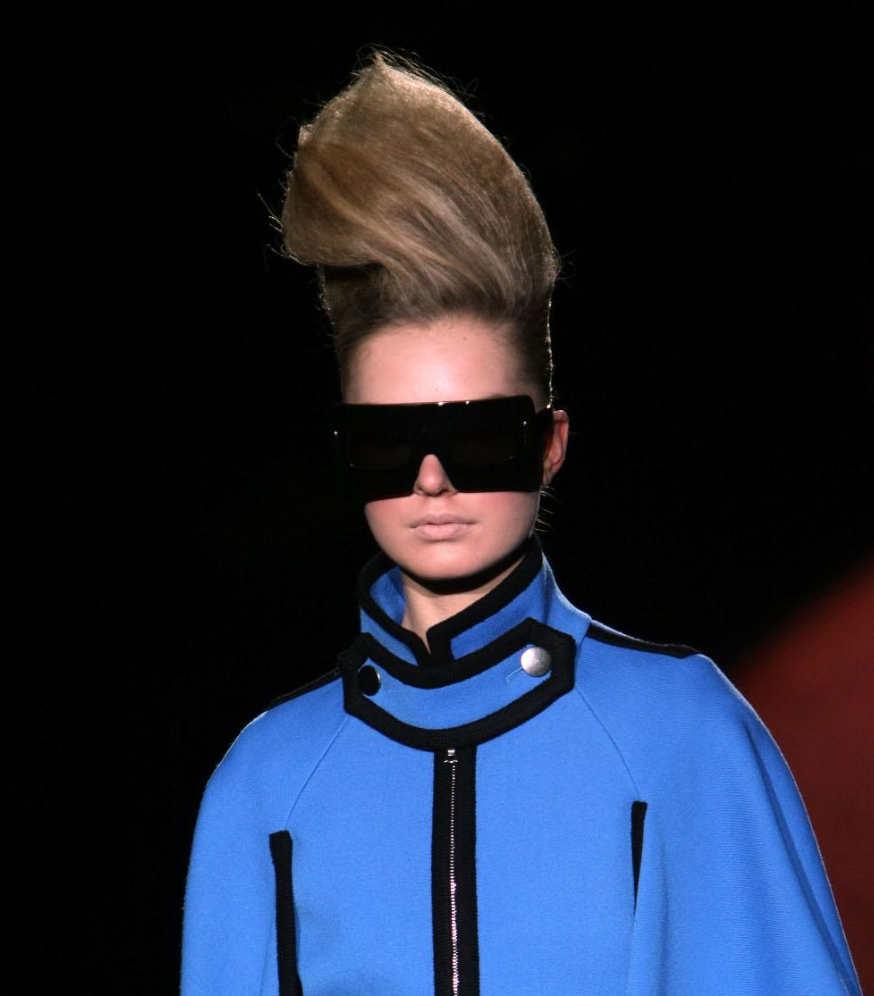
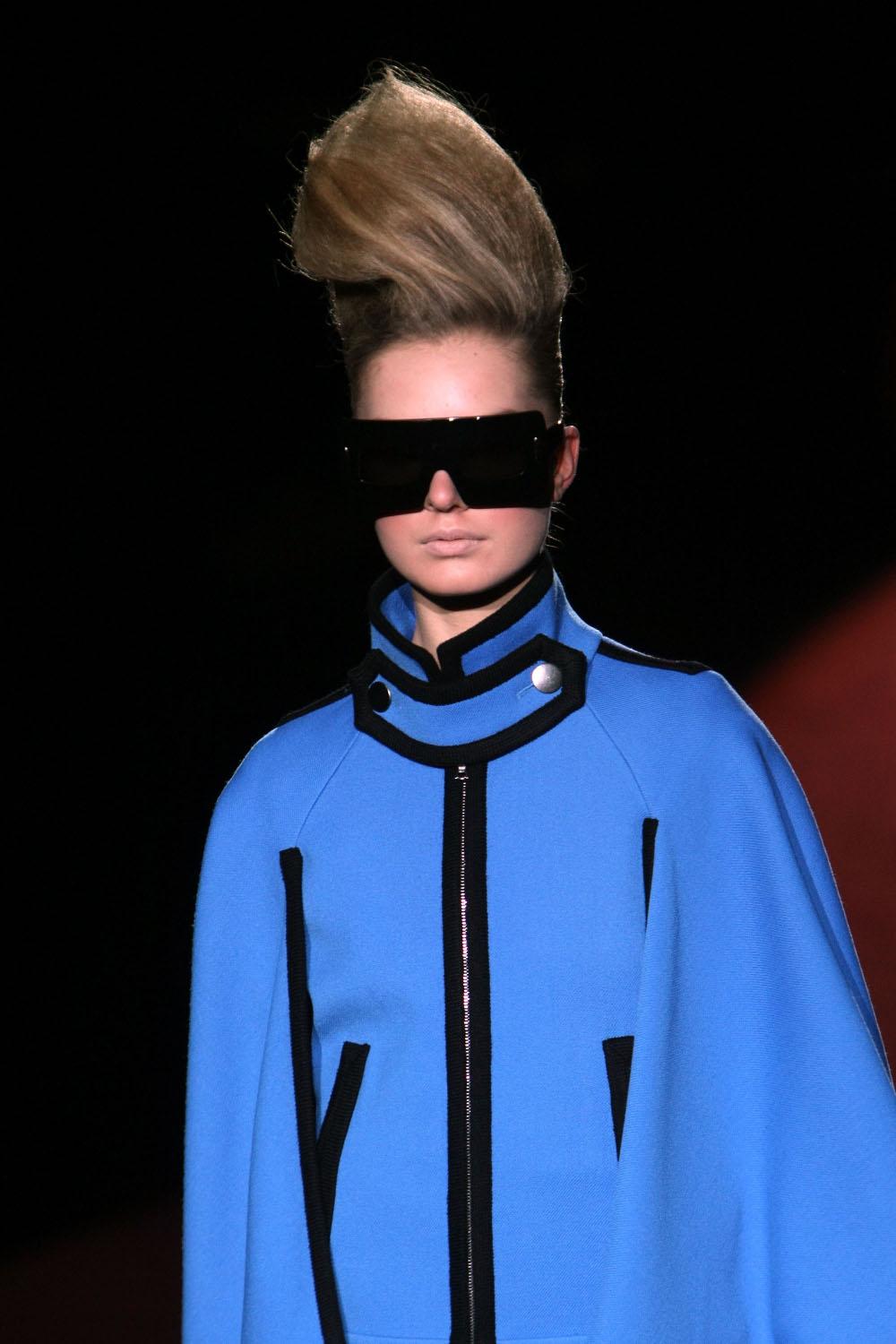
The French have banned wearing a veil in public.  Good luck with that, mon ami.  I don’t know the first thing about French law, but I can’t help but wonder how they are going to hold to a narrow definition of the veil.  I suspect that they are defining it in terms of religious use–as constitutionally committed to being a secular state, they can do that–which dodges the question otherwise while putting them far away from American habits of thought about religious freedom.  Even so, there has to be a palpable sense of inconsistency, doesn’t there, when you consider how prevalent–and dare I say, chic–sunglasses are in every modern society?

So, is she veiled or not?  I’m sure I don’t need more examples, although hundreds are available.  (Indeed, I’ve even made the point before, but until European governments start following my advice, I guess I have to keep on giving it.)  But let’s not stop there.

OK, not so chic, but not exactly a model of transparency either.  Take off the screwy goggles and hat, and you couldn’t pick her out of a line-up.  And who knows?  Perhaps someone who wears baggy T-shirts and does home-brew metal work might be a terrorist.  You don’t need a burqa to be dangerous; all you really need is a good reason to blow.  As long as the Green Bay Packers keep winning, however, we should be fine.

I can imagine a traveler from Afghanistan seeing each of these women and reporting back home that “some women in America are veiled, but you wouldn’t believe how strange their veils can be.”  If so, would they be completely off the mark?  Well, yes, they would be, but that really isn’t the point.  What we do is strange enough even if the analogy with the veil breaks down, and I doubt we really know what we are doing or why we do it.  Modern life involves a range of techniques for denying visibility in one direction while allowing it in another.  When the asymmetry is too explicit, as with the Islamic veil, we become anxious.  We shouldn’t believe for a minute, however, that the customary alternative is to see one another as if face to face.

Photograph of the Green Bay Packer fan by Mike Roemer/Associated Press.

 0 Comments

Allegories of War, Then and Now

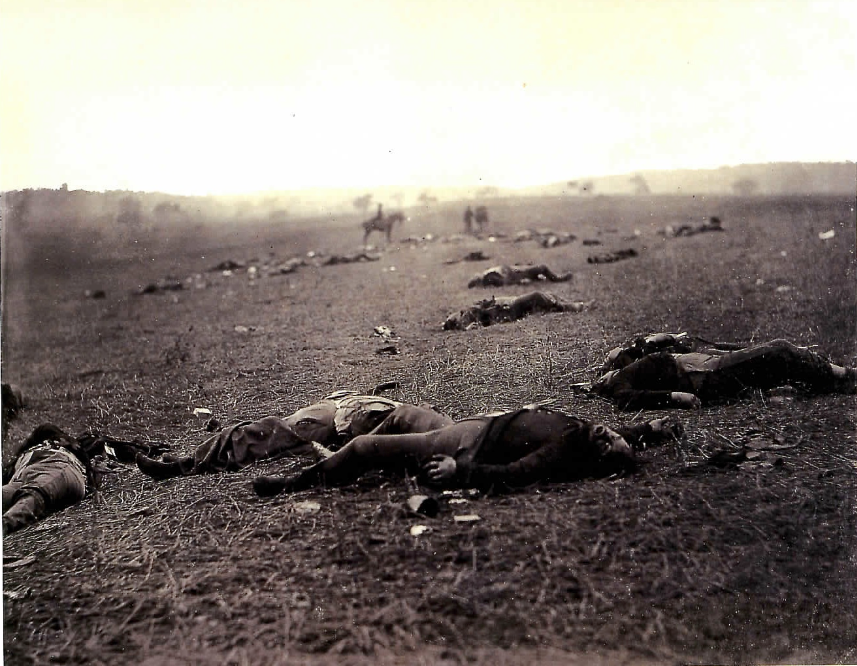
It was 150 years ago (April 12, 1861) that the deadliest war in U.S. history commenced, casting in its wake over 625,000 military deaths and an incalculably large number of non-fatal casualties.  And while the nearly five year conflict between northern federalists and southern confederates was not the first war to leave behind an extensive photographic record—that honor goes to the Crimean War and the efforts of Robert Fenton—its photographic record is nevertheless extensive and impressive, particularly given the state of photographic technology at the time.

There is no shortage of photographs that one could point to as emblematic of the so-called “civil war,” portraits and landscapes alike, and as the sesquicentennial celebration unfolds over the next five years we will not doubt see many of them on display, marking the war in general as well as the specific anniversary of particular battles.  And that is as it should be.  Nevertheless, one photograph stands out above them all—at least in my estimation—as a powerful and searing allegory of war itself.  That photograph, seen above, is Timothy O’Sullivan’s “A Harvest of Death.”

The photograph appeared originally in Alexander Gardner’s Photographic Sketchbook of the American Civil War, published in 1866.  The image displays the fields of Gettysburg in the aftermath of the three day battle that left nearly 8,000 dead bodies.  Captioned by Gardner, the photograph is accompanied by a legend that identifies the dead bodies as “rebels” who “paid with life the price of their treason.”  That characterization has been contested in recent times and is almost surely incorrect, as there is compelling evidence that many of the dead bodies are actually union soldiers. But whether the men who once occupied those bodies fought for one cause or another is really beside the point, for what the photograph shows are the utter and abject effects of war that truly know no ideological boundaries—no right or wrong, no good or evil.  Indeed, notice how the image is minimalist in the extreme in this regard.  Dead bodies in a field, virtually indistinguishable from one another.  It could be anywhere in the world—and, of course, it has been.  What more is there to know?

But of course, there is more.  In the absence of a pall to cover the bodies it is clear that all suffer alike, and not just those represented in the image, but those who dare to view it as well—both then and now, both up close and at a distance. Shot so that the frontal plane of the photographer/ viewer parallels the frontal plane of the scene itself, the photograph is framed by a frontal angle that not only objectifies the scene by purporting to show all that there is to show, but it also directly involves the viewer in the world being represented. Whether we like it or not, we too are part of this world, pulled in further by the linear perspective of the image that draws our vision from the clear and sharply focused bodies in the foreground to the smaller bodies that seem to extend to the hazy horizon … and beyond.

And there is more still, for the bodies themselves, while lifeless, nevertheless perform for the viewer, miming the grotesqueries of an undignified death. Again in Gardner’s words, they recall “the ancient legends of men torn in pieces by the savage wantonness of fiends.”  Note in particular the soldier closest to the front of the image, his face contorted, his mouth open as in a silent scream that relies upon no ethnic or national language and that will never die out.

Alas, and for all the many things that war may be, there is no denying that it is fundamentally a harvest of death. As we sow, so shall we reap.

Photo Credit: Timothy Sullivan/Alexander Gardner

 3 Comments

Visualizing Complex Systems

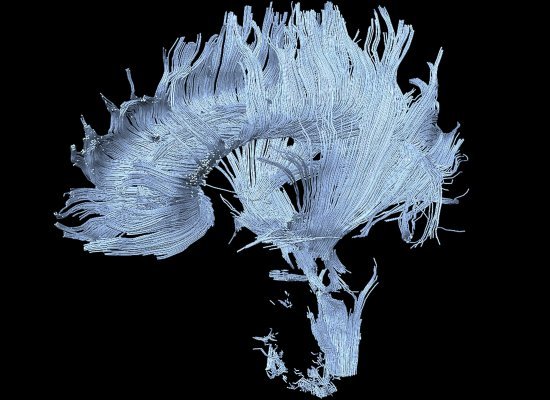
It’s a fine thing to know thyself, I’m told.  If only that were as easy to do as it is to say.  One of the ironies of the modern era is that the incredible achievements of science and technology have led primarily to knowledge of the natural world–even to the distant edges of the universe and the beginning of time.  There has not been a corresponding increase in the ability to know what it is to be human, to be a society, or to be an individual person–indeed, those goals have become ever more complicated by the advances that have occurred in the natural and human sciences.  Recent developments in imaging technologies provide intriguing demonstrations of how the production of knowledge can bring us both closer to and farther away from knowledge of who we are.

This stunning image presents axion pathways in a live human brain.  It seems to impart immediately an aesthetic knowledge of human consciousness, and reflexively so: I see an essential dimension of neural organization, and my brain looks at another version of itself.  The beauty of the vibrantly interwoven blue tracery against the black background suggests complexity and density, while its visual analogies with hair, helmut, crest, and other natural and artistic forms carries the image, like consciousness itself, across the divide between inside and outside, seen and unseen, self and world.

But aesthetic knowledge alone goes only so far, at least in this domain.  Does this image impart anything else to those not studying axion pathways?  Does it extend the horizons of self-knowledge to include a more articulate sense of our inner world, or does it create an illusion of self-knowledge and of scientific mastery of what remains almost completely unknown?  Consider these additional options as well: perhaps it constructs a model of human being that will lead inquiry down one path but not another–toward, say, reductive knowledge of bodily functioning rather than understanding emergent properties in complex systems.  Or it might offer not merely knowledge but possibility, that is, an ability to visualize complexity in a manner that might lead to productive analogies and genuine insights regarding how human beings are creatures with a remarkable capacity (though not the only one) for transferring information across networks.

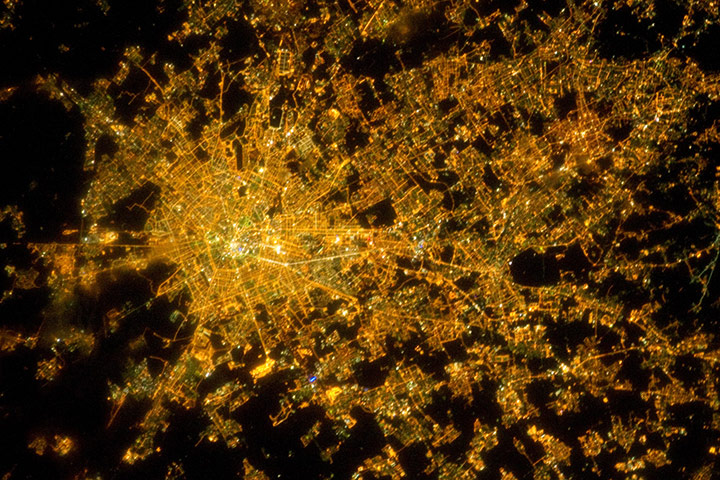
Networks like this one, for example.  It could be a circuit board, but it is the city of Milan, Italy.  The radiant energies are palpable yet not threatening, perhaps because of the broad distribution throughout the system.  Though a vast fabrication of streets and buildings on an electric grid, it seems almost organic, as if a life form that had grown through cellular replication in close adaptation with its physical environment.  There is a decorative beauty to the array, which articulates both nodal intensities and patterned expansion.  Frankly, it looks smart: as if intelligence had emerged through the growth of complexity.

As so we know ourselves a bit better, perhaps, for seeing these images, but imperfectly so.  For example, the self-awareness activated by the first image is in fact flawed: the brain belongs to a stroke victim, and, happily, your brain stem probably looks quite different than the one above.  Likewise, the experience of the city on the ground will usually have little relationship to what is seen here, not least when encountering any of the problems sure to be a part of life on the street.

Both of these images provide an opportunity for thinking anew precisely because they are the result of extraordinary instrumentation: we cannot otherwise see into the brain or from the vantage of the International Space Station.   They can be misleading for the same reason.  Even so, I think these and others like them present a marvelous opportunity to better understand the human species, modern societies, and perhaps even how you or I are embedded in complex systems that each are partial analogues of the others.

MRI by Henning U. Voss and Nicholas D. Schiff; and ISS/NASA.

 0 Comments

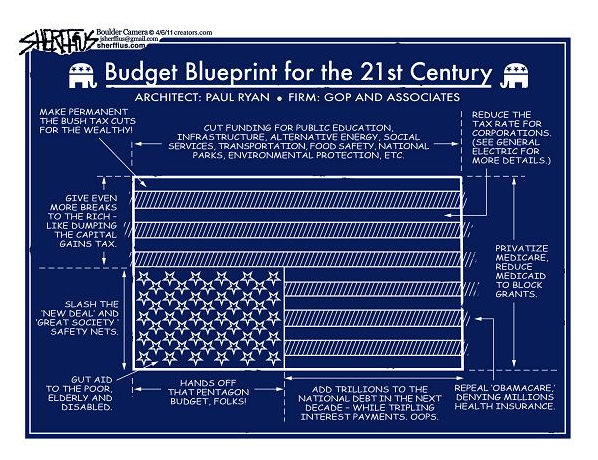
Sight Gag: A Blue Print for Budget Reduction

Credit: John Sherffius

Sight Gags” is our weekly nod to the ironic, satiric, parodic, and carnivalesque performances that are an important part of a vibrant democratic public culture.  These “gags” may not always be funny or represent a familiar point of view, but they attempt to cut through the lies, hypocrisy, shamelessness, stupidity, complacency, and other vices of democratic life.  We typically will not comment beyond offering an identifying label, leaving the images to “speak” for themselves as much as possible.  Of course, we invite you to comment … and to send us images that you think might deserve a laugh or at least a wry and rueful look.


 1 Comment