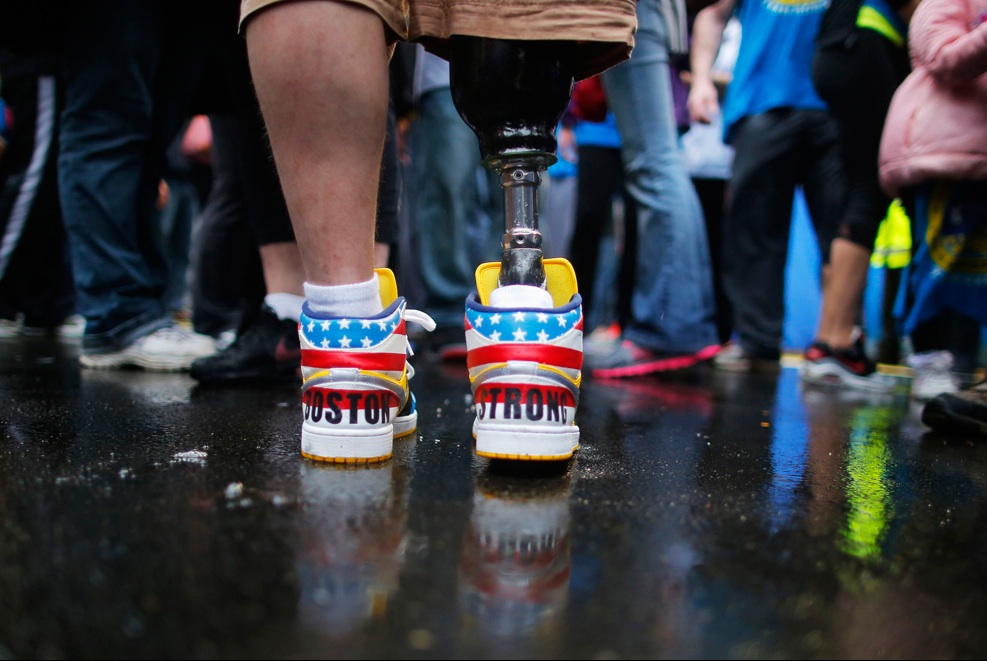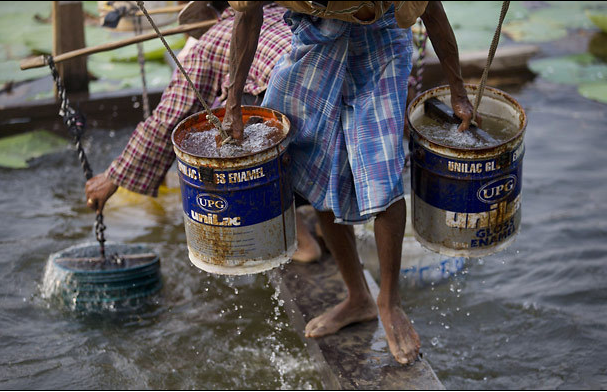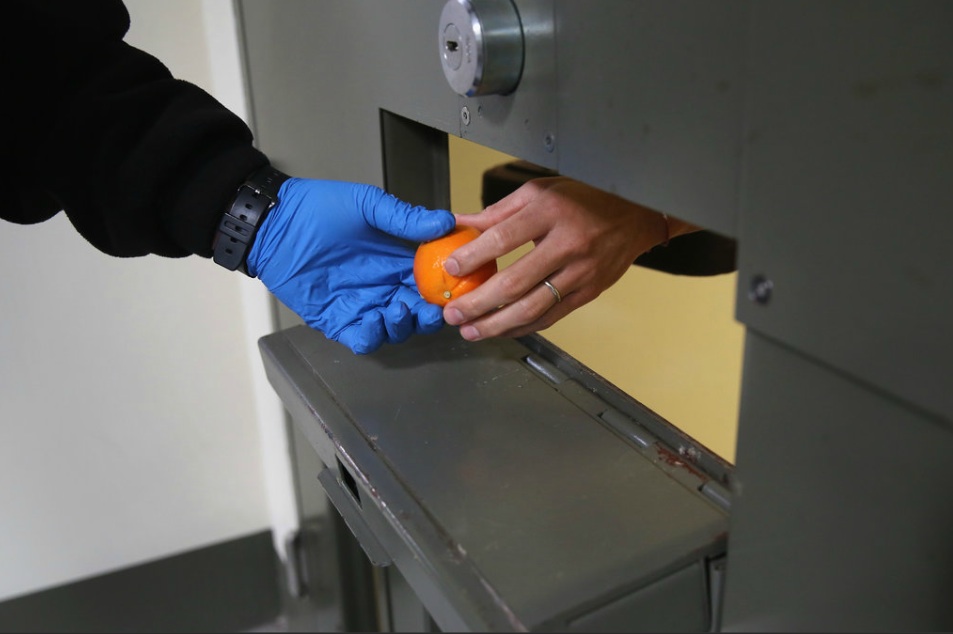
NO CAPTION NEEDED
ICONIC PHOTOGRAPHS, PUBLIC CULTURE, AND LIBERAL DEMOCRACY

No Caption Needed is a book and a blog, each dedicated to discussion of the role that photojournalism and other visual practices play in a vital democratic society. No caption needed, but many are provided. . . .

April 29th, 2013

“Oh Happy Day”

Posted by Lucaites in boots and hands, visual memory

Screen shot 2013-04-28 at 9.06.07 PM

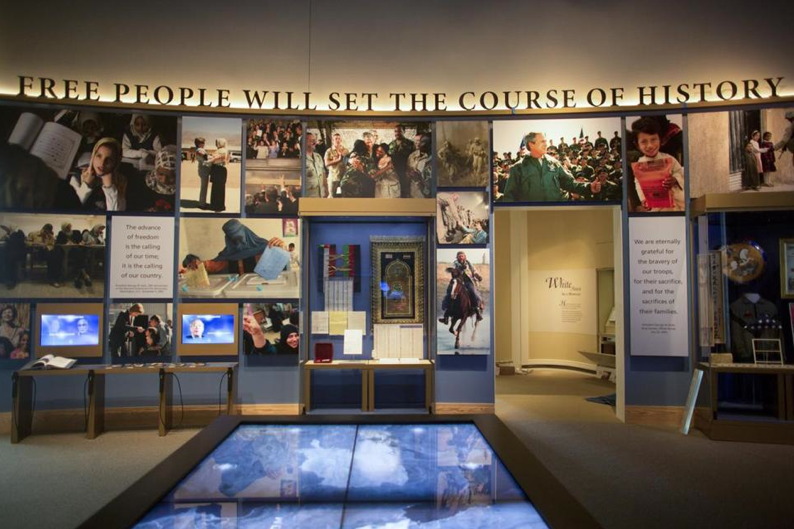
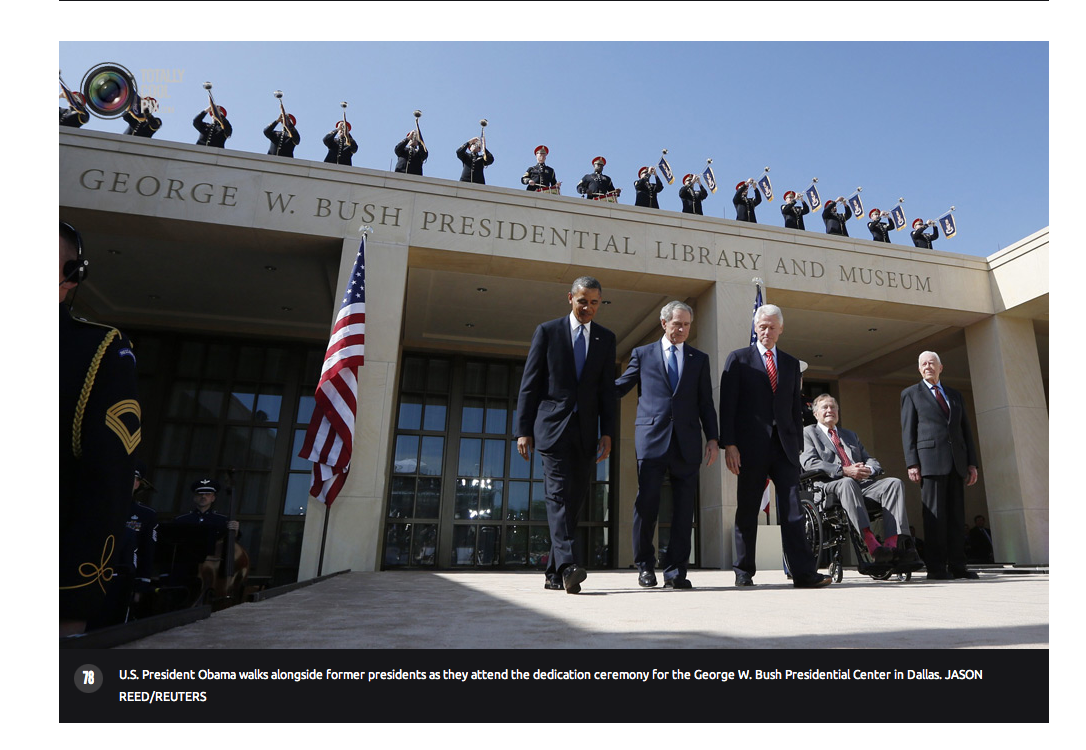
This past week marked the dedication of the George W. Bush Presidential Library and Museum at Southern Methodist University.  “Oh happy day,” announced the former president.  And as is the convention with such dedications, it was a grand celebration of the past president’s legacy.  And for the most part photojournalists followed the script, featuring numerous images of the five living presidents collected together in fraternal solidarity, as well as snapshots of various library exhibits such as the dedication to “free people” shown above, or in photographs of Barney and Miss Beazley’s food dishes and the former president’s baseball collection.

The dominant theme for the library is “What would you have done?” inviting visitors to participate with interactive displays allowing them to second guess the president’s various controversial policy decisions, from the search for weapons of mass destruction to the handling of Hurricane Katrina to addressing the debacle on Wall Street, and more.  Ironically enough, such judgments were rarely if ever solicited during the president’s two administrations and when they were expressed by various publics (or “free peoples”) they were systematically ignored.  But it is of course impossible to visualize something that did not occur—and in any case is not featured in the museum—and so the best that photojournalists were able to do was to call attention to the glitz and glamour.

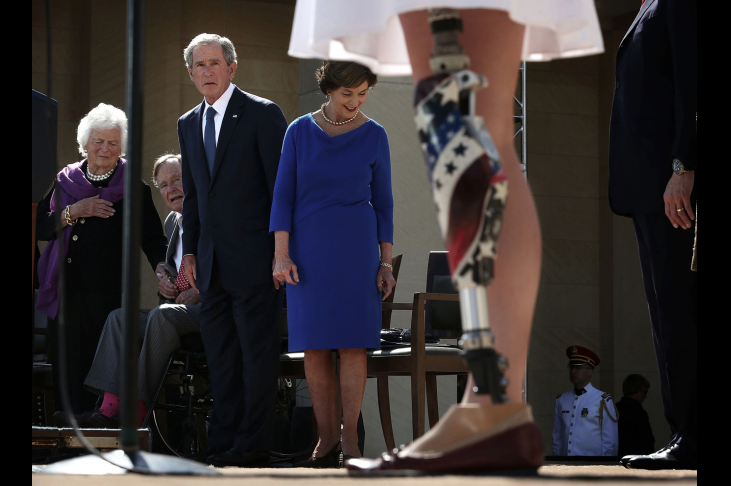
One photograph, however, broke through the veneer of praise and acclaim that dominated the day’s festivities, although it was not featured in very many places.

Screen shot 2013-04-28 at 8.58.31 PM

The prosthetic leg belongs to Army 1st Lt. Melissa Stockwell (Ret.), the first female American soldier to lose a limb during the war in Iraq. She is reciting the Pledge of Allegiance with the Bush family standing in the background.  Interestingly enough, neither of the former first ladies is looking directly at Lt. Stockwell, each carefully averting their eyes, while former President George W. Bush appears to be staring at her with a befuddled and confused look on his face.  We can only imagine what he might actually be thinking, but his gaze clearly directs our attention to her star spangled, red, white and blue prosthesis, an ersatz symbol of the personal and private cost of the war in Iraq that contrasts with the shape and contour of her remaining, normal leg.

We cannot see Lt. Stockwell’s face, but perhaps that is altogether appropriate, for while she is without doubt a hero and the cost to her has been inestimable, she is not alone. Indeed, she stands literally to represent the more than 1,300 military personnel who have lost an arm or a leg (with more than 40 triple amputees and 5 quadruple amputees) in Iraq or Afghanistan (and with more than 63% from the war in Iraq alone).  Perhaps this photograph and those statistics should be featured at the museum exhibit which announces: “No stockpiles of W.M.D. were found.”

After all, if a “free people” are truly to “set the course of history” they should have access to all of the facts.

Credit: Allison V. Smith/NYT; Alex Wong/Getty Images

March 3rd, 2013

Sight Gag: Working Together For the Common Good

Posted by Lucaites in boots and hands, sight gags

Clay Bennett editorial cartoon


Credit: Clay Bennett, Chattanooga Times Free Press

Sight Gag is our weekly nod to the ironic, satiric, parodic, and carnivalesque performances that are an important part of a vibrant democratic public culture.  These “gags” may not always be funny or represent a familiar point of view, but they attempt to cut through the lies, hypocrisy, shamelessness, stupidity, complacency, and other vices of democratic life.  Of course, we invite you to comment … and to send us images that you think might deserve a laugh or at least a wry and rueful look by those who are thinking about the character of public life today.

December 19th, 2012

After Newtown: Tokenism or Culture Change?

Posted by Hariman in boots and hands, the visual public

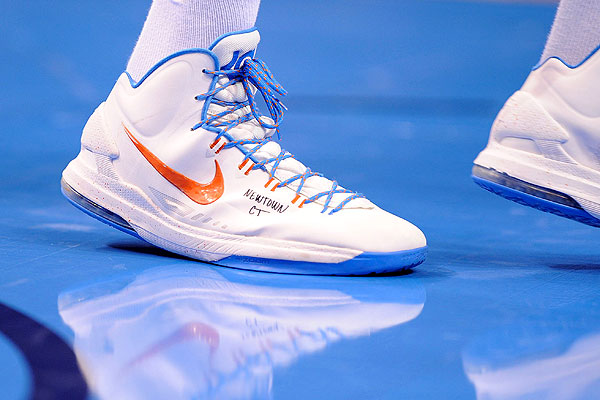
This is one photo that probably wasn’t included in the slide shows at the major papers this week.

nba_u_durant11_600

And why not, some might say, isn’t one memorial to the victims in Newtown as good as another?  Well, no, not really, but the show must go on in pro sports, and so perhaps this is the best that Kevin Durant could do, all things considered.  If you look closely, you can see that he has written “Newtown CT” on the shoe that he wore for the Friday night game.  Nor was he alone: players and teams around the NBA and NFL put names on shoes and gloves, pasted decals on helmets, observed moments of silence, and otherwise had token observances across their scoreboards, end zones, and assorted other media.

And the New England Patriots even went to far as to donate $25,000 for the families of the victims.  Really.  And if you don’t believe it, just tune in to ESPN, which is making darn sure that everyone knows just how much the sports world cares, really cares, about the tragedy.

It’s hard, very hard, not to be cynical about these token gestures.  Indeed, I think the photo above neatly captures just how small and temporary they are: compared to the gleaming arena floor, polished like the finest glass, and the Nike swoosh, which represents a lucrative shoe contract for a global market, the small, black lettering is sure to be discarded soon, which will hardly matter as no one without a telephoto lens could see it anyway.  Ditto the tiny helmet decals, the player Tweets, and any other efforts to laminate compassion onto celebrity.

But that’s too easy.  Just about every candle, teddy bear, classroom letter, and prayer chain is also but a gesture.  And if the better memorial would have been to cancel the game, well, how many of you refused to go to work on Friday or Monday because you thought doing so would dishonor the dead?  The truth is, there is very little that anyone can do in response to such senseless slaughter, and that applies not only for distant strangers but also for close friends and family of the bereaved.  And however mixed the motives might be in the business of sports, one shouldn’t be too quick to assume that nothing is sincere.  (I’m told that Kevin Durant is a fine human being.)  So, token gestures become part of the story of how a nation deals with social rupture.

Of course, nothing said above should excuse pro sports for some of its excesses.  Individual players perhaps should get a pass, but the organizations may indeed need to consider that the better response really is to do nothing–or, if they really want to help the people in their own backyard, to do it right.  (Certain prominent figures on the religious right might want to take a hard look into that same mirror.)  But, again, the matter at hand is about more than pro sports or any other single institution.  The hope that many of us have this week–the one we hold on to against the shock and grief and dismay–is that this time the carnage might really bring the country to its senses about its culture of violence.  And although the resistance will be extensive, there are signs that change could be happening already.

One of the interesting things about American democracy is that it can be stalemated for so long and then seemingly transform itself in a few years.  Think of what happened after Pearl Harbor, or what has happened in the past few years regarding the acceptance of homosexuality (even the word now sounds antique).  The strength of the political culture is that it’s not just a political culture–that is, a subculture defined solely by a political class, although there is some of that–but instead richly intertwined with all the rest of society.  Think of the importance of integrating pro sports for civil rights, not just then but continuously, and look at how so many different people and organizations respond in kind to disasters such as hurricanes, floods, earthquakes–and shootings.  In those situations, what otherwise would be tokenism can become something else: a small but visible commitment to real change.

Guns are not unknown among pro athletes, so hypocrisy may yet prove to be the norm there and elsewhere as well.  But I hope that something else could be in the works, there and especially elsewhere.  In any case, the change requires silent, personal, private resolve to think differently–and not least to move beyond the political habits that were part of the prior stalemate.  Thinking differently is easier to do, however, if it can be done in small ways that can be shared with others who might want to do the same.  And to be shared with other citizens, there is nothing like doing something that can be seen.  So this week I’m giving token gestures of solidarity a pass, and in the hope that this time the nation can raise its game to a higher level of play.

Photograph by Jerome Maron/USA Today Sports.

December 3rd, 2012

The Gestural Economy of Hands and Faces

Posted by Lucaites in boots and hands, no caption needed

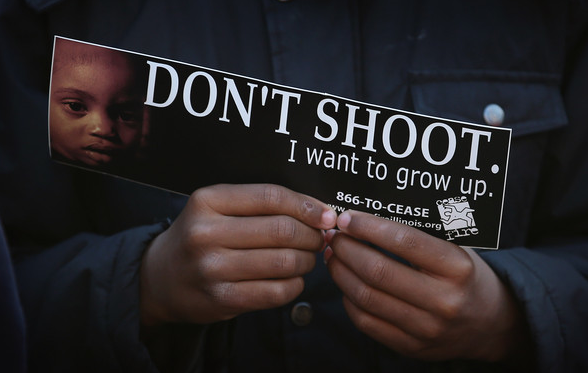
Images of hands (and feet) have become stock images in the photojournalist’s tool kit.  If you look at the slide shows that appear daily and weekly on the web you will find them to be ubiquitous.  Indeed, they have become something of a gestural remediation in the movement from oral to visual representation.  This should not surprise us since hand movements have long been an important part of the orator’s stock in trade.  And what is especially important is that such images access and animate an important gestural economy of emotions and identifications that cross all manner of affective relations and demographic boundaries even as they accent race, gender, age, and other categories as well.  What is most significant here is that they challenge the more common convention of identifying and representing actors is featuring their faces (the primary marker of liberal individualism).  We typically do not identify individuals by their hands or feet alone, and the reason is palpable: hands and feet underscore human similarity even as they mark difference.  And as a result, they become important sites for encouraging empathy or compassion—although these are clearly not the only emotions that such images underscore.

The photograph above is interesting in this regard as it places two conventions in tension with one another, as both face and hands are present, though it is the hands that are most prominent, and not simply because they are larger and more to scale, or because they are more prominent in the photograph, but also because they are a first order representation, while the face on the bumper sticker is a second order representation (a photograph of a photograph).  The hands, in this sense, are “more” real, and while they could belong to the child pictured on the bumper sticker, we can’t know that for sure.  And so the photograph encourages us to consider the relationship between the two—both the hands and face and the orders of representation in which they operate.  In short, the hands, which are front and center and mark a universal humanity, hold and display a sentiment that no doubt effects the child pictured, but potentially extends beyond him or her as well—one can imagine other children on display.  The photograph is part of a slide show that marks a peace rally on Chicago’s South Side, and so it marks a particular event, but it also stands as an invitation to consider the sense in which the random and criminal violence that cuts young lives (and others) too short is larger than any one city.

But of course, there are limits here as well.  And the juxtaposition of face and hands indicates that as well.  To get the point, substitute the face of a white child on the bumper sticker.  There is no doubt that white children are the victims of random and criminal violence in our urban centers, but on the whole that is not the core of the problem (though a problem it is, to be sure).  And so even as the focus on the hands frames exigency as more or less universal—and thus invites a more generalized compassion, if not responsibility for the situation—the face in the background is a reminder that like most problems this one is localized by particular sites and circumstances.

Photo Credit: Scott Olson/Getty Images North America

September 10th, 2012

Hiding the Cost of War

Posted by Lucaites in boots and hands, visualizing war

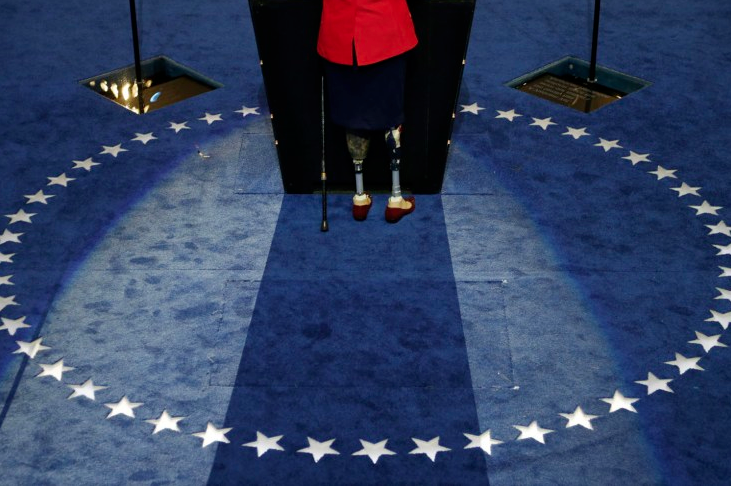
The photograph above is of Tammy Duckworth, a candidate for U.S. Congress in Illinois’ Eighth District, speaking at the Democratic National Convention this past week. She is also a war hero, having been among the first women to fly combat missions in Iraq, losing both of her legs when a grenade landed in her lap while piloting a Blackhawk helicopter north of Baghdad.  Her opponent for Congress, the incumbent Republican Joe Walsh has accused her of not being a “true hero” because she makes a point of discussing her military service in her campaign.  To quote former President Clinton in a different context, “that takes some brass,” especially coming from someone who has never served a day in the military in his life.  But the photograph above is not about Congressman Walsh’s Neanderthal attitudes nor even about Tammy Duckworth’s heroic service and sacrifice to her nation—or at least not explicitly so.

Shot from behind the podium and at a high angle that crops her body at the waist and accents her prosthetic legs, the photograph emphasizes what the viewing audience could not see—at least not while she was speaking. Viewed from the front we see a face, the marker of the liberal individual, a person.  And any person who can make their way onto the national stage to address a live audience of thousands and a mass mediated audience of millions can’t be doing all that bad.

Viewed from the back, however, the photograph invites a different story.  It reminds us of the terrible price that this individual paid—and now note that she is anonymous, faceless, another casualty of war but not one that we have to address directly.  In short, the photograph is an aide memoire to what we desperately don’t want to see, to what we want actively to forget: that we sent her into battle and the price she paid is really our debt, but it is a debt we have no way of paying.

In a sense, the photograph is a comment on the hundreds of images we see of the more than 1,200 veterans who have lost limbs in the Iraq and Afghanistan wars and yet, through the wonders of modern medical technology (ironically made possible because of advances in “war medicine”), survived to live what appear to be so-called “normal” lives.  And indeed, it is the emphasis on appearance that is very much to the point, for in the end we rarely learn very much about the ordinary lives that such people live and pain, trauma, and hardships that they face.

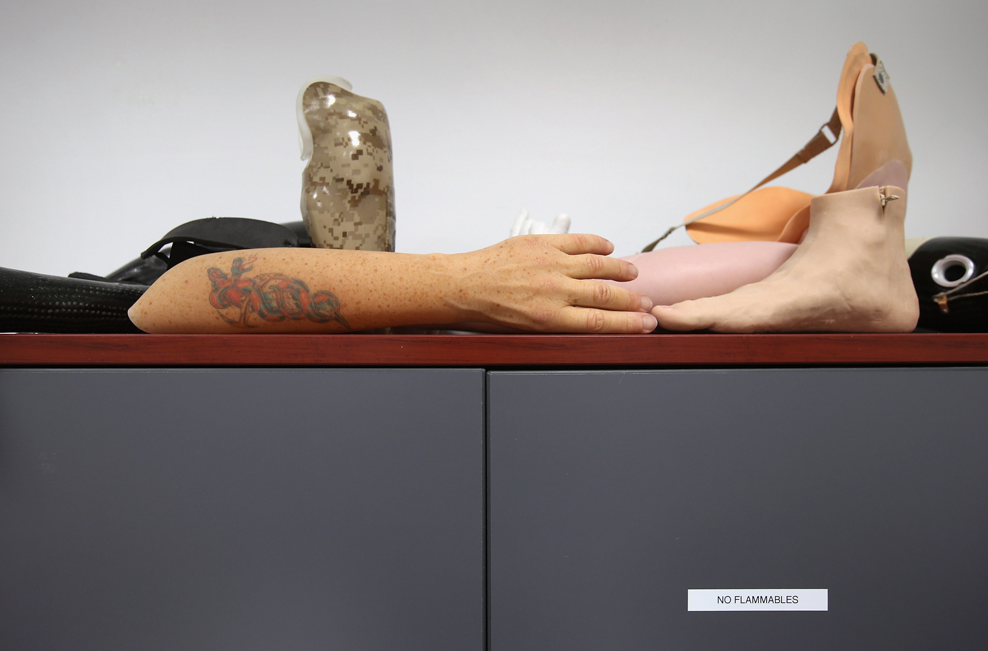
Consider, for example, this photograph that appeared recently in a slide show dedicated to the recovery of war veterans at Brooke Army Medical Center.

What you are looking at here are not real arms and legs, but rather “life-like covers” designed to slip over prosthetic limbs so as to masquerade a disability and to hide it from public view.  Note in particular the customized tattoos on the arm that make it appear to be individual and personal. There is every reason to believe that an amputee would want to be “seen” as normal, to hide his or her stigma, and thus to mask their prosthesis with a “life-like cover.”  Or rather there is every reason to believe that this is how someone who does not share such a disability—a so called “normal” person—might imagine how an amputee would want to cover-up his or her “shame.”  But really, the shame is ours and such “life-like covers” function, at least on par, as a veil that makes it easier for us to forget or to ignore our complicity with the sacrifice such men and women have made and the real debts that have to be paid.

Photo Credit: Charlie Neibergall/AP; John Moore/Getty Images

August 27th, 2012

“I Guess, You Know, Stuff Happens”

Posted by Lucaites in boots and hands, catastrophe

You might have heard that there was a shooting in midtown Manhattan late last week.  It was in all of the papers and on the nightly news. Of course, then again, such events seem to be routine so maybe you missed it.  The perpetrator got off five rounds, all aimed directly at his target; the police got off seventeen shots.  Nine bystanders were hit with bullets.  Do the math.

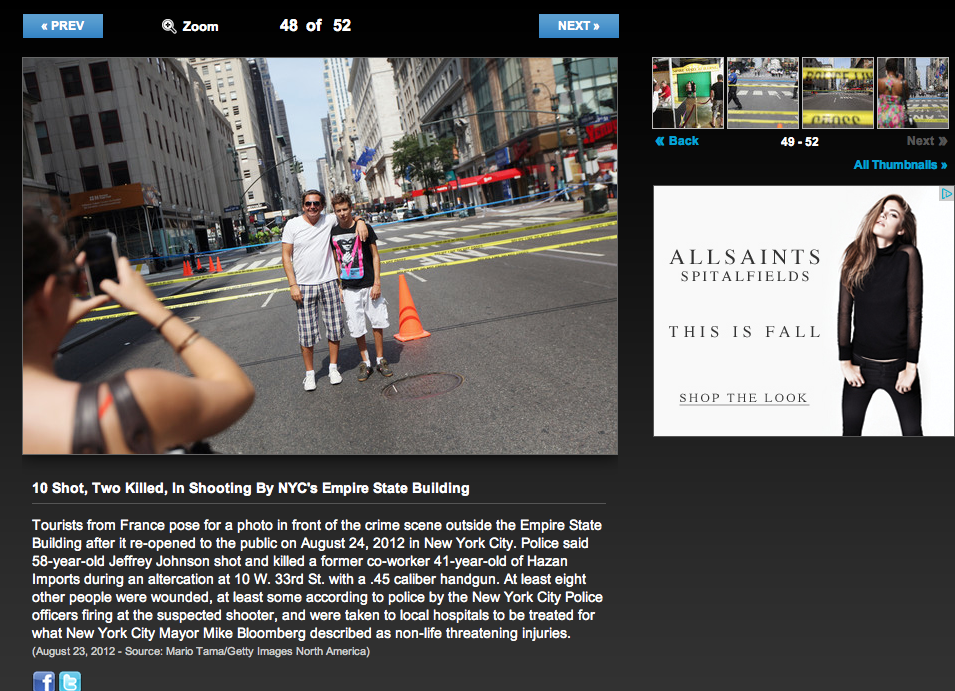
The photographic record of the event ranges from the somewhat clichéd representation of yellow and blue police line tape and numbered crime scene markers shot from on high and at a distance to mark the official response to a somewhat voyeuristic image of a dead body resting in a sea of red blood to the absolutely bizarre snapshot of smiling tourists (from France, no less) posing in front of the scene where the carnage too place.  But it is the photograph above that tells the story that really needs to be told.

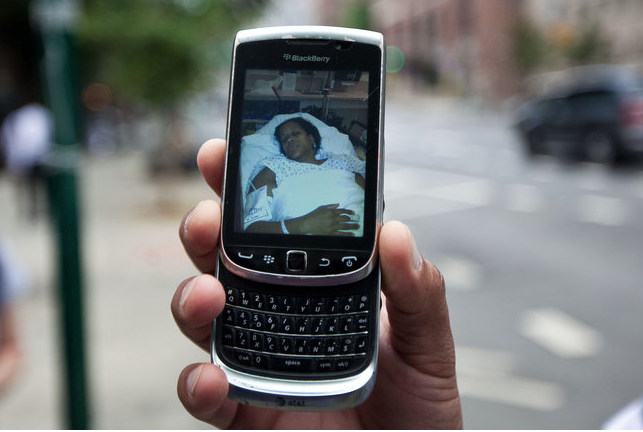
The woman, Madia Rosario, is one of the nine innocent bystanders hit by police bullets (that’s right, all nine were wounded by police bullets or ricochets).  She is thankfully in stable condition, as are apparently the other eight bystanders who were wounded. But what should concern us is that she and the others were shot at all.  There have already been calls to investigate whether the officers were following regulations when they discharged their weapons with bystanders at risk, but there is a different point to be made.  Or maybe two.

The first point is that this is just one more of a continuing—weekly if not daily—litany of such shootings, each of which is treated as if it were an entirely individual and isolated event.  A disturbed individual goes berserk and shoots up a school yard or a campus or a church or a movie theater. As one of the bystanders hit by a police bullet put it, “You know, stuff happens.”  But of course these  are not isolated events, for what connects them quite palpably is the simple fact that in each case the perpetrators all had too easy access to automatic or semi-automatic weapons.  There is no easy way to represent that connection photographically, and so we resort to commonplaces that individuate the problem by emphasizing the perverse psychology of the perpetrator and/or visualizing the official response.  But of course  in countries with more restrictive access to such weaponry events like this happen far less frequently. On this point the facts are incontrovertible.  Once again, do the math.

The second point is really a response to those who claim that everyone will be safer when we all have guns and can thus protect ourselves from such violence and bloodshed. But the photograph of Madia Rosario suggests perhaps otherwise.  The police are enjoined never to “put civilians in the line of fire.”  And more, they are trained in how to respond to crisis situations in which chaos reigns and human behavior is animated more by fear and the rush of adrenalin than reason or common sense. And on par they do a pretty decent job.   And yet for all their training and preparation, “stuff happens.” One can only imagine what stuff would happen if bystanders not trained in crisis management of any sort were carrying weapons and started shooting.  Just do the math.

Photo Credit: Uli Seit/New York Times

May 30th, 2012

Signifying Shoes

Posted by Hariman in boots and hands

You might think that a high end fashion item would seem more valuable for being rare, hard to get, almost one of a kind.  Everyone should want one of the items, but it should be clear that not everyone will have one.  So it is that this display of Christian Louboutin shoes seems counter-intuitive.  How can there be so many of something so pricey?  Why pay so much for something that appears mass produced and uniform?  The Louboutin website opens with a pair of heels under glass, as if they were a rare treasure that should be protected from the open air, whereas this display of indistinguishable copies invites comparisons with the knockoff items that you can buy for a few bucks on the New York street.

But the curator who created this exhibit at the Design Museum isn’t in the business of selling shoes.  Like the designer, she is keenly aware of how shoes signify, but the focus here is on prompting reflection on fashion as a design art.  Two of the contradictions within modern fashion are that “exclusive” products typically are mass produced, and that consumers strive to distinguish themselves using identical items.  These conditions make good design harder, not easier to achieve.  Instead of individualized tailoring whereby everyone could be outfitted uniquely, clothing, furniture, and everything else has to be appealing and functional for many different people despite having a single, impersonal form.  By acknowledging these constraints, the exhibit captures Louboutin’s achievement: even when one pair of shoes is shown to be exactly like all the others, they still look really good.

It’s also interesting to see how focusing on one art can reflect back on another.  The display of the shoes makes each pair interchangeable with the others; what are real shoes become mere copies of an absent original.  Thus, the mere awareness of mechanical reproduction subverts a secure sense of the reality or worth of the object.  Photography, of course, suffers the same fate: the ease in making reproductions of any image heightens awareness of how each one is a copy of another reality.  One result, particularly in the hands of some theorists, is to fault the art for cheapening our sense of what is really real.  What happens, however, is that some images prove to be all the more exceptional for that.  Their artistic achievements become more obvious, not less, when set against many others much like them.  And that competition for attention amidst a pervasive process of copying is another of the constraints in fashion design.  Perhaps we shouldn’t be surprised that one way to distinguish each of the shoes above is by the way it catches the light.

Nor need the comparison stop there.  Fashion and photography can intersect not only in the museum but also out on the street.  Or at the Golden Gate Bridge.

This commemorative display was created by the Bridge Rail Foundation, which advocates for measures to prevent suicides at the structure.  Turns out there is more than one design problem involved.  On the one hand, the bridge proves to be superbly suited to a wholly unintended use; on the other hand, perhaps the most deep-set objection is that preventative modifications mar the bridge’s aesthetic appeal, which is one of its principle design features.

In any case, it is interesting that a display of shoes can say so much about the tragic cost of inaction, and comparison with the first image can identify some of the reasons why.  Whereas in the first image multiple copies enhanced distinctiveness, here the obvious uniqueness 0f each of the pairs heightens a sense of common fate. Each person wearing the identically recognizable Linboutin shoes will stand out in a crowd, and the status markers proclaim that they have the personalized flair that comes with being among society’s winners.  Each of these motley yet varied shoes at the bridge marks a single individual no longer visible, someone who ended up at the bottom of life, caught in an undertow of despair that lead to the same darkness.

However cheap, each one of those shoes was a small fashion statement before it became a means for civic advocacy.  The shoes’ second significance is extended further by being copied by the camera.  Shoes, like photographs, are social objects, and so can talk by being seen and communicate further by being displayed.  This photograph expresses the advocates’ intention, but it also prompts the viewer to think about who is seen and valued, who is granted attention or other social goods and who is left to walk by unseen–as if just another copy of the one before, even if on their way to the bridge.

Photographs by  Jonathan Short/Associated Press and Noah Berger/Associated Press.

May 28th, 2012

Mirroring Responsibilities: Lest We Forget

Photo Credit: Susan Walsh/AP

April 8th, 2012

The New Normal

Posted by Lucaites in boots and hands, visualizing war

Perhaps one of the most famous photographs to come out of World War II—or any war—is the image of a nurse and sailor kissing in New York’s Times Square.  The “Times Square Kiss” is notable for many reasons and not least for the way in which it models the egalitarianism of the war effort (both sailor and nurse are in uniform), as well as for way in which it channels the public celebration of the end of the war (it was VJ day) through the spontaneous, heterosexual kiss of two anonymous individuals as they return to the “normalcy” of public life.  If war marks the enforced separation of the sexes and uniformed repression of the yearnings of private life, the subordination of Eros to Thanatos, the “Times Square Kiss” signifies the release of long suppressed passions.

Photographs of returning sailors, soldiers, and marines kissing their loved ones upon return from overseas duty have become a photojournalistic convention and it is difficult to look at the many such images and not see their tribute to the image of the sailor and nurse in Times Square.  Most such photos are full-bodied shots; the image above, however, taken recently in Washington, D.C. at the return of the 4th Civil Affairs Group, 2nd Marine Division from a 7 month deployment in Afghanistan, focuses only on a pair of feet, and in that fact the photograph seems to tell something of a different story.

There is no way to know for sure that they are kissing, of course, but the fact that her right foot rises above the floor and her weight seems to be firmly on her left foot suggests that she is leaning up and into a taller lover as if in an embrace.  The contrast between heels and combat boots implies that this is a heterosexual kiss, just as with the original “Times Square Kiss,’ but nevertheless ambiguity reigns as even female Marines would surely wear combat boots.  And more, photographs of public homosexual kisses between returning veterans and their loved ones is no longer a taboo (see here and here).  If nothing else, then, the photograph gestures to the possibility of shifting mores within the public culture, or at the least to the uncertainty of otherwise longstanding stereotypes of cultural normalcy.

The primary difference between this photograph and the “Times Square Kiss,” and here there is no ambiguity, is the privacy of the scene being represented.  And that privacy is marked in multiple ways.  To begin, and most obviously, there is nothing in the image that would indicate that this is a public space.  The flooring appears to be some kind of tile designed to look like marble, but it also has an indistinct, institutional quality about it that suggests that this could be just about anywhere—and nowhere in particular.  More to the point, there is no indication of a viewing or witnessing public of any kind.  The caption to the photograph notes that 35 Marines from this unit returned on this day, but of course there is no evidence of them whatsoever in the image.  In all likelihood they too are engaged in kisses and embraces with loved ones, but if this photograph is to be an index of the event they too are in all likelihood involved in personal, individuated celebrations.  The point is accentuated by the contrast between the combat boots and the high heels, both showing the scuff marks of normal, everyday wear that mitigates the distinction between military and civilian life.  While the anonymity of the full-bodied kissers in the original photograph underscored their status as individuals standing in for the public at-large, here the solitary focus on their shoes identifies them as private individuals representing only themselves in a closed and private universe.  Nor perhaps should this surprise us all that much.  After all, the war in Afghanistan is the longest war in the nation’s history, and given that there is neither public consensus as to what our mission there is nor clarity regarding when it will actually end—promised schedules notwithstanding—it should come as no surprise that there is no public witnessing or celebration of such returns.

The original “Times Square Kiss” was often captioned “The Return to Normalcy” and here we might be witnessing something like the “The New Normalcy.”  Whether we want to read that as a salutary world of changing mores concerning gender relations or as an increasingly frail, privatized world in which the public exercises no voice at all in such matters is a matter of what we choose to see.

Photo Credit: Staff Sgt. Brittany E. Jones/USMC

January 24th, 2012

The Shame of Survival

Posted by Lucaites in boots and hands, visualizing war

The VA reports that 18 veterans commit suicide every day.  And last week the U.S. Army reported that the suicide rate among active duty soldiers has risen from 9.6 per 100,000 in 2005 to 24.1 per 100,000 in 2011. The number of attempted suicides is astronomically higher still and all out of proportion with the suicide rate among the civilian population.  Reports of all of this leak out from time to time, of course, but the tendency is to make the problem abstract by focusing on the aggregate and not so much on the individuals.  The numbers underscore the sheer magnitude of the problem, but at the same time they make it almost impossible to imagine the individual trauma … or perhaps the better word here would be “envision.”  And because the real effects of the problem are harder to see in the abstract, they are also easier to be blind to.  We are not inclined to quote totalitarians in the affirmative here at NCN, but Josef Stalin’s characterization of such situations is much to the point, “[o]ne death is a tragedy, one million deaths is a statistic.”  The situation is thus really something of a catastrophe: a problem that we don’t appear to know how to solve (assuming we exclude the obvious and refuse to eliminate the root cause, which is sending our young men and women to fight  such wars in the first place) and yet one that is so large and so present that the logic of its representation encourages us to acknowledge and ignore it simultaneously.

A large part of the difficulty is that it is virtually impossible to get photographs of actual suicides and one would surely have to challenge the ethics of taking such photographs if one could do so. And yet it is not sufficient to turn a blind eye to the situation.  A slideshow at the Denver Post titled “Welcome Home” is much to the point in this regard as it invites us to see into the life and mind of at least one contemporary war veteran and his struggles with readjusting to the civilian world.  Part of the story conveyed by the slideshow is the all too conventional tale  that the veteran’s return home is experienced as altogether lonely and alienating, and in any case anything but welcoming.  That narrative is no less true for being conventional, but the photograph above signals a second, more poignant and even more troubling story as well. Tattooed with what appears to be the face of death—a marking which it will turn out is probably not incidental—the wrist belongs to Brian Scott Ostrom, an honorably discharged veteran of the U.S. Marine Corp’s Second Reconnaissance Battalion who served two tours of duty in Iraq.  Ostrom did not commit suicide, but as the fresh stitches that mark his wrist indicate, he made a serious attempt at doing so.  In fact, it was his second such attempt.  The question, of course, is why?

Like so many veterans of Iraq and Afghanistan, Ostrom suffers from PTSD, a psychological disorder that manifests itself in panic attacks and fits of rage that often lead to physical violence.  Frequently that violence is directed outwards at other people or physical objects, but just as often it is directed inward at an intractable guilt that simply never goes away—and, of course, that cannot be seen. Part of that guilt is a result of having voluntarily participated in a troglodyte world in which all empathy for the other is evacuated, a world in which there is no difference between doing’s one’s job and behaving in the most brutal ways imaginable … and yet, in Ostrom’s own words, not feeling bad for “anything I did over there,” but “for what I didn’t do.”

The words are as cryptic as is the face of death on Ostrom’s wrist.  But both take on an eerie and troubling significance when we recall something he said earlier in his narrative, reflecting on his PTSD, “I think it comes from the fact that I survived.  That wasn’t my plan.  It’s an honor to die for your country, but I made it home.”  And then this, “Every one of us has a suicide plan.  We all know how to kill, and we all have a plan to kill ourselves.”  What he didn’t do was to die for his country.  The words are as hard to hear as the photograph above is to look at.

But look at it we must, for in its own way it illustrates the problem faced by our returning war veterans writ large—a point emphasized by the fact that the hand itself is disembodied; it could belong to Ostrom (as it does) but it could belong to any of the thousands of returning veterans (or for that matter to those who might be inducted to fight in future wars):  Bred to kill and marked by death, our warriors are assimilated into a topsy-turvy world in which survival is a sign of failure, and doing one’s job well results in dishonor.  And there does not seem to be any way out except for one.   Perhaps the only wonder is that the suicide rate amongst our veterans is as low as it is.

Photo Credit: Craig F Walker/Denver Post.

Cross-posted at BAGnewsNotes.

Next Page »
FAIR USE NOTICE: This site contains images and excerpts the use of which have not been pre-authorized. This material is made available for the purpose of analysis and critique, as well as to advance the understanding of rhetoric, politics, and visual culture.

The ‘fair use’ of such material is provided for under U.S. Copyright Law. In accordance with U.S. Code Title 17, Section 107, material on this site (along with credit links and attributions to original sources) is viewable for educational and intellectual purposes. If you are interested in using any copyrighted material from this site for any reason that goes beyond ‘fair use,’ you must first obtain permission from the copyright owner.