May 12, 2014
Nov 20, 2009
Aug 23, 2007
Mar 04, 2012
Feb 01, 2015
Jul 20, 2007

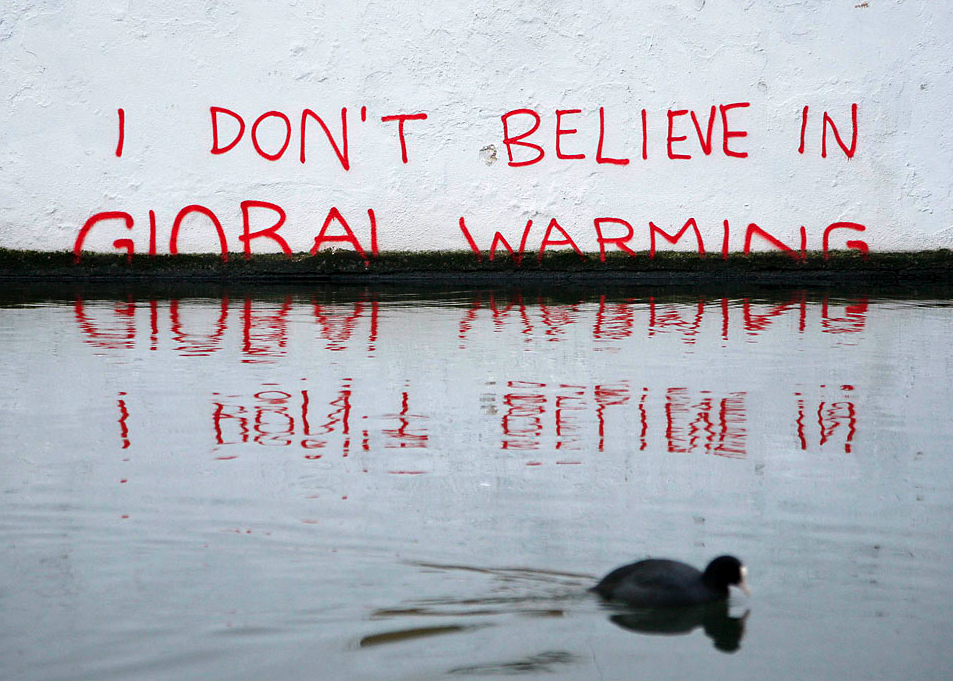
SIght Gag: Global What?

Global Warming

Photo Credit:  Luke McGregor/Reuters; Graffiti Attributed to Banksy

“Sight Gags” is our weekly nod to the ironic and carnivalesque in a vibrant democratic public culture.  We typically will not comment beyond offering an identifying label, leaving the images to “speak” for themselves as much as possible.  Of course, we invite you to comment … and to send us images that you think capture the carnival of contemporary democratic public culture.

 0 Comments

Sight Gag: Without a Clue

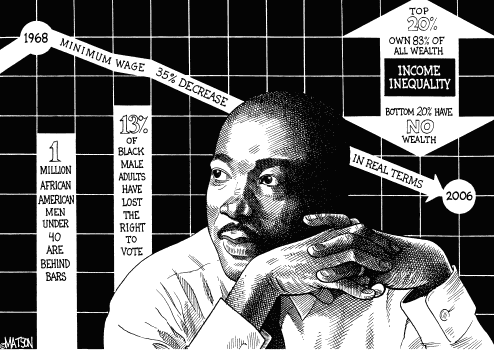
11510md

Credit:  Matt Davies

“Sight Gags” is our weekly nod to the ironic and carnivalesque in a vibrant democratic public culture.  We typically will not comment beyond offering an identifying label, leaving the images to “speak” for themselves as much as possible.  Of course, we invite you to comment … and to send us images that you think capture the carnival of contemporary democratic public culture.

 0 Comments

A Crime With No Name

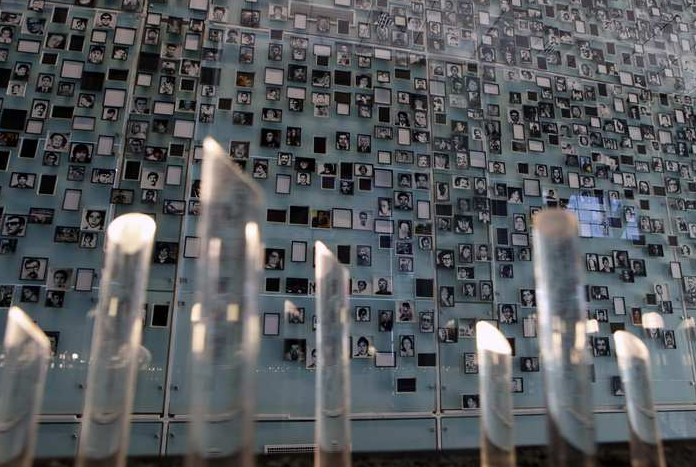
Museum of Memory

We have all seen images like this before.  A photograph of photographs.  A wall of missing or deceased men, women, and children remembered by little more than their photographic residues.  Once they were here to be photographed, but now they are not.  All that remains are these images.  A visual aide-mémoire to what once was but is no more. The photographs here represent the thousands who were tortured, murdered, and imprisoned in Pinochet’s Chile, but it is no different in kind from the Holocaust Museum’s “Tower of Faces” and other such memorial installations.  One of the things that distinguishes such photographs (and the  installations that they represent) is the anonymity of the individuals being remembered.  And even when a name is available, it is little more than a verbal marker that designates the face portrayed, but tells us nothing of the person being memorialized, of who they were: their successes and failures, their joys and sorrows, their personal conceits and virtues, etc.  In an important and somewhat ironic way, that is precisely the point.  What makes photographs such as the one above notable is how they aggregate a mass of individuals as a collective, not by metonymic reduction of the many into the one, but by underscoring the sense in which the whole is more than the sum of its parts.  And the normative impact of that is palpable, all the more so since it marks a crime that has no name.

The torture and murder of any individual is unjust, to be sure, but here the injustice is magnified literally beyond comprehension.  To begin with, many of the images are simply beyond the range of ordinary human vision, both too high and at an oblique angle from the floor, making it very nearly impossible to register the visual representation of any individual with any  real precision.  And yet, even though many of the photographs cannot be easily registered there is no doubt that they are to be seen, just as those recorded in the images were once there to be seen.  But more, there is something of the quality of an optical illusion: Try to focus on an individual face and you are almost immediately lost in the collage of images that demarcate the sprawling but vaguely ordered mass, look to the whole so as to make sense of its collective order and your line of sight is drawn to individual faces, and then back again.  The overall effect is to underscore the sheer impossibility of taking in, let alone understanding, the magnitude of the crime imagined and being remembered.

And therein lies, at least in part,  the power of the photographic image: to help us show—and perhaps to see—when words are simply not up to the task.

Photo Credit:  Aliosha Marquez/AP

 0 Comments

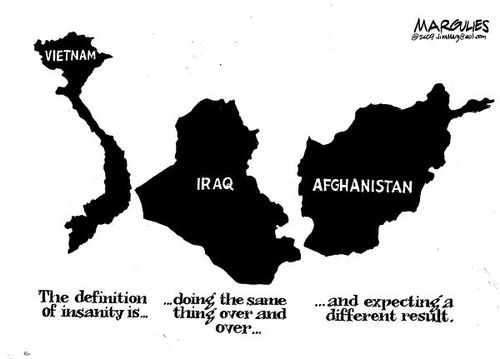
Sight Gag: An Operational Definition of Insanity

6a00e55026407188330120a543ce95970b-500wiCredit: Marguiles

“Sight Gags” is our weekly nod to the ironic and carnivalesque in a vibrant democratic public culture.  We typically will not comment beyond offering an identifying label, leaving the images to “speak” for themselves as much as possible.  Of course, we invite you to comment … and to send us images that you think capture the carnival of contemporary democratic public culture.

 1 Comment

War at a Distance

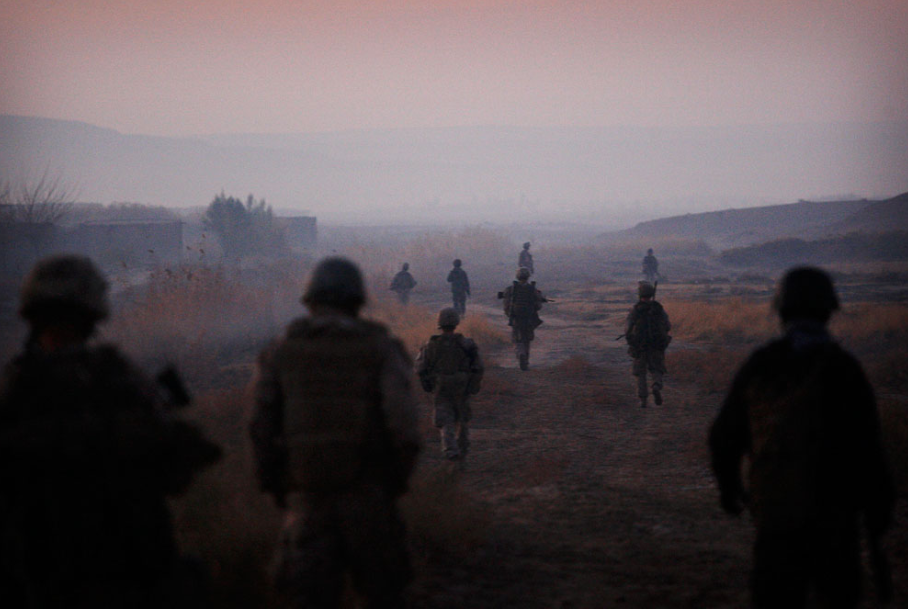
The current war in Afghanistan began in October, 2001.  In U.S. history only the Revolutionary War and the War in Vietnam have occupied longer periods of time. For most of us this has been a quintessentially modern war fought at a distance:  we have “lived through” the war, but not “in it.”*  Temporally present, the war remains geographically distant, and as time has passed we have become increasingly inured to both, habituated to the war’s everydayness—an ordinariness made manifest by the capacity of realist photography to construct us, here at home, thousands of miles from the violence and suffering, as passive and objective spectators.  Recently, however, realist photography has given way to an artistic impressionism that seeks to open the war to a different affect.
war sublime

Notice how the caption in the NYT features the conventional expectations of professional journalism, reporting exactly what we are seeing in all of its mundanity, while telling us almost nothing at all, the meaningful significance of the image elided by the abstract invocation of time and distance:  “US Marines and Afghan National Army soldiers carried out an operation in the Garmair District of Helmand Province in southern Afghanistan on Wednesday.”  And, of course, it is the representation of time and distance that animates this image.  Were this an ordinary photograph of a patrol shot in middle distance, adhering to the realist conventions for focus and exposure, it is likely that we would not take a second glance at it.  We would see it, but we would not look at it.

But, of course, it is not an ordinary image.  Shot from a long view (almost, but not quite a panorama), mindful of the effects of linear perspective, and cast in muted, hazy light, the focus dreamy-soft to the point of distraction, the photograph has all of the qualities of an impressionistic water color. And as it animates an impressionist aesthetic, notice that it complicates the relationship between the scene and the viewer.  One can no longer look at the representation as an objective, mechanically reproduced image that provides all that one needs to know.  It is impossible to distinguish between US Marines and Afghan Nationals, time is elongated into an abstract and almost imperceptible future, and in the process, what is palpably distant becomes ever closer as the viewer is now encouraged (or dared) to look over the edge of the frame with a certain degree of awe and foreboding (perhaps invoking something like the sublime affect of Casper David Friedrich’s Wanderer Above the Sea of Fog).

War tests the limits of  human communication: it cannot be experienced in its totality, and thus it can never known—let alone communicated in any complete way—by one individual to another; it mobilizes appeals for solidarity while separating people from home and community; and so on.  And all of this is made more problematic as we become habituated to these inherent dilemmas, made all the more “comfortable” with a war at a distance that we see but never really comprehend.  Photographs like the one above aestheticize war, to be sure, but in doing so they make it increasingly difficult to look and not see, to experience the distance between here and there at a distance.

Photo Credit:  Kevin Frayer/AP

*This quotation, as well as the inspiration for the post come from Mary Favret’s very important War at a Distance: Romanticism and the Making of Modern Warfare (Princeton UP, 2010).

 3 Comments

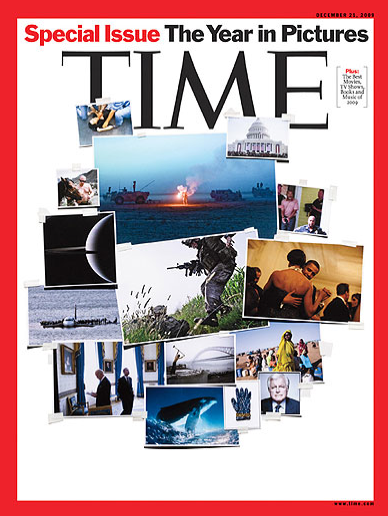
Pictures of the Year

“I have been a witness and these photographs are my testimony.”  James Nachtway

‘Tis the season for the multiple lists of photographic retrospectives.  The first to cross our in-box include this special issue from Time magazine that begins with a introductory letter from Richard Stengel titled, “A Window on Momentous Events.”  We will list additional retrospectives as they become available, so keep coming back to check in over the next several weeks.

TIME SPECIAL

Additional Retrospectives:  Big Picture 1, 2, 3, Pictures of the Decade; NYTNYT-Documenting the Decade;  AOL: The People’s Choice, Editor’s Choice; LA Times; Charlotte Observor; Washington Post: Best of the Decade, Best of 2009; Chicago Tribune; Wall Street Journal; New Yorker

 1 Comment

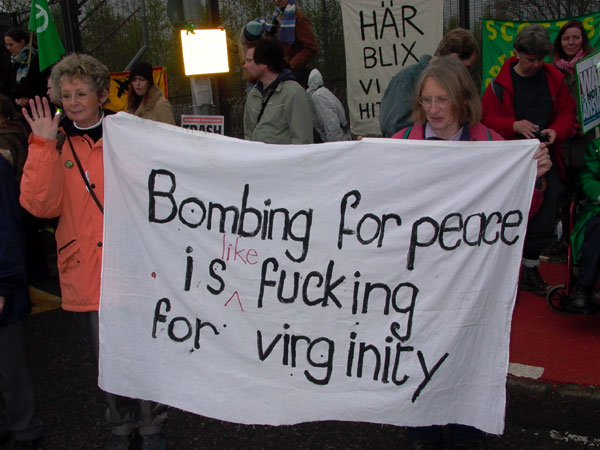
Sight Gag Rediva: (Iraq)/Afghanistan v. Vietnam – “Déjà vu All Over Again” (Again)

This is a reprise of our Sight Gag of February 17, 2008. If our word processor was working properly the title would read:

Iraq Afghanistan v. Vietnam – ‘Déjà vu All Over Again’ (Again).”

THEN

peacebomb.jpg

NOW

virgins.jpg

“Sight Gags” is our weekly nod to the ironic and carnivalesque in a vibrant democratic public culture.  We typically will not comment beyond offering an identifying label, leaving the images to “speak” for themselves as much as possible.  Of course, we invite you to comment … and to send us images that you think capture the carnival of contemporary democratic public culture.

 0 Comments

Déjà Vu All Over Again

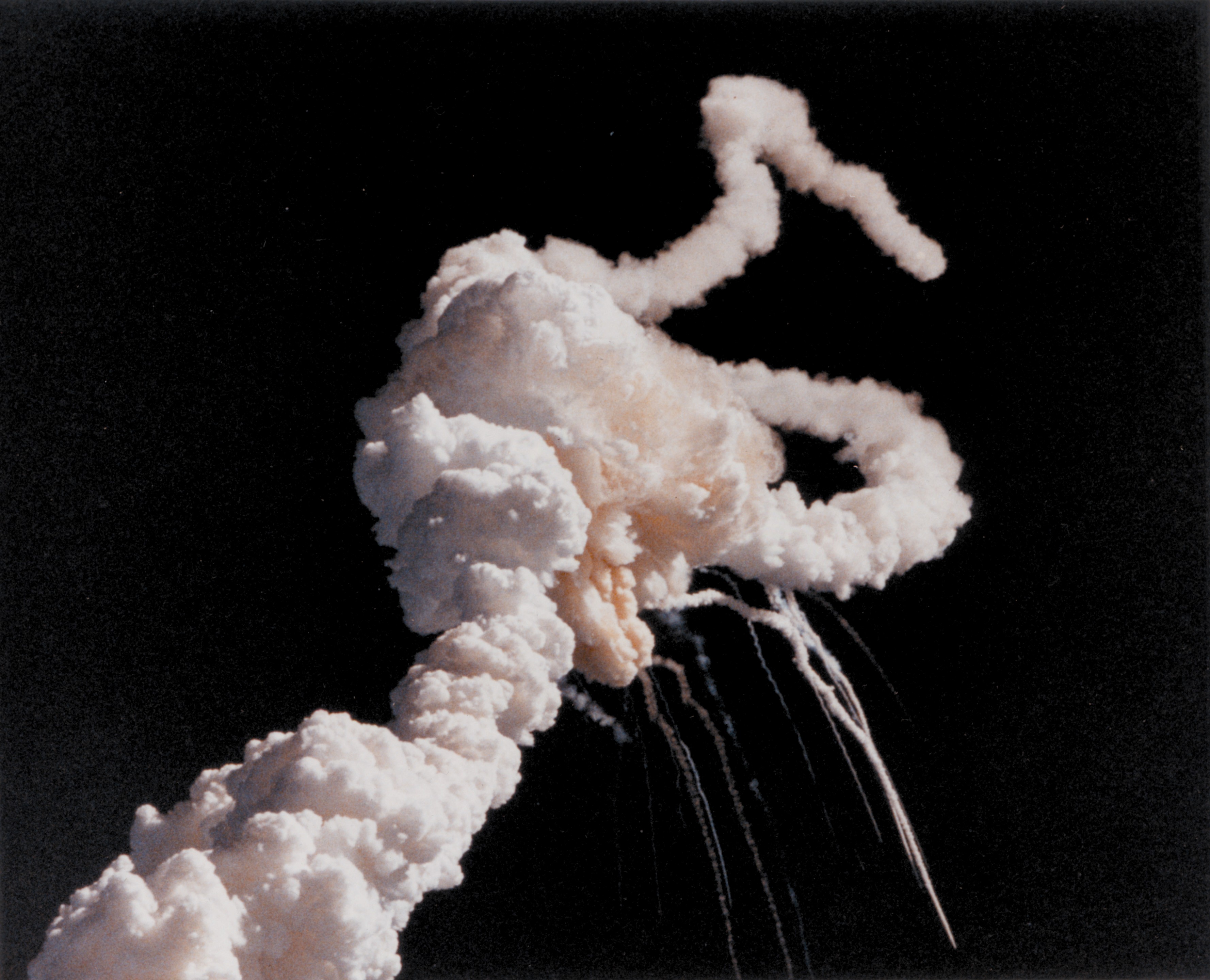
One of the primary anxieties of late modern life is modernity’s gamble, the wager that the long-term dangers of a technology-intensive society will be avoided by continued progress.  And, as with any wager, it is driven not only by calculations of probability but also by an unrelenting desire to beat the odds  There is perhaps no better representation of the anxiety that has attended modernity’s gamble than the dialectical tension animated by the iconic photographs of the tragic explosions of the Hindenburg and the Challenger: the first a dark, gothic, dystopian warning against the excesses of technological hubris, the second a bright and forward moving, utopian celebration of the heroic frontier spirit.

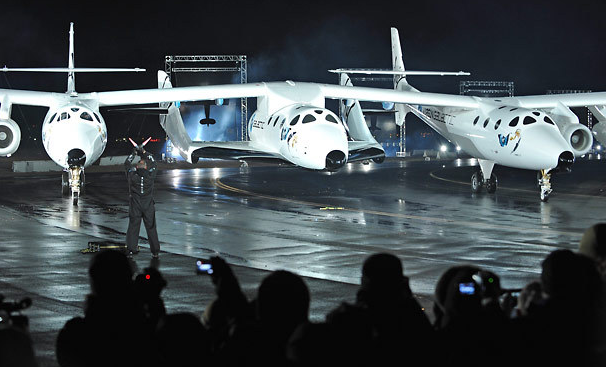
Enterprise 2

I was reminded of modernity’s gamble when I came across the above photograph of the recent public unveiling of the “VSS Enterprise,” named in honor of U.S. and British naval vessels, as well the “Starship Enterprise” of Star Trek fame.  The VSS Enterprise is the first commercial passenger spacecraft that will offer 300 paying customers a two and one half hour suborbital space ride—including five minutes of weightlessness—for the modest sum of $200,000 each.

The first thing to recall when considering the Hindenburg and Challenger explosions is that the events leading up to the tragic moment in each case were orchestrated as media spectacles.  And note that here too, the “unveiling,” which takes place in the Mojave dessert and in the dead of night, accompanied by “dreamlike purple lights” and “an ethereal soundtrack,”  is heavily attended by the media dutifully recording the event.  But the comparison does not stop here, for as with both the Hindenburg and the Challenger, the development of the VSS Enterprise has been beset with one technological delay after another, as well as with tragic injuries and three deaths following equipment failures and explosions.  We can only assume that more will follow.  And yet, the fetishistic desire to conquer the heavens never seems to die, a point driven home by the billionaire Richard Branson who noted, “Isn’t that the sexiest space ship ever?”

These similarities notwithstanding, it should be recalled as well that both the Hindenburg and Challenger were statist enterprises driven by a martial spirit and distinct militaristic goals—the Hindenburg underwritten by Hitler’s Nazi Germany and an interest in exploiting the advantages of air warfare, and the Challenger a manifestation of the U.S.’s involvement in the Cold War “space race”—while the VSS Enterprise is an entrepreneurial, free market enterprise.   This difference, it seems, is worth remarking upon, for while one might imagine militaristic functions as part of a “rational” public policy agenda, the current enterprise seems driven by the same hubris that led Icarus to fly too close to the sun, and one can only assume that the current “enterprise” will have a similar ending.  How else to account for such space tourists as Natasha Pavlovich, a native of Serbia who bought her ticket “on credit” because she wants to “bring pride to her native country.” In short, the fetishized,  ritualistic thrill of modernity’s gamble comes in many guises, and the desire to “beat the house” is an unyielding addiciton for indivduals and states alike, regardless of how tragically fated its failure it might be.

It is little wonder, then, that agencies like NASA stay in business and that the citizenry is willing to support them with public dollars. Or that the media is always there to play its part.   Yogi Berra had it right.

Photo Credit: Robyn Beck/AFP/Getty Images

 3 Comments

Sight Gag: Fox News, "Just do the Math!"


Fox News Graph

Credit:  Fox News, Chicago

“Sight Gags” is our weekly nod to the ironic and carnivalesque in a vibrant democratic public culture.  We typically will not comment beyond offering an identifying label, leaving the images to “speak” for themselves as much as possible.  Of course, we invite you to comment … and to send us images that you think capture the carnival of contemporary democratic public culture.

 1 Comment