Mar 21, 2016
Oct 12, 2011
Mar 06, 2011
Aug 26, 2007
May 23, 2014
Sep 02, 2011

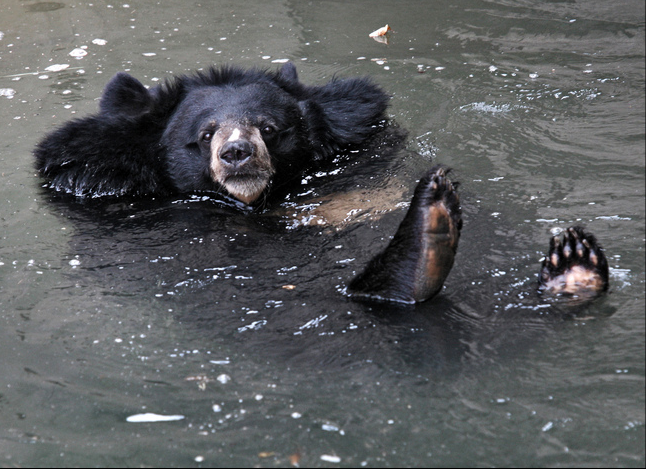
Sight Gag: Kickin' Back

Photo Credit:  Valentina Petrova/AP

Our primary goal with this blog is to talk about the ways in which photojournalism contributes to a vital democratic public culture. Much of the time that means we are focusing on what purport to be more or less serious matters. But as Jon Stewart and Stephen Colbert often remind us, democracy needs irony, parody, and pure silliness as much as it needs serious contemplation. For our part, we will dedicate our Sunday posts to putting such moments on display in what we call “sight gags,” democracy’s nod to the ironic and/or the carnivalesque. Sometimes we will post pictures we’ve taken, or that have been contributed by others, or that we just happen to stumble across as we navigate our very visual public culture. Sometimes the images will be pure silliness, but sometimes they will point to ironies, poignant and otherwise. And we won’t just be limited to photography, as a robust democratic visual culture consists of much more. We typically will not comment beyond offering an identifying label, leaving the images to “speak” for themselves as much as possible. Of course we invite you to comment … and to send us images that you think capture the carnival of contemporary democratic public culture.

 3 Comments

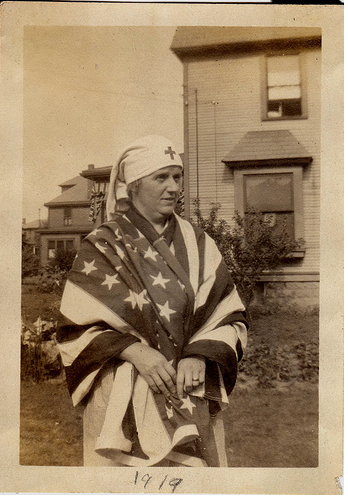
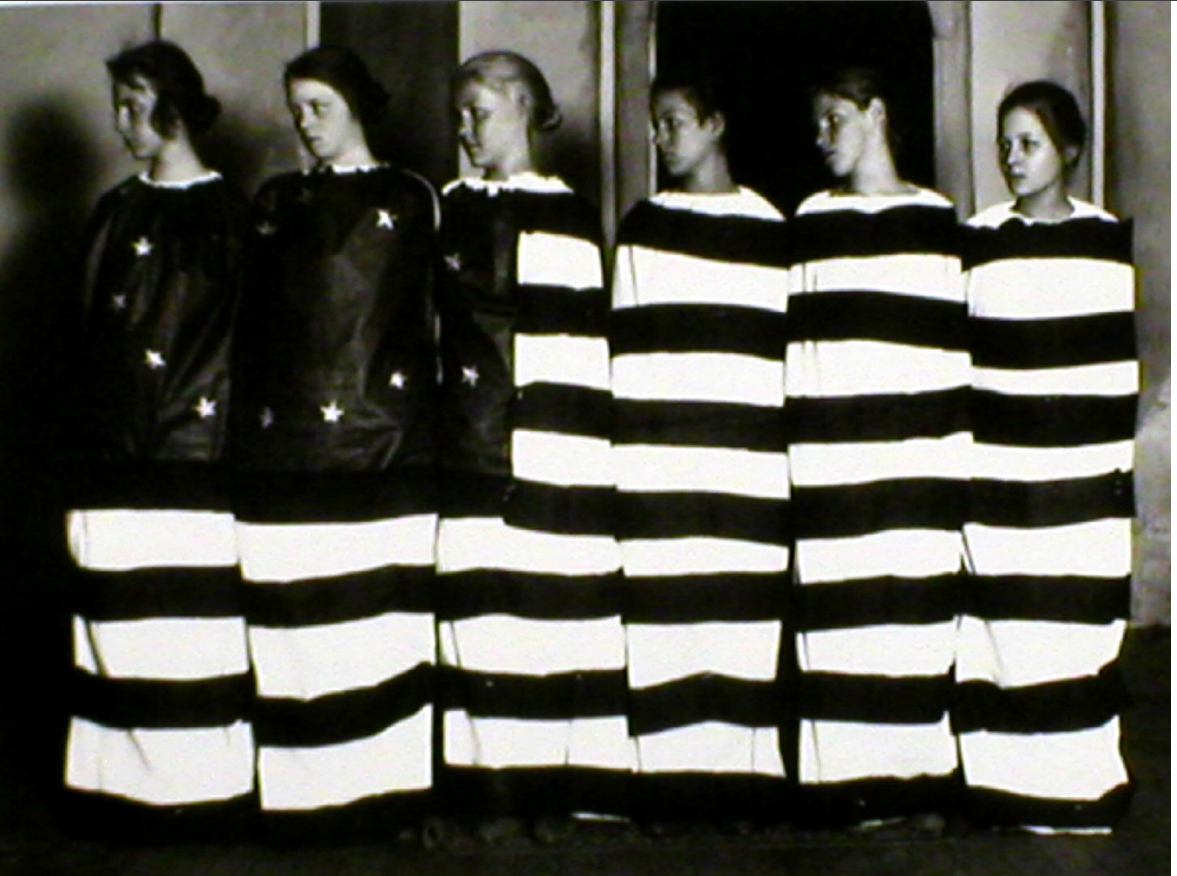
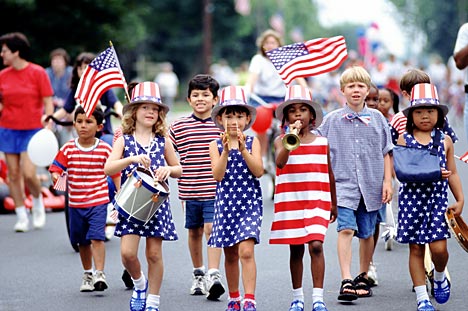
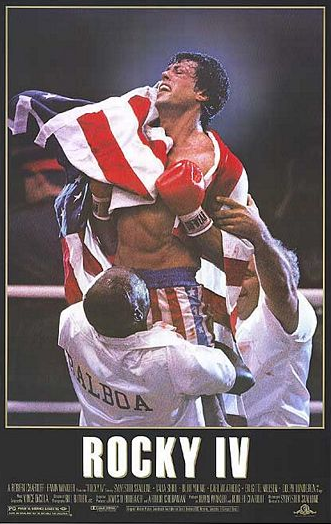
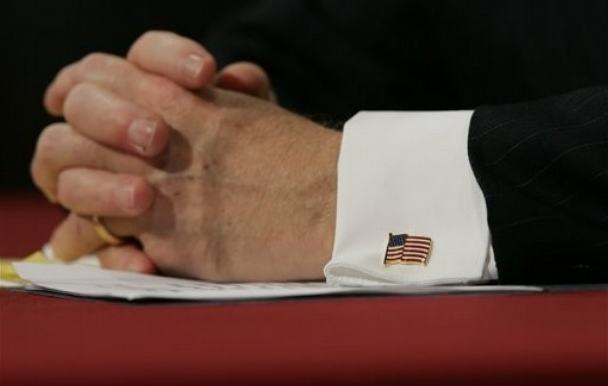
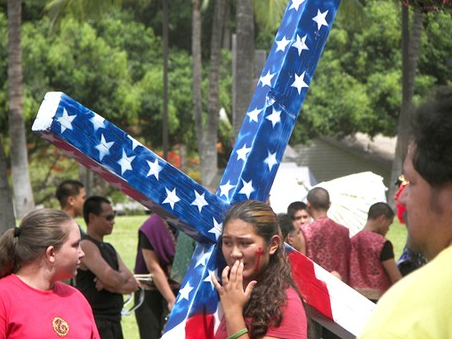
Wrapped in the Flag

Red Cross Volunteer, 1919


Flag Day was officially established in 1914.


The Fourth of July became a legal holiday in 1941. Ariel Skelley/Corbis


Rocky wins the Cold War in 1985.


Robert Gates testifies at his confirmation hearings before the Senate Armed Services Committee on December 5, 2006. J. Scott Applewhite/AP


“When fascism comes to America, it will be wrapped in a flag and carrying a cross.’ Sinclair Lewis, It Can’t Happen Here


 0 Comments

Ersatz Patriotism in a World Turned Upside Down

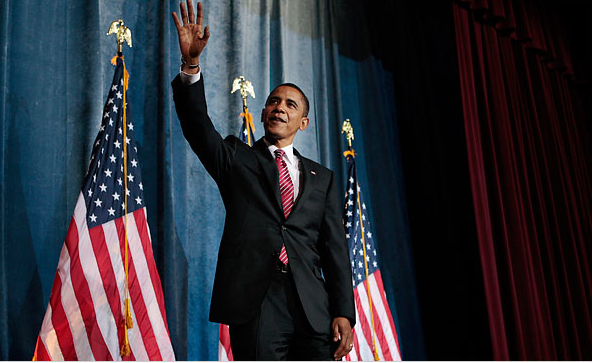
The charge that Senator Barack Obama is “unpatriotic” is so preposterous that it is hard to imagine any sane person not driven by partisan extremism actually taking it seriously.  And so I found it somewhat disheartening that the Senator himself would succumb to such charges to the extent of posing before a bevy of U.S. flags while wearing a red, white, and blue tie (against the backdrop of a white shirt and dark blue suit) as well as a flag pin, or for that matter that the NYT would feature a photograph of it on it’s website this past weekend.

The picture is altogether conventional, of course, and we have seen such images of Senator John McCain (and many other politicians from points all along the political spectrum) in comparable poses all too frequently.  Such photographs show up with clocklike regularity to the point of being barely noticeable except for their absence.  But one might have hoped for something a little less ordinary, if not less excessive (and a lot less ersatz), from the candidate for change.  Indeed, and it pains me to write it, but there is a sense in which the photograph and the mode of patriotism it performs profanes Obama’s otherwise eloquent and compelling plea to locate American patriotism in something a bit more substantial than a “political sword or a political shield.”

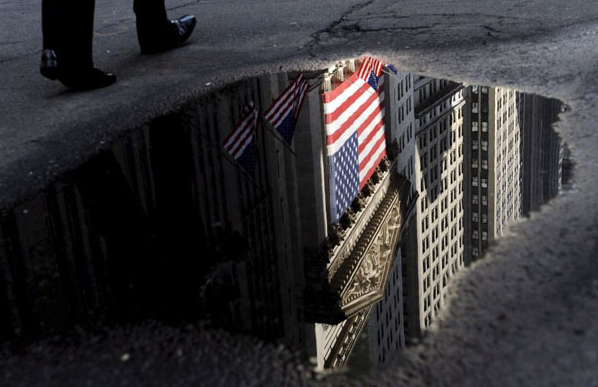
This is not to say that one should not honor the flag (nor that politicians should not be sensitive to their public image), but it is to question quite seriously the point of excess at which public displays of flag-waving patriotism by our leaders turn Old Glory into a nationalistic fetish that trivializes both the flag’s political significance and the value of a reflexive patriotism. The symptom of such excess is captured rather eloquently in this photograph of four U.S. flags as they are inverted by their reflection in a puddle on Wall Street:

The building to which the flags are attached is the New York Stock Exchange.  The image thus captures the rich ironies of the identification of the United States with the street often characterized as the “economic capital of the world” as each seems to have stumbled from grace and economic power on the global stage in recent times. It is literally a world turned upside down as the flags are now displayed both with the stripes above the shield and backwards; no longer furling on high, something to which we might look up to, they seem to reach upward to the ground (or is it to consciousness?) as if buried deep below (or should we say repressed?), virtually begging for attention; indeed, rather than something to be revered, the flag—or all four of them to be exact—are barely noticeable at all by passersby as pedestrian feet seem not even to break stride in their presence.

During a week dedicated to celebrating the nation’s birth it should give us pause to reflect on the effects of an ersatz patriotism.

Photo Credits:  Jae C. Hong/AP; Justin Lane/EPA

 2 Comments

Stopping Time at the Olympic Diving Trials

The Boston Globe now provides an online photography page that features stunning images in full page display. I’ve wanted to call attention to The Big Picture since it was brought to my attention recently, and the images below are a fitting example of the work that can be found there.
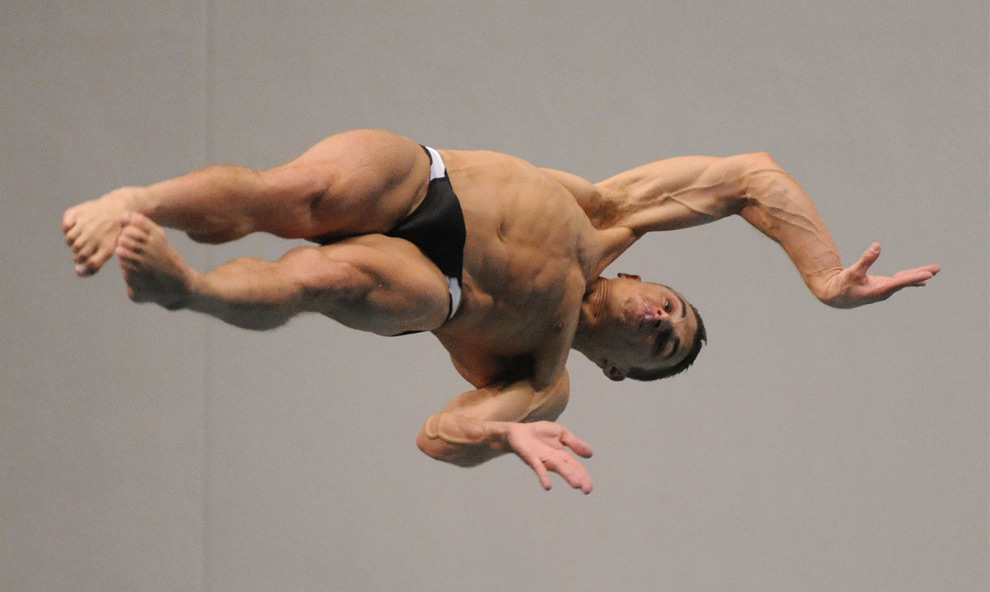
Tony Dumais is spinning through the air between the three meter board and the water at the US Olympic diving trials. You’ll see more at the slide show at The Big Picture, but hang with me for just a minute. This is an amazing shot, not least because you are seeing something you would never see were you watching the actual dive. The dive will have been a whirling swoosh of motion that was over in the blink of an eye. Yeats once asked, “O body swayed to music, O brightening glance,/How can we know the dancer from the dance?” Well, this is how: stop time and take a look.

There is much to see in this instant of stopped time. The incredible muscle definition, his concentration, the contortion that exposes the body while bending it to a demanding task, the sheer energies of the torqued body drawn through gravity’s funnel toward the surface below, the taut suspense of whether he will pull everything together in time. And the photograph asserts itself amidst all this, displaying a human body with the exquisite anatomical detail of Renaissance art. The body is displayed as if a specimen, and yet not only that, for it is both commanded and exposed as part of a society’s relentless attempt to optimize human power. The perfect dive, the perfect shot.

All that is evident in this image, and something more.
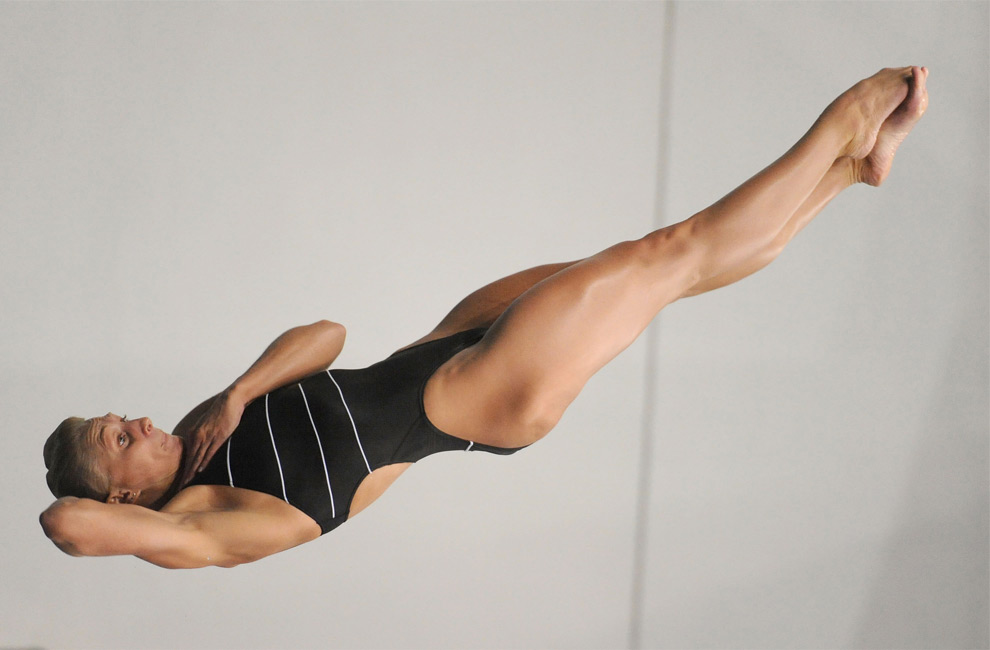
Again, the definition is incredible. Allison Brennan could have been sculpted out of living flesh. But another facet is revealed here, as this image reminds us that diving is a controlled fall. Allison seems to have it under control, waiting only for gravity to finish the job. For some reason, however, the photo gives me the sense that she could be falling for miles. She seems to be holding her breath, and that may evoke something dream-like, as though she were under water rather than in the air, or in a science fiction film, falling through one dimension after another in some alternate universe. Her body’s sense of suspended animation reinforces the formal dimension of the photograph itself, a suspension of time, and so of space.

Thus the dive unfolds: from concentrating the body while throwing oneself out into the air, to folding into a controlled fall toward the earth, to entering the water:
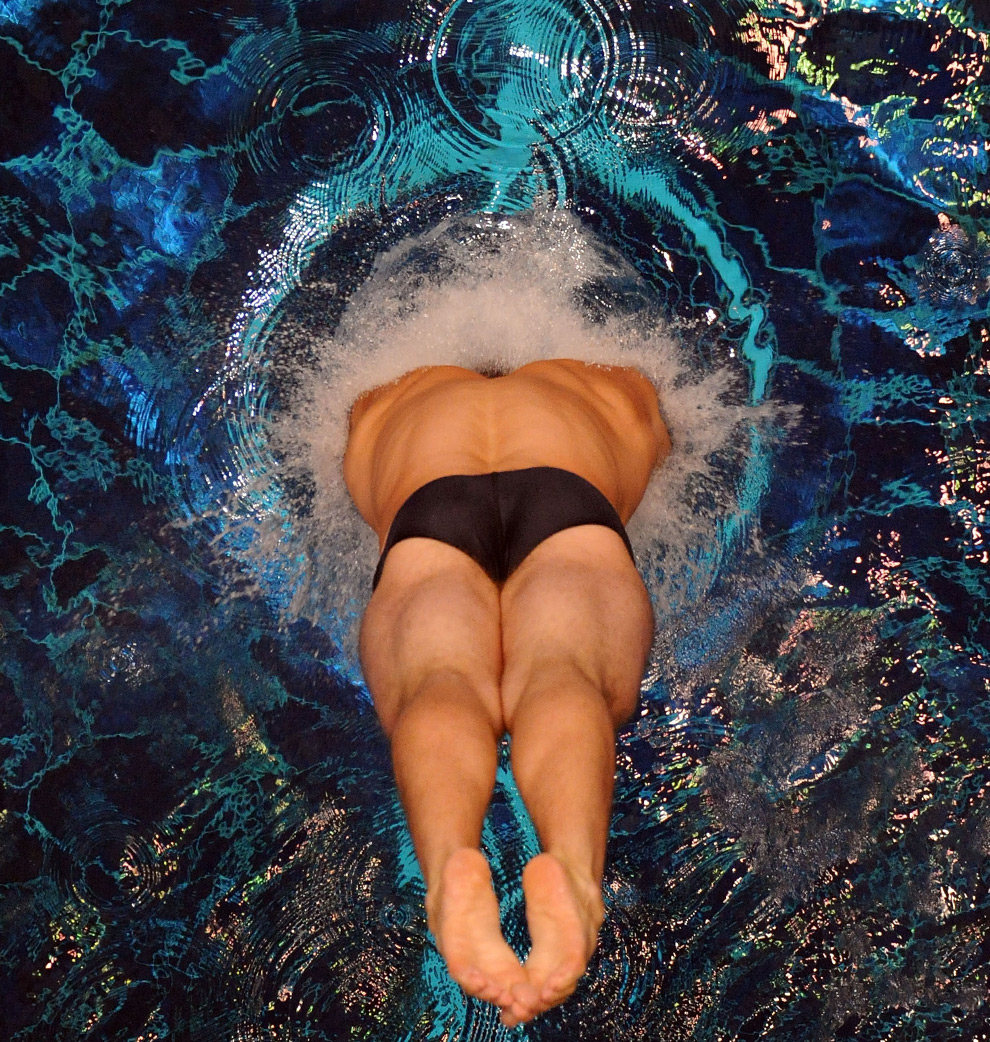
This is Terry Horner at the moment of completion. Again, a powerfully defined body, the controlled fall, and now the water. The beautiful water, which reminds us that this has been about being in another medium all along. Not just on the ground, where we only breathe the air and drink the water, but in the air, just as he will within the next instant be immersed in the water. Just as these photographs have allowed us to be suspended within another medium, not just looking at things but caught up in vision, seeing what otherwise would be a blur.

Only a very few people will ever dive at this level. Their experience is not ours, nor should we miss it. The last picture provides a caution in that regard. The buff body is so forceful within the frame, and yet it also is headless. I can’t help but admire his build, and yet he appears monstrous. The beautiful water might as well be a trap. The diving competition has brought these athletes to the heights of athletic achievement, and yet there always remains the fall. Much is given, and yet something is always taken. The Olympics, like the dives, isn’t even here yet but soon will be over. The trick is to see, and savor, the brief moment of time.

Photographs by Harry How/Getty Images. Note that The Big Picture at the Boston Globe online should not be confused with the excellent economics blog, The Big Picture.

 2 Comments

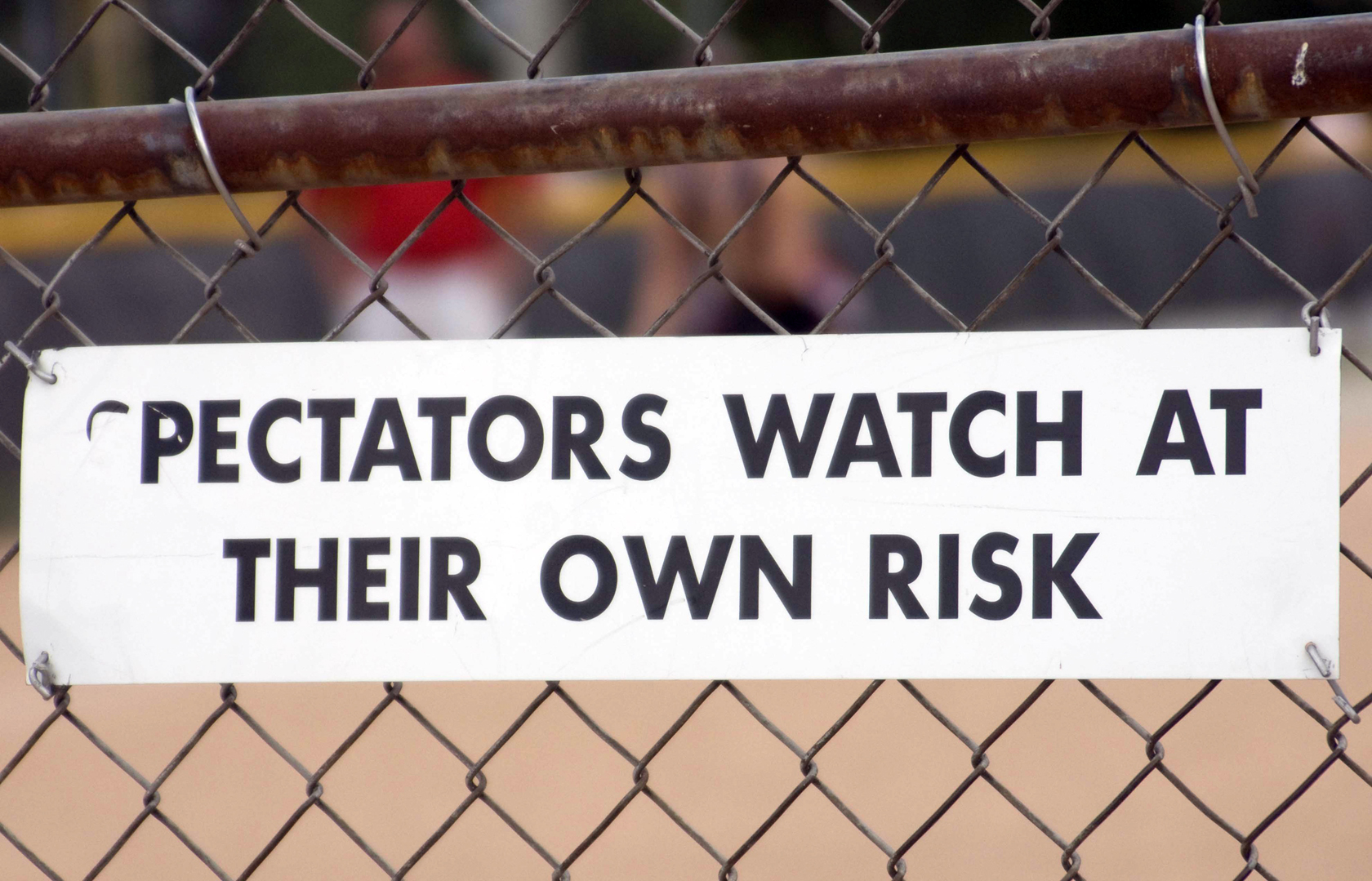
Sight Gag: The Warning

Photo Credit: John Lucaites

Our primary goal with this blog is to talk about the ways in which photojournalism contributes to a vital democratic public culture. Much of the time that means we are focusing on what purport to be more or less serious matters. But as Jon Stewart and Stephen Colbert often remind us, democracy needs irony, parody, and pure silliness as much as it needs serious contemplation. For our part, we will dedicate our Sunday posts to putting such moments on display in what we call “sight gags,” democracy’s nod to the ironic and/or the carnivalesque. Sometimes we will post pictures we’ve taken, or that have been contributed by others, or that we just happen to stumble across as we navigate our very visual public culture. Sometimes the images will be pure silliness, but sometimes they will point to ironies, poignant and otherwise. And we won’t just be limited to photography, as a robust democratic visual culture consists of much more. We typically will not comment beyond offering an identifying label, leaving the images to “speak” for themselves as much as possible. Of course we invite you to comment … and to send us images that you think capture the carnival of contemporary democratic public culture.

 0 Comments

Post-Doctoral Fellowships in Photography Studies

This from Andrea Noble at the University of Durham (UK):

I’m writing to see if you happen to know of any candidates eligible to apply for a Newton Fellowship that would enable them to come to the UK to work on a photography-related project at the Durham Centre for Advanced Photography Studies (DCAPS). This seems like an exciting opportunity for 2-years postdoctoral research experience in the UK. Newton Fellowships provide grant of £24,000 per annum to cover subsistence and £8,000 to cover research expenses, plus a one-off relocation allowance. Additionally, as part of the scheme, all Newton Fellows who remain in research will be granted a 10-year follow-up funding package worth £6,000 per annum. I’m forwarding further details of the scheme (below) and would be very grateful if you could bring it to the attention of (ex) graduate students (up to 6 years postdoc) working in a photography-related field who might be interested.
Full details can be found at:
http://www.newtonfellowships.org/

I’d be happy to field any questions, so please don’t hesitate to get in touch.

Professor Andrea Noble
School of Modern Languages and Cultures
Durham University
Elvet Riverside
Durham
DH1 3JT
00 44 (0)191 334 3428
www.dur.ac.uk/dcaps

 3 Comments

It's not the Message, It's the Medium

How often have you seen a t-shirt of tattoo featuring Japanese or Chinese ideograms? No doubt they were beautiful. They also may have not exactly said what they were supposed to mean. A line here or there, a seemingly incidental mark might make a big difference in the original language. LIke this, for example:

There are hundreds like this at Engrish.com. As the site explains, in Japan English lettering often is used just as we use ideograms here–entirely for decoration. “Most of the Engrish found on Engrish.com is not an attempt to communicate – English is used as a design element in Japanese products and advertising to give them a modern look and feel (or just to “look cool”). There is often no attempt to try to get it right, nor do the vast majority of the Japanese population (= consumers) ever attempt to read the English design element in question.” OK, that we can understand.

But is it correct to say that Engrish is “not an attempt to communicate”? Obviously, if communication is defined as the intentional transfer of information and ideas from one person to another, the answer is no. But what is design doing if not communicating? Even the attempt to look cool is a message, and the “modern look,” like any style, involves an act of identification–I am such a person, or adopting such a role, or orienting myself toward such people, etc. We dress to identify ourselves with particular cultures and subcultures, and we then can be identified by others accordingly. Even the social references often are not exactly spot-on accurate: look at how many university sweatshirts are worn by people who never attended the school. Society works in part by articulating social types such as college student, middle class family, and hip consumer, and some of the time we are the signboards for keeping those types in circulation.

Way back in the twentieth century someone stated that “you cannot not communicate.” He should have added that this fact of life can be the source of a lot of business, and even a laugh or two.

So, have a nice day:

PS: Thanks to those who contacted us via the blog or email regarding the future of NCN. John and I will continue to post, though not at the 6 days per week pace that we have maintained for the last year, and we will be bringing in a few guest authors as well. One of the strengths of this blog is that we have discerning readers who value the public arts and engaged discussion that characterize a strong democratic society. You may not know of each other, but you are there.

 2 Comments

First Birthday: What's Needed at No Caption Needed?

It’s been a year since we began this blog. We had no idea what we were getting into. The initial idea was to put up an ad for the book. Not a great idea, but then we thought that we could write a few posts to thicken the ad. After all, neither one of us had the time to do this on a regular basis. One thing lead to another, and soon we had created a monster: we loved writing the posts and seeing the audience grow, but we still didn’t have the time, so we told ourselves that we’d do it for a year and then quit. It’s been a year and we don’t want to quit, but we need to make some changes.

We have a number of options: quiting, mothballing it for the summer (when readership drops a bit), posting regularly but less often (say, two substantive posts instead of four each week), providing more varied content with less commentary, bringing in more writers, and merging with a bigger blog (we have a standing offer).

Before we make any decisions, we’d like to hear from our readers. There are several thousand of you, most from the US but others from around the globe. We assume that most of you won’t see the need to weigh in on this, but please feel welcome to comment, either here or via private email to either of us (robert.hariman@comcast.net, lucaites@indiana.edu).

We’d like to know what you like about the blog, what you don’t like, and any suggestions you might have for how it should continue. We seem to have a niche, but we’re not quite sure what that is. We’d like to provide material that is thought-provoking and otherwise valued, but we’re not sure who wants what how often. In short, we hope to refine our work so that it can be distinctive, useful, and sustainable.

We’ll hope to hear from you.

 15 Comments

Sight Gag: Constitution 2008

At NCN we say are fond of saying that the world is there to be observed you just have to look close enough. So the question is, what do you see in the picture above?  Need help? Here is a partial close-up. Still can’t tell … this is closer still.  And once again.  To read the artist’s description, go here.

Photo Credit:  Chris Jordan/Running the Numbers: An American Self-Portrait.

Our primary goal with this blog is to talk about the ways in which photojournalism contributes to a vital democratic public culture. Much of the time that means we are focusing on what purport to be more or less serious matters. But as Jon Stewart and Stephen Colbert often remind us, democracy needs irony, parody, and pure silliness as much as it needs serious contemplation. For our part, we will dedicate our Sunday posts to putting such moments on display in what we call “sight gags,” democracy’s nod to the ironic and/or the carnivalesque. Sometimes we will post pictures we’ve taken, or that have been contributed by others, or that we just happen to stumble across as we navigate our very visual public culture. Sometimes the images will be pure silliness, but sometimes they will point to ironies, poignant and otherwise. And we won’t just be limited to photography, as a robust democratic visual culture consists of much more. We typically will not comment beyond offering an identifying label, leaving the images to “speak” for themselves as much as possible. Of course we invite you to comment … and to send us images that you think capture the carnival of contemporary democratic public culture.

 1 Comment