Oct 02, 2009
Nov 12, 2014
Sep 18, 2009
Mar 17, 2010
Oct 26, 2008
Oct 14, 2007

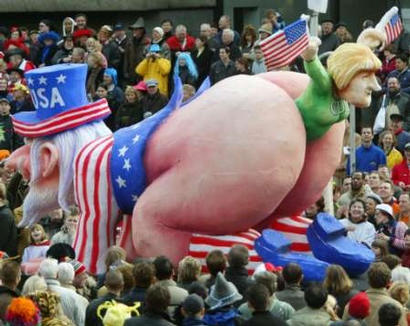
Sight Gag: Shocked But Not Awed in Germany

unclesam_merkel.jpg

This is a picture of a papier mache float in the Rose Monday carnival parade in Dusseldorf, March 3, 2003. The woman emerging from Uncle Sam’s buttocks is Angela Merkel, subsequently elected the first woman Chancellor of Germany in 2005 and currently considered by Forbes Magazine to be the most powerful woman in the world (followed in second place by Condolessa Rice). At the time of this photograph she was the leader of the conservative opposition in Germany and highly critical of the government’s anti-Iraq stance; she had also just returned from a trip to Washington, D.C.

Photo Credit: Ina Fassbinder/Reuters (and with thanks to Stefan Sharkansky)

Our primary goal with this blog is to talk about the ways in which photojournalism contributes to a vital democratic public culture. Much of the time that means we are focusing on what purport to be more or less serious matters. But as Jon Stewart and Stephen Colbert often remind us, democracy needs irony, parody, and pure silliness as much as it needs serious contemplation. For our part, we will dedicate our Sunday posts to putting such moments on display in what we call “sight gags,” democracy’s nod to the ironic and/or the carnivalesque. Sometimes we will post pictures we’ve taken, or that have been contributed by others, or that we just happen to stumble across as we navigate our very visual public culture. Sometimes the images will be pure silliness, but sometimes they will point to ironies, poignant and otherwise. And we won’t just be limited to photography, as a robust democratic visual culture consists of much more. We typically will not comment beyond offering an identifying label, leaving the images to “speak” for themselves as much as possible. Of course we invite you to comment … and to send us images that you think capture the carnival of contemporary democratic public culture.

 1 Comment

Flag Week: Iwo and Manzanar

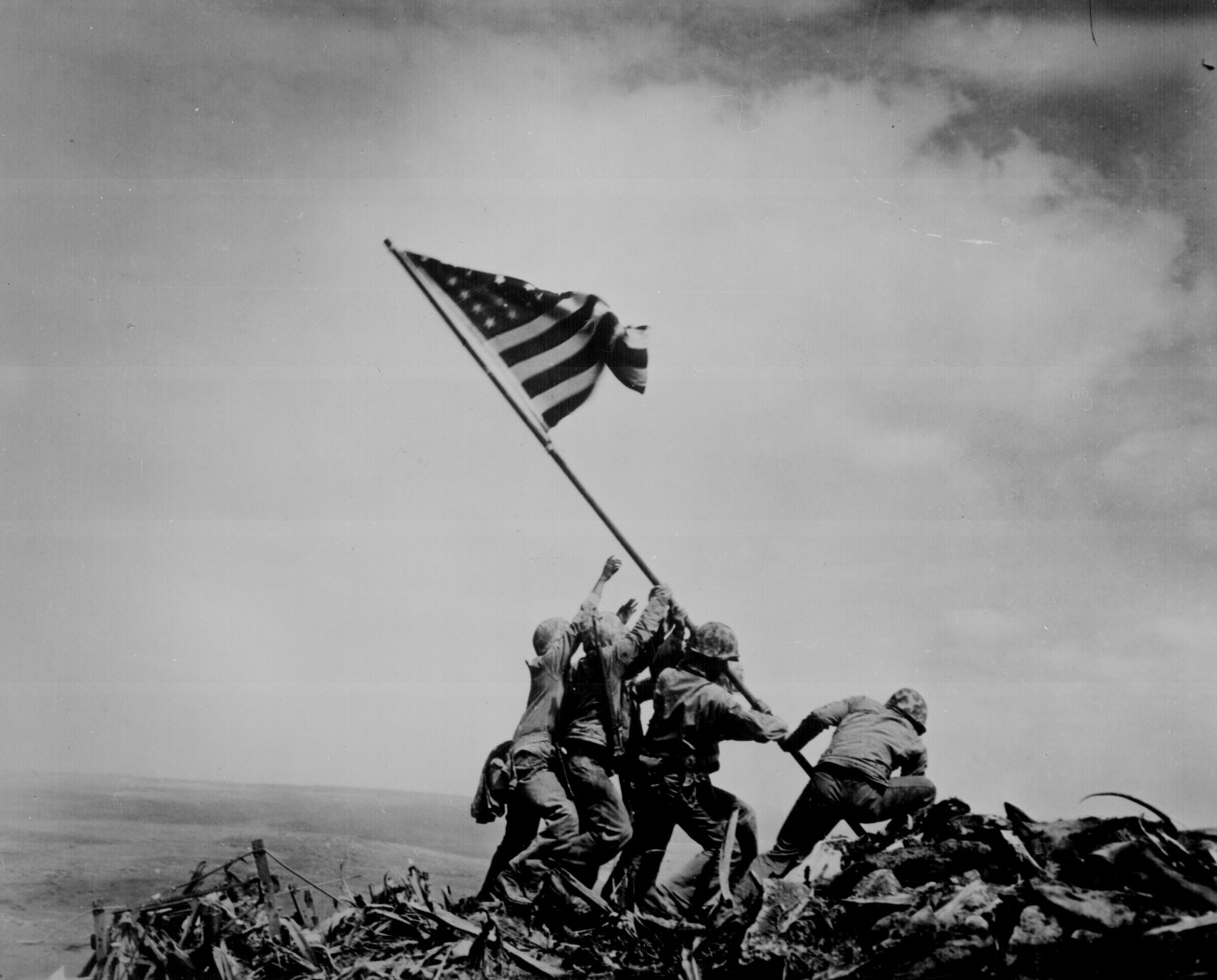
On February 19, 1945, the Marines hit the beach at Iwo Jima. A few days later Joe Rosenthal would take the most famous iconic photograph of them all. That image will appear throughout the media this week, and it should be no surprise to see it here:

iwo-ww2-156.jpg

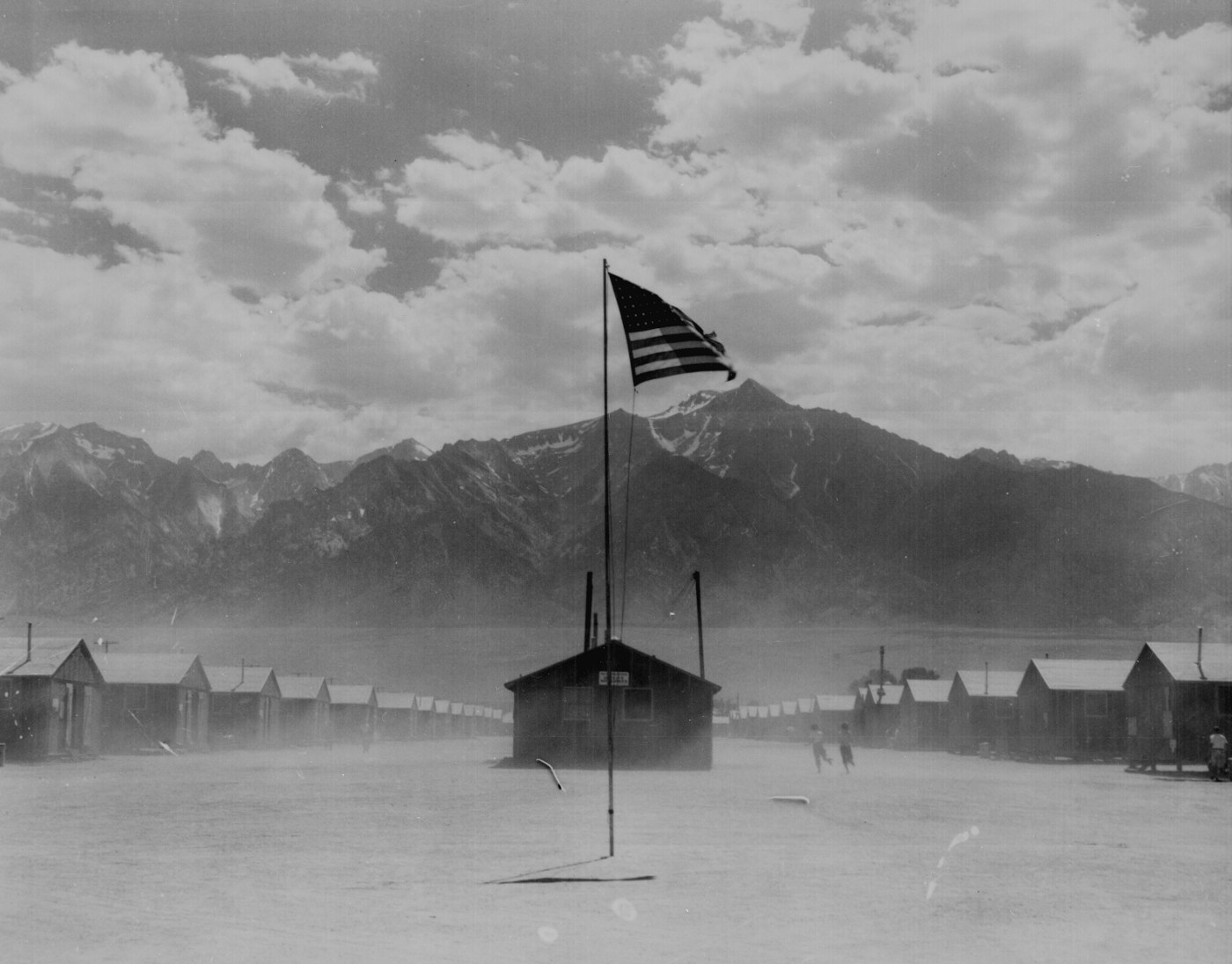
That should not be the only flag we remember, however. Three years earlier, but on the same day as the invasion of Iwo, President Roosevelt signed an executive order granting authority to the military to relocate Japanese-American citizens to internment camps. These two stories could not be more contradictory: on foreign soil, men giving their lives so that their country can remain free; in their own country, soldiers imprisoning fellow citizens who were no threat to the liberty broken by their incarceration.So it is that we should look at another image of the American flag:

lange-flag-manzaner.jpg

This photograph was taken by Dorothea Lange at the internment camp near Manzanar, California. The image captures perfectly the terrible mixture of irony, betrayal, pain, and longing that defines every aspect of this desolate moment in American history.

Two photographs, two flags, two sides of American history. Let’s not forget either one.

Photo Credits: “Flag raising on Iwo Jima.” Joe Rosenthal, Associated Press, February 23, 1945. 80-G-413988 (http://www.archives.gov/research/ww2/photos/#iwo).

“Dust storm at this War Relocation Authority center where evacuees of Japanese ancestry are spending the duration.” Dorothea Lange, Manzanar, CA, July 3, 1942. 210-G-10C-839 (http://www.archives.gov/research/ww2/photos/#home).

 3 Comments

The Joy of Voting

Every year or so at election time we are reminded of how apathetic American voters are by one or another group that calls attention to the low U.S. voter turnout in comparison to other countries. The antidote to this condition is to be “rational,” for voting, we are told, is the rational thing to do: every vote can make a difference, by voting you have a voice in the political, use it or lose it, and so on. The problem, of course, is that no matter how rational it is to be rational, few of us live our lives exclusively by the standards of such a calculus (even when we can figure out what the rational thing to do is!). The question then, perhaps, is not why do so few people vote, but in fact why do so many actually choose to go to the polls?

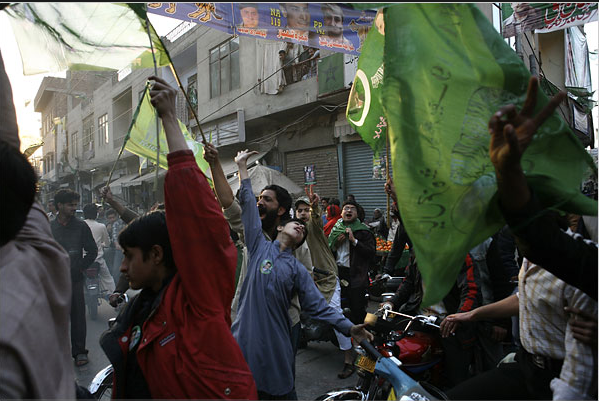
One possibility, of course, is that voting is altogether irrational, contrary to one’s best interests according to a carefully calculated cost-benefit analysis. A different answer is suggested in this photograph that appeared in the NYT this past week following the parliamentary elections in Pakistan.

p-election.png

Voting in this election might have been the rational thing to do, although the caption points out that those going to these polls did so “fearful of violence,” but what the photograph features is a moment of unfettered, collective joy and celebration. The figure dancing in the middle is a cipher of almost pure affect, channeling the emotion that courses up and down the street. This election is about more than aggregating personal preferences: in the process citizens have become part of something that is larger than individual self-consciousness. The joy of voting here is an almost transcendent act; it is not inconsistent with a rational appeal to aggregate one’s votes and thus gain the power of numbers, but it is clearly more than that—a ritual of social life and collective being.

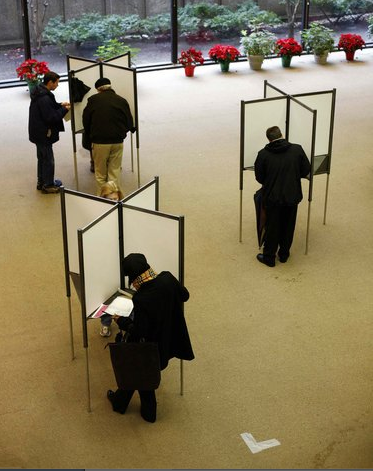
In the U.S., of course, we worry a good deal about the influence of such demonstrations of public affect on the voting process. And so while political campaigns themselves seem to be acceptable occasions for public spectacles, parades, and overt displays of collective emotionality, voting itself is rendered as an individual and isolated moment of private reflection. This photograph from this past week’s Washington Post is typical of how the voting process is ritualistically represented by the mainstream media:

individual-voting.png

Nameless and faceless individuals visually and physically segregate themselves from the influences of the public as they register their voice and opinion guided by nothing by conscience—and, presumably, rationally calculated private interest. Indeed, there are no signs of the public whatsoever, a point underscored by the high angle and long distance of the image that would ordinarily contextualize the setting in a public space, but here only emphasizes the stark, drab, emptiness of the room which could be anywhere—and nowhere.  Note too how the image highlights the fragmentation and separation of private individuals. What the picture shows us then is a scene that symbolically underwrites the autonomous individuality featured in contemporary liberal-democracy, and one that mutes the affect or joy that goes along with being members of a community of strangers. Good reasons aside, it is little wonder so many people choose not to vote.

Photo Credits: Tyler Hicks/NYT; Shannon Stapleton/Reuters

 3 Comments

The Neo-Con Nightmare: Hope

The latest theme among the punditry–and once again, one serving conservative interests–is that Barack Obama is a silver-tongued, spell-binding, mesmerizing, messianic orator whose powerful rhetoric is creating a cult of personality. (They really are saying this.) Charles Krauthammer is the latest to weigh in, although largely to summarize his colleagues’ profound insights. One might think it would be an understandable response if the current president had been a model policy-maker, but that obviously is not the case. And it wasn’t that long ago when conservatives were telling us that Ronald Reagan ought to be celebrated for how he made us believe, after the doldrums of the Carter years, that it was “Morning in America.” That message of hope has been conveniently forgotten, it seems. So what’s up?

The convention of capable writers attacking eloquent speakers goes all the way back to Plato. In brief, the cautionary note against demagoguery is an important warning in any democracy, but one often used on behalf of oligarchic interests. And there are two very important considerations: whether the charge is correct in the particular case, and what the alternative is. Furthermore, it can be difficult for some people to tell the difference between bombast and eloquence, and the alternative often gets a pass as one assumes that other speakers with different styles are somehow more substantive, or those with less ability are nonetheless adequately effective.

But those are not the problems we have at the moment. No, the problem is that the currently regnant ideological regime has acquired enormous power, influence, and wealth through the politics of fear. No wonder they now are afraid. Obama isn’t just an orator, but his oratory has done something far more important than enchant his audiences. He has given voice to a new, rightly hopeful America that already exists. If you want to see them, take a look:

obama-vibe.png

These are faces in a crowd that was listening to Obama last month in South Carolina. I liked this photograph the moment I saw it. That response is cued by the smiles in the center of the frame, but by more as well. To the extent that faces can tell the story, these people aren’t just watching, they are listening and responding, and actively so. They are not being snowed but rather attending intelligently and liking what they hear. They are in a good mood because they are responding in kind to a speaker who respects them enough to appeal to their intelligence and their belief in a good society. They are neither stupid nor poor, nor vulnerable to a demagogue because of that. But that is not the whole of it.

The profound beauty captured in this photograph is that they are comfortable with one another. Black and white, young and middle-aged, Southerners all, they are pressed together and yet each is completely at ease. The good vibe comes not from seeing Obama’s luster reflected in their faces, but from who they already are individually and together. This is the America that has been emerging, however fitfully, in that last twenty years. This is the America that wants to hope and deserves a president who can recognize and respect and strive for all that hope represents.

The Krauthammer column appeared in the Chicago Tribune on Presidents Day. The Republican claim to be the “party of Lincoln” became ever more strained with the the continuation of Nixon’s “Southern strategy” throughout the Karl Rove era. Now it appears that it was not enough to abandon Lincoln’s vision of America; his eloquence has to be rejected as well. But let us not forget the challenge he has set before us forever. Politics may not be able to escape vicious partisanship, but it should not succumb to it, and the highest calling of the political leader is to bring people to respond to their common problems by drawing on what is good and true within each of us. As Lincoln knew:

“I am loath to close. We are not enemies, but friends. We must not be enemies. Though passion may have strained it must not break our bonds of affection. The mystic chords of memory, stretching from every battlefield and patriot grave to every living heart and hearthstone all over this broad land, will yet swell the chorus of the Union, when again touched, as surely they will be, by the better angels of our nature.”

Photograph by Jim Wilson/New York Times. You can read all of Lincoln’s First Inaugural Address here.

 6 Comments

Madonna and the Santa Clones at the Dog Show

Question: is an icon one or many? On the one hand, an icon is supposed to be unique, representing the singular achievement, the ne plus ultra of a field of human endeavor. Michael Jordan is an icon, not Scottie Pippen or many other top-tier players. Babe Ruth, not Hank Aaron or Sammy Steroid. Einstein and Picasso, not Bohr and Braque. The Mona Lisa, not . . . Well, that gets to the other hand, which is that the icon is iconic because it is widely distributed, something that may have become distinctive through constant reproduction regardless of individual merit. Thus, the icon appears to be both singular and the latest iteration of a series, both unique and the characteristic instance of a type. Nobody understands this better than Madonna:
madona.png

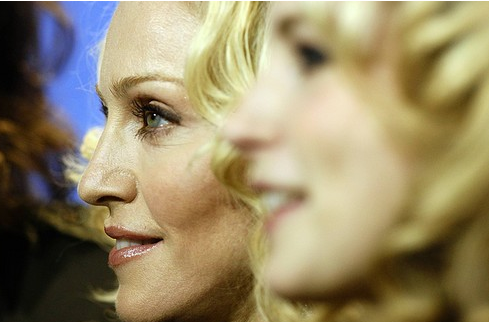
Here she is posing with actress Holly Weston at a publicity shoot for their movie “Filth and Wisdom.” The combination of title and double image invites snide remarks, but that’s taking the cheap bait. I like the photo because of how it captures Madonna’s genius for making herself heir to all the blondes produced by the Hollywood dream factory. We have realized since Warhol’s Marilyn series that the blonde du jour is performing a type, but Madonna makes that a virtue rather than a dirty little secret.

This photograph captures the visual iteration beautifully. Madonna is in focus and set forward at the head of a series. The younger woman is somewhat fuzzy, as if still in the process of formation. They seem to be perfectly sequenced in space and time, the one rightly receiving the spotlight that eventually will be on her successor. Above all, each is one of a series that can extend indefinitely–and will, as all that is required is processes of reproduction that obviously are well in place. Image, publicity, bone structure are all a sure thing. The “mechanical reproduction” of the camera replicates the culture machine and genetic mechanism alike.

According to Walter Benjamin, mechanical reproduction destroyed the “aura” of the individual work of art as well as its relationship to tradition. Absent this anchoring in “ritual,” artistic production becomes politicized. For all his brilliance, Benjamin’s observations can get in the way of understanding how culture depends on constant iteration of visual forms. To see this, one might shift from fine art to vernacular practices and pagan rituals, like this one:
santa-clones.png

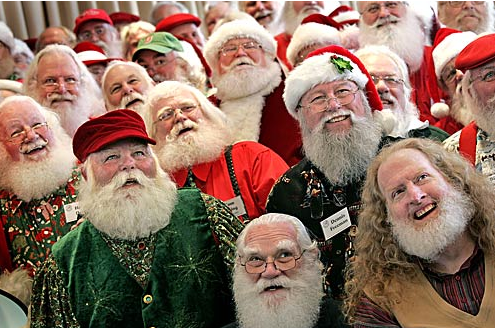
You are looking at a photo from this year’s annual convention of the Amalgamated Order of Real Bearded Santas. If there is a rival organization of Fake Bearded Santas, I haven’t heard of it. This group meets every year in Southern California, which no doubt it just the place for letting your hair down after the Christmas rush.

I get a kick out of this image for several reasons. Their easy association with ritual is mirrored in their behavior for the camera, where they all lean together and smile on cue for the group snapshot. The photographer may have asked for a big “Ho Ho,” but they probably smile easily. We also can smile at the few outliers in the group: the Lord of the Rings afficiando in the front right, and the wary ball cap guy in the left rear. The real comic effect, however, comes from the photo being a study in duplication. Santa Claus should be a single, iconic figure, and he is–but only because there are Santa Clones in every department store in the country.

And so we get to the dog show. To get some distance from Benjamin’s anxiety about the mass media, we might consider how it is that humans are continually reproducing images of visual iteration. Like this:
dog-line-sheepdogs.png

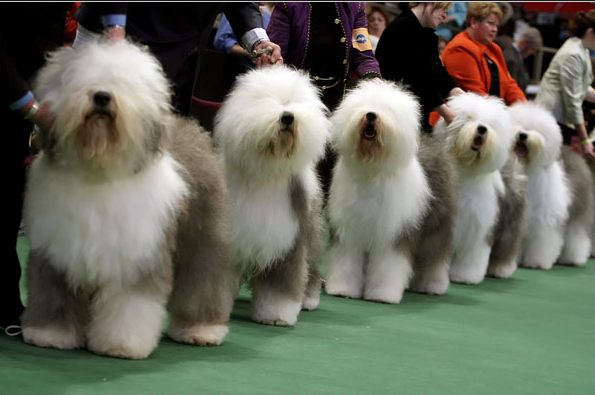
These are Old English Sheepdogs lined up for judging at the Westminster Dog Show. I won’t doubt that each of these dogs are individuals, but the photograph highlights their species identity and regimented styling. The most distinctive Old English Sheepdog will be the perfect iteration of the type, which stands behind that dog in a long series issuing from the twined processes of nature and culture.

Despite the attempt by these photographs to put a good face and good vibe on cloning, I’ll bet that the anxiety about mechanical reproduction remains. Celebrity culture, vernacular culture, subculture, all are exercises in the reproduction of the same. Cloning isn’t something that emerges unbidden from modern technology, but rather one more instantiation of something humans do all the time. If you don’t like it, there still is reason to blame the camera, which is both an apparatus of reproduction and a means for naturalizing cloning. But I wouldn’t, for these images and others offer more than apparatus and ideology. They are how we see ourselves as we are, seriatim.

Photographs by Markus Schreiber/Associated Press, Karen Tapia Andersen/Los Angeles Times, and Timothy A. Clary/Agence France-Presse/Getty Images.

 4 Comments

Presidents Day Celebration

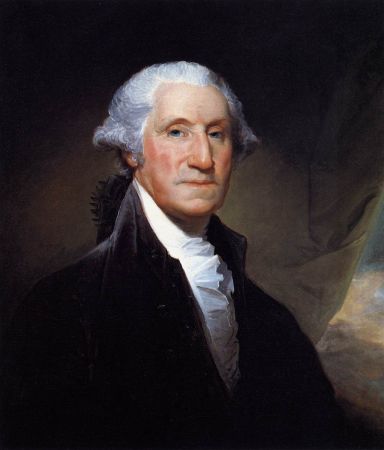
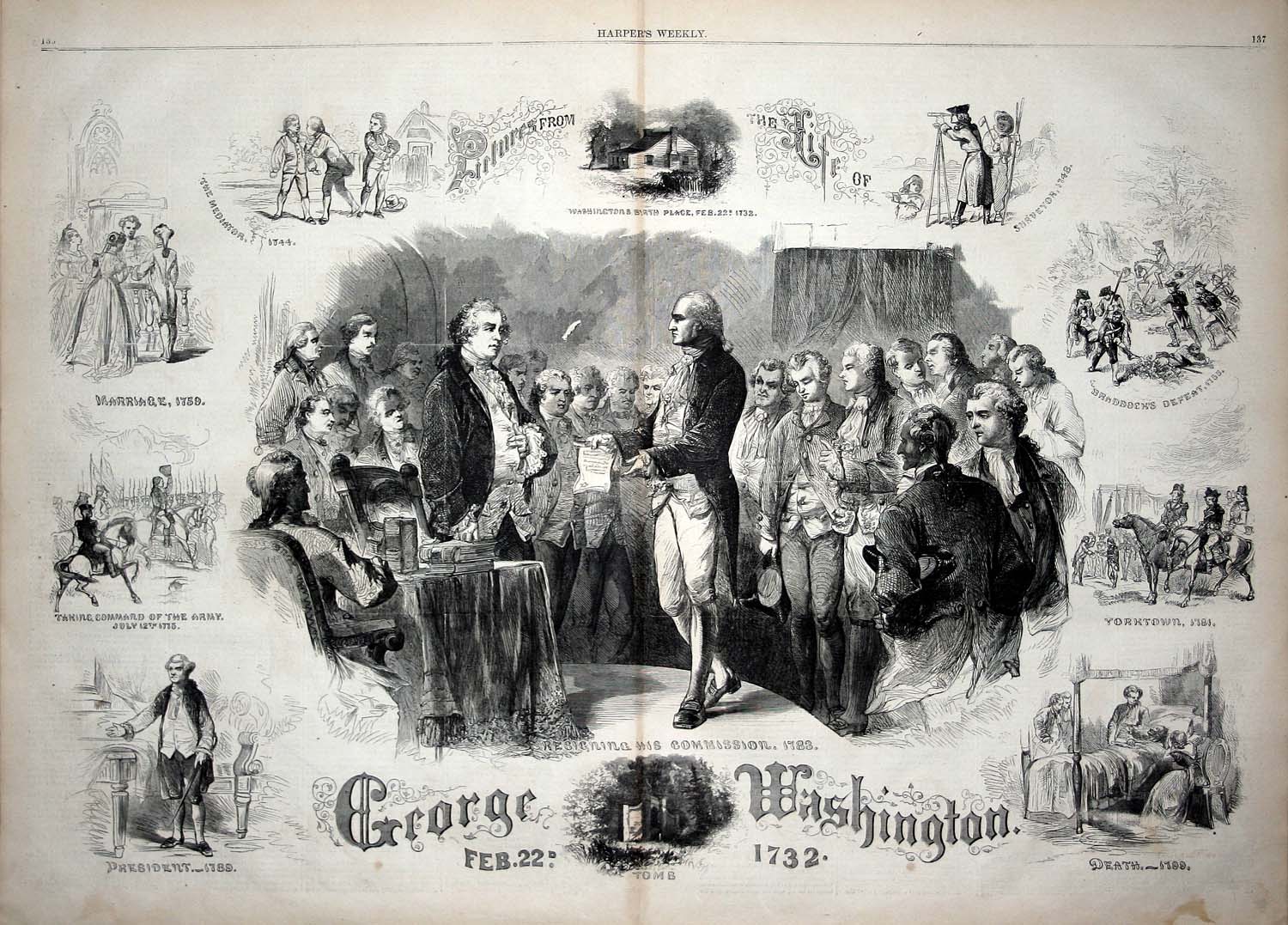
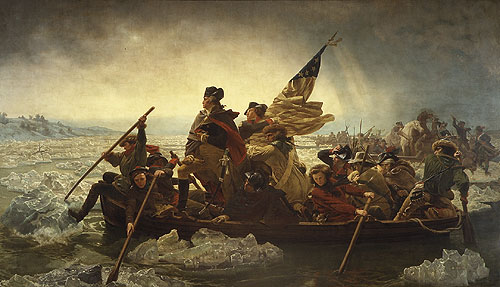
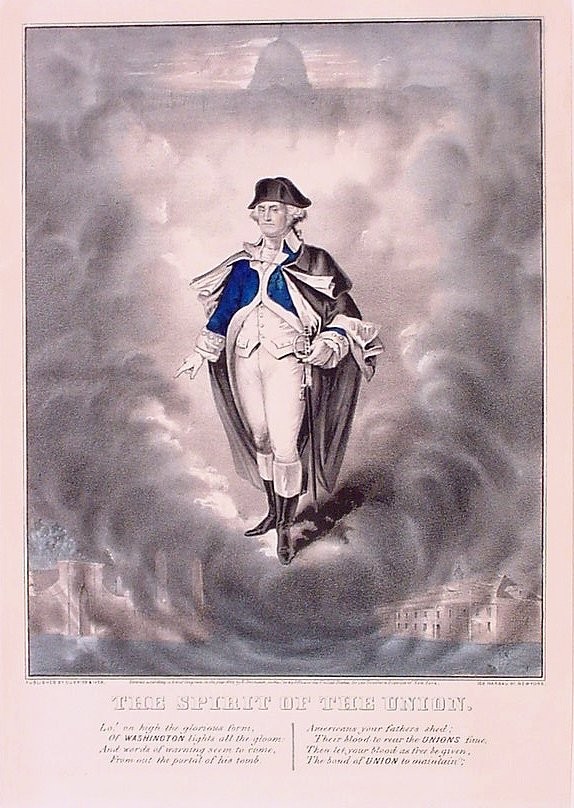
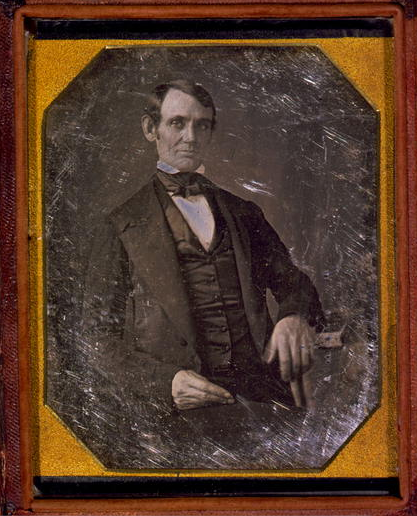
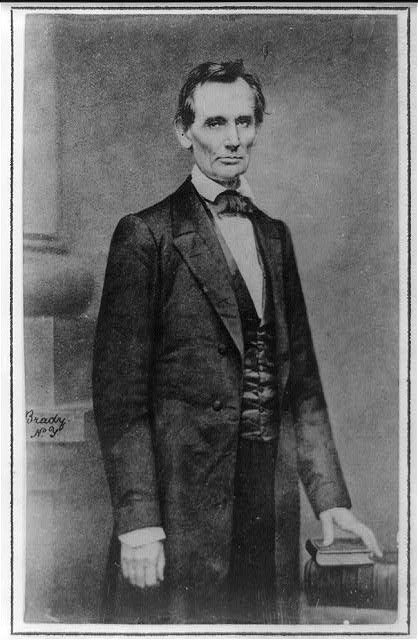
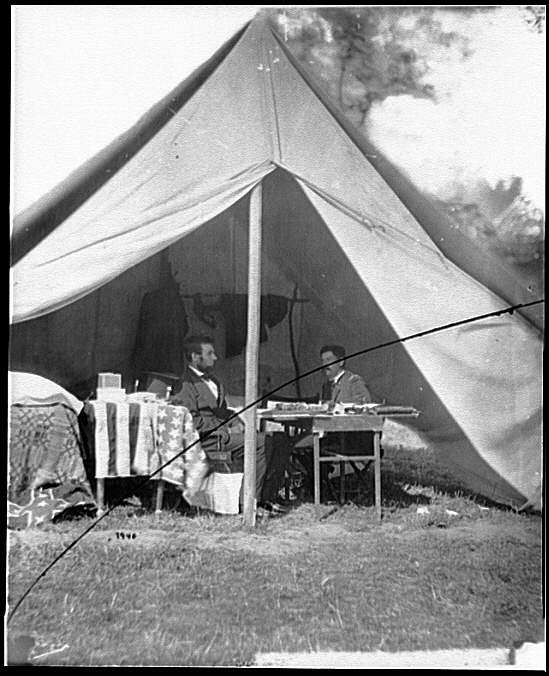
There is a good deal of confusion about Presidents Day. Some see it as a celebration of the lives of two of our greatest presidents, while others see it as a commercial holiday, a break in the winter season and the occasion for a salea-bration. We think it is an interesting occasion because it features a president for whom we have no photographs, though no dearth of images, and the first president to recognize the publicity value of the photograph, sitting for over 100 portraits and being photographed in many different contexts including, most prominently, at the war front. (The first president actually photographed was John Quincey Adams, but it was many years after he was in office.  The first president actually photographed while in office was James K. Polk.) The question is, what’s the difference?

generals_4.jpg
Gilbert Stuart, 1795


george-washington.jpg
Harper’s Weekly, Feb. 22, 1732


ap97341.jpg
Emanuel Leutze, 1851


cur5655.jpg
Currier and Ives, 1860


lincoln-d.png
Nicholas H. Shephard, Daguerotype, 1846


3a09102r1.jpg
Mathew Brady, Lincoln at Cooper Union, 1860


lincoln2.jpg
Alexander Gardner, Lincoln with General McClellan at Antietam, October 3, 1862


lincoln-color.png
Alexander Gardner, Silver Gelatin Print, February 1865


02928r.jpg
Alexander Gardner, Lincoln’s Second Inaugural, 1865

Images Courtesy of Library of Congress, Philadelphia Print Shop, Ltd., Abraham Lincoln Art Gallery

 0 Comments

Sight Gag: Iraq v. Vietnam – "Deja Vu All Over Again"

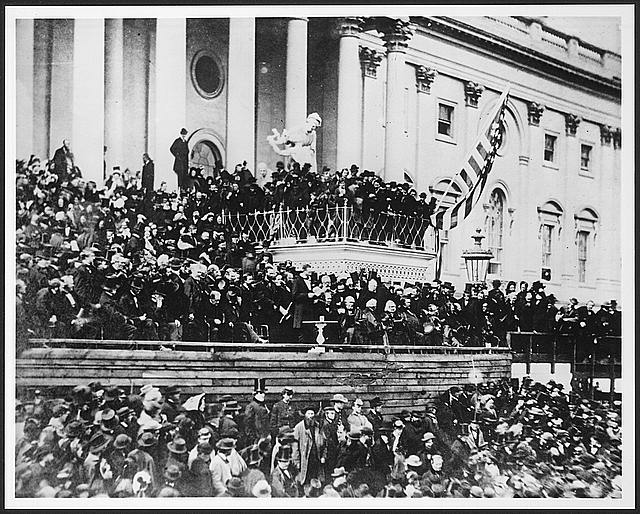
THEN

peacebomb.jpg

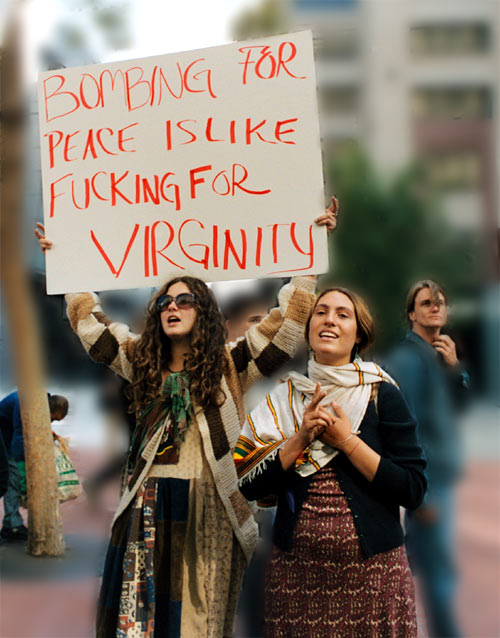
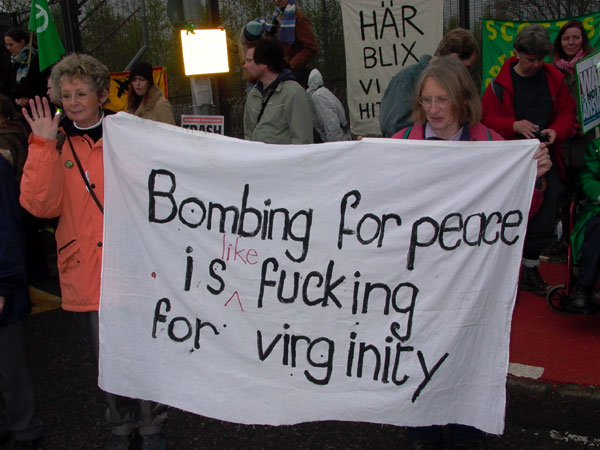
NOW

virgins.jpg

Photo Credit: Incredimazing, Friends of the Earth

Our primary goal with this blog is to talk about the ways in which photojournalism contributes to a vital democratic public culture. Much of the time that means we are focusing on what purport to be more or less serious matters. But as Jon Stewart and Stephen Colbert often remind us, democracy needs irony, parody, and pure silliness as much as it needs serious contemplation. For our part, we will dedicate our Sunday posts to putting such moments on display in what we call “sight gags,” democracy’s nod to the ironic and/or the carnivalesque. Sometimes we will post pictures we’ve taken, or that have been contributed by others, or that we just happen to stumble across as we navigate our very visual public culture. Sometimes the images will be pure silliness, but sometimes they will point to ironies, poignant and otherwise. And we won’t just be limited to photography, as a robust democratic visual culture consists of much more. We typically will not comment beyond offering an identifying label, leaving the images to “speak” for themselves as much as possible. Of course we invite you to comment … and to send us images that you think capture the carnival of contemporary democratic public culture.

 2 Comments

Conference Call: Visible Memories Conference

The “Visible Memories” Conference will take place at Syracuse University, October 2-4, 2008. The conference will explore the intersections of visual culture and memory studies with particular focus on the ways in which memories are manifested and experienced in visible, material, or spatial form. Featured speakers  include Keynote Speaker Enesto Pujo, Cara Finnegan, Andrea Hammer, George Legrady, Julia Metzer, Phaedra Pezzullo, Gregory Sholette, David Thorne, and Patricia Zimmerman.The call for competitive panel sessions indicates a special interest in (but is not limited to) work on local sites of memory; memorials and archives; environmentalism and representations ofnature; regioal, national, or global tourism; photography or cinema; digital media; and art installations.Submission Guidelines: Submit a paper abstract electronically (500 word maximum). Include a separate cover page with paper title; author name and affiliation; and contact information. Submissions should be addressed to Dr. Anne T. Demo (atdemo@syr.edu). Deadline for abstract submission is May 1, 2008. Acceptance notification will be sent by June 1, 2008.For additional details contact Dr. Demo (above) or check the conference website.

 1 Comment

A Season for the Passions

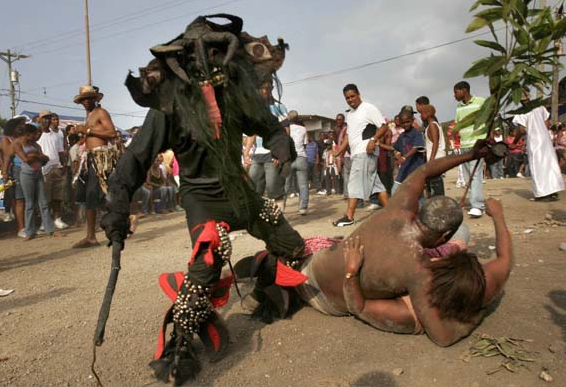
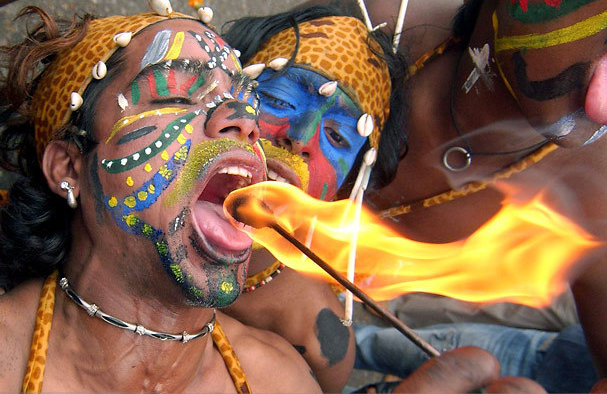
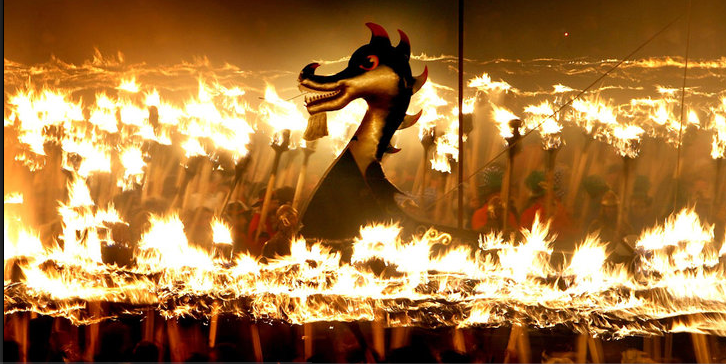
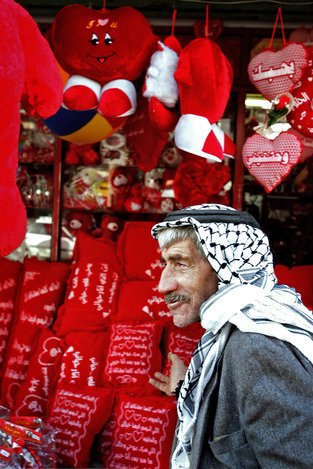
As you no doubt know, today is St. Valentines Day. Most of us in the United States are first introduced to it in kindergarten or the 1st grade where we are encouraged to give valentines to all of our classmates. Eventually we learn that Valentines Day is something of a romantic holiday, to be shared mostly in private with that “someone special,” but even at that it retains its communal quality as an occasion for the expression of the passions by virtue of being marked as a public holiday. Like most such holidays it has become grossly commercialized and it is thus easy to be cynical about it (even as I mark on my calendar the need to buy a valentine for my beloved), but what we too easily forget is that Valentines Day occurs during the mid-winter season that includes an array of holidays and festivals—Mardi Gras, carnival, the Lunar New Year, etc.—all of which feature some version of a public and communal expression and release of emotion.

Public displays of emotion are often seen as undermining collective judgment and putting democratic polity in peril, and certainly emotional reactions can get out of hand (just like obsessive and blind adherence to rationality), but at NCN we believe that public emotion is nevertheless essential to a vital and vibrant democratic public culture and thus needs to be nurtured and cultivated. And so we celebrate the mid-winter season as a time for the communal expression of affect and emotion—a season for the passions—by bringing you pictures of the season that have been featured by the mainstream media who seem implicitly to recognize its importance both at home and abroad.


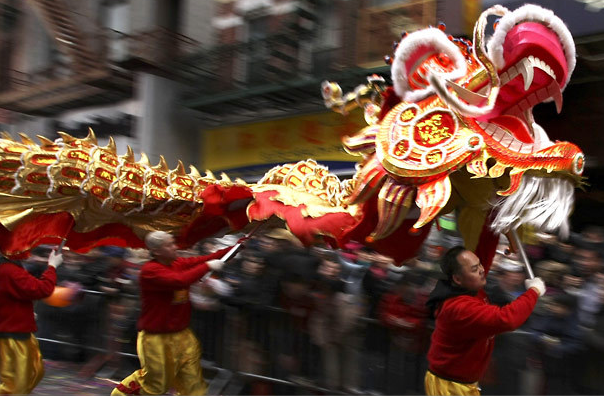
china-town.png
Lunar New Year, Chinatown, New York City

tet.png
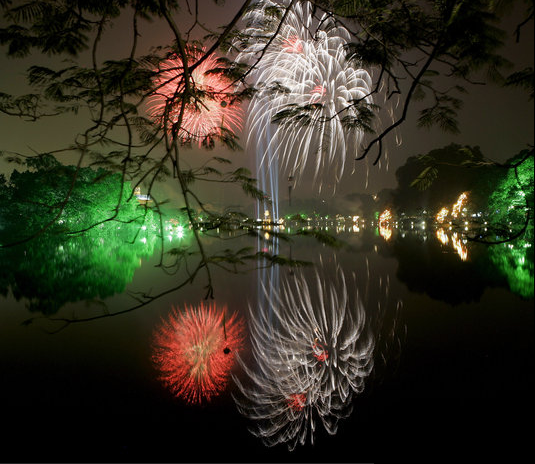
Tet, Hanoi

mardi.png
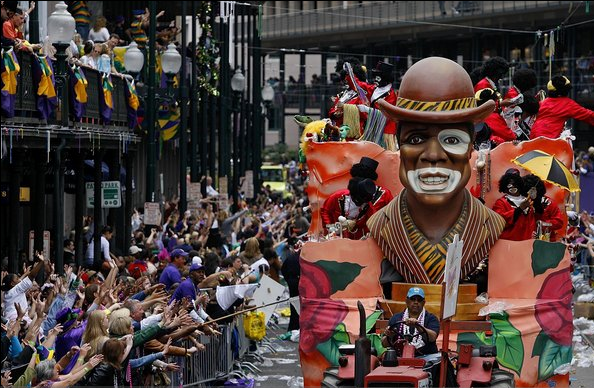
Mardi Gras, St. Charles St., New Orleans

rio-1.png
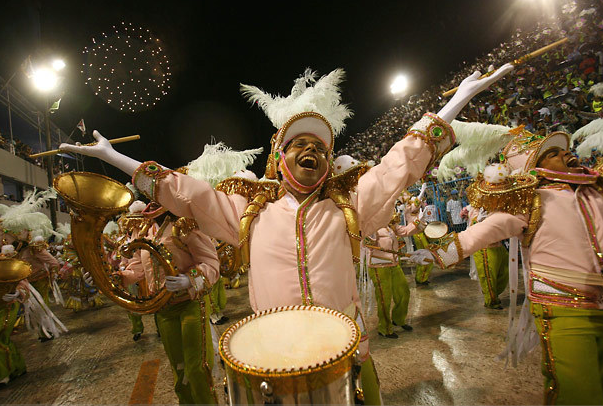
Carnival, Rio de Janeiro

sweden.png
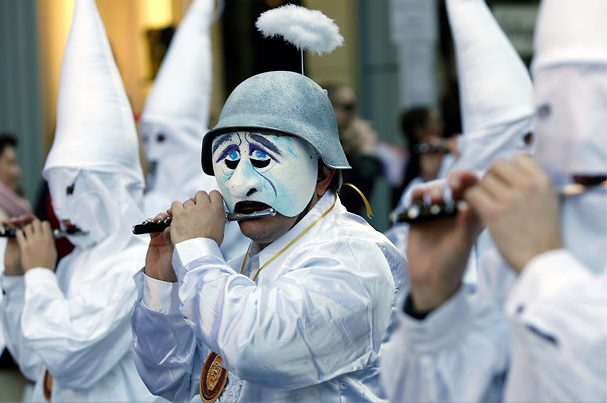
Carnival, Basel, Switzerland

diablo.png
Congos y Diablo Carnival, Panama

hindu.png
653rd Anniversary of the Birth of Bawa Lal Dyal, Amristar, Pakistan

scotland.png
Up the Helly Aa Festival, Shetland Isles, Scotland

west-bank.png
Valentines Day, West Bank city of Jenin

Photo Credits: Chris McGrath/Getty Images, Chitose Suzuki/AP, Ted Jackson, Times-Picayune, Daldo Galderi/AP, Andreas Frossard/AP, Narinder Nanu/AFP/Getty Images, Arnulfo Franco/AP, Danny Lawson/AP, Saif Dahlah/AFP/Getty Images

 6 Comments

Unimaginable Results

The surge is working! Or so President Bush intimated in his recent State of the Union Address when he indicated that “the American and Iraqi surges have achieved results few of us could have imagined one year ago.” Imagined by the numbers, what this means is that American and allied military deaths are now down to just slightly above pre-surge levels, amounting to 2.47 deaths per day (a “mere” 901 deaths in the preceding twelve months). Of course, this number does not take into account the 16.6 injuries per day to military personnel or the incalculable psychic damage resulting in PTSD. But most of all, it doesn’t take into account the nearly 25,000 deaths to Iraqi civilians in the past year, a conservative estimate which more than doubles pre-surge numbers in this category. Such statistics are hard to find, as they are typically not featured in the mainstream press, but even at that they are abstractions that operate in the aggregate and make it hard to identify the real human and social costs and implications of such of policies as they are lived and experienced.

To understand the larger impact of the surge requires more than numbers. It also requires vision and imagination.

picture-2.png

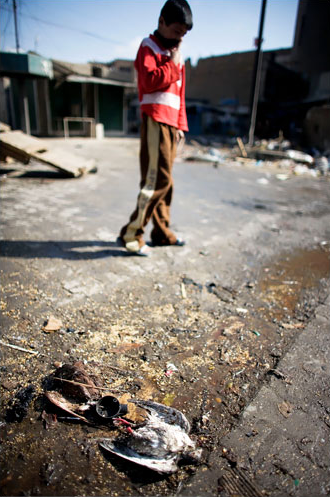
Less than a week after President Bush lauded the “results” of the surge, Baghdad experienced its “Worst Attack … in Months” as two suicide bombers unleashed carnage in a popular pet market and bazaar. No Americans died or were injured, but 65 Iraqis were killed and at least twice that many were wounded, including many children and teenagers. The NYT depicted the attack in a slideshow that generally followed the realist conventions of documentary photography, focusing on the particular event with landscape portraits of the after effects of the explosions, as well as medium and close shots of injured individuals, family members mourning the deaths of relatives, and coffins housing the dead. However, the photograph above, appearing near the middle of the slide show, broke with these conventions in ways that invites a more capacious, allegorical understanding of the attacks and their implication for interpreting the otherwise unimaginable results of the year long surge.

What we see here is a young boy standing in the middle of the street. It could be anywhere, of course, lending universal appeal to the image, but the slide show locates us in Baghdad. Cast in a shadow and shot in a subtle but noticeable soft focus, it is hard to recognize the boy as an individual. Nor does his individuality seem to matter, for he is identified in the caption as a type, “a young boy,” and it is the assumption of his youthful innocence and potential for the future that seems to matter the most. While he occupies nearly half the frame of the image, and thus his presence looms large, it is not the boy to which our attention is drawn, at least not exclusively and except insofar as the caption notes that he is “examin[ing] dead doves at Ghazil market, which has been a regular bombing target.” No, it is the doves, laying prostate and framed in the foreground by a wide angle that casts them in sharp focus, that invites our most immediate and direct identification and consideration.

Just as the child is a symbol of innocence and hope for the future, so the dove is the symbol of peace and harmony. One would hope that the two would go hand in hand. But here they have been sundered, their separation from one another – and from the viewer – emphasized by the low angle, debris, and blood that marks their distance from one another. The significance of this is once again underscored by the caption which, goes on, “Ghazil market … has been a regular bombing target. It was struck a year ago in January, when 15 people died, but after months of increased American troop presence, it regained some of its vitality.” The tilt of the boy’s head (is he “examining the doves” or mourning a loss) suggests that the “return to vitality” was a false hope. The veil of innocence has been shattered (perhaps, once and for all), and with it the future is placed in question.

The photograph would thus seem to be an allegory for much more than this one explosion. And as such, perhaps it helps to make the results of the surge a bit more imaginable.

Photo Credit: Eros Hoagland/New York Times

 3 Comments