Feb 12, 2008
Dec 07, 2009
Jan 14, 2015
May 18, 2008
Sep 16, 2007
Jul 14, 2007

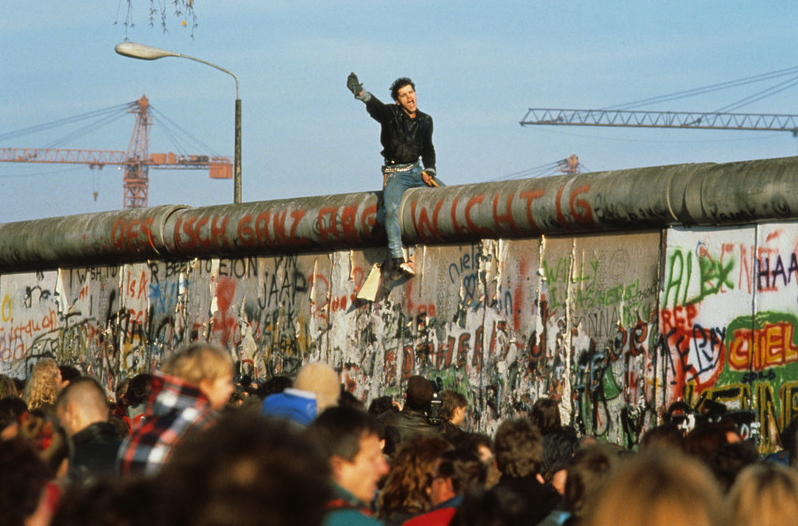
Photographer's Showcase: The Fall of the Berlin Wall

This week we feature a CBS report that celebrates the twentieth anniversary of the fall of Berlin Wall by drawing upon the work and reminiscences of photojournalist (and longtime friend of NCN) Peter Turnley.  Click on the image to view the video, or click here to read his column on the fall of the Wall at the Digital Journalist and here to see a stunning gallery of his photographs that includes both the fall of the Wall and the Velvet Revolution in Czechoslovakia.

Turley, Fall of the Berlin Wall

Photo Credit: Peter Turnley/Corbis

 1 Comment

When Poverty Doesn't Catch the Eye

This photograph may be one of the more ordinary images in recent photojournalism, and all the more eloquent for that.

homeless labourer

The caption stated that “A labourer rests near his makeshift tent home in a park” in Charlotte, North Carolina.  Attentive readers will have noticed the British spelling (and usage), and the image did come from an online slide show at The Guardian.  My guess is that American papers weren’t so quick to run the photo, but can you blame them?  There is nothing dramatic or otherwise notable anywhere in the frame.  The focus is diffused from the man in the foreground across the darkened, nondescript scene and then up into the spare stand of trees and the vague sky.  The area on the ground is littered with generic consumer items, while the background vista is a mess of random tree trunks, scrawny branches poking every which way, and brown leaves not yet scattered. The scene is utterly without visual interest, while nothing is happening–or likely to happen.

Attentive viewers may have noticed another dimension to the scene, however.  There are several tensions, subtle yet troubling, that can guide reflection.  First, there is more to the man, if you will look for it.  He is brooding it seems, an attitude that resonates with the long shadows from the late afternoon sun.  And that sunlight gilds his face and his hand: the face is taut with interior life, and the gesture and veins of his hand suggest strength and skill.  Together they may signify the dignity of labor, and so this photograph can channel the realism and progressive sentiments of genre painting.  He is not at work, however, or have enough of a job to afford shelter, and so the worker’s capable hands (and strong back) are immobilized.

Note also the contrast between his personal possessions and the unkept woodland.  His clothes are clean while laundry is draped on a clothesline, there is a symmetrical order to the campsite, and it looks as if a calendar and similar items are tacked to the tree trunk on the right.  What should be natural setting has taken on the look of domesticity, and what should be a temporary site–a campground, as if for a weekend getaway–is becoming the place where he may spend the winter.

So it is that the banality of the photograph is the vehicle for its documentary truth.  What we are seeing is a man settling into a “new normal.”  He is homeless, even if he is working he won’t have any job security, and his ability to cope, adapt, keep his shirt clean, and otherwise be ready to move up may do no more than keep him from slipping lower yet.

Photograph by Carlos Barria/Reuters.

 3 Comments

The March of the Flag

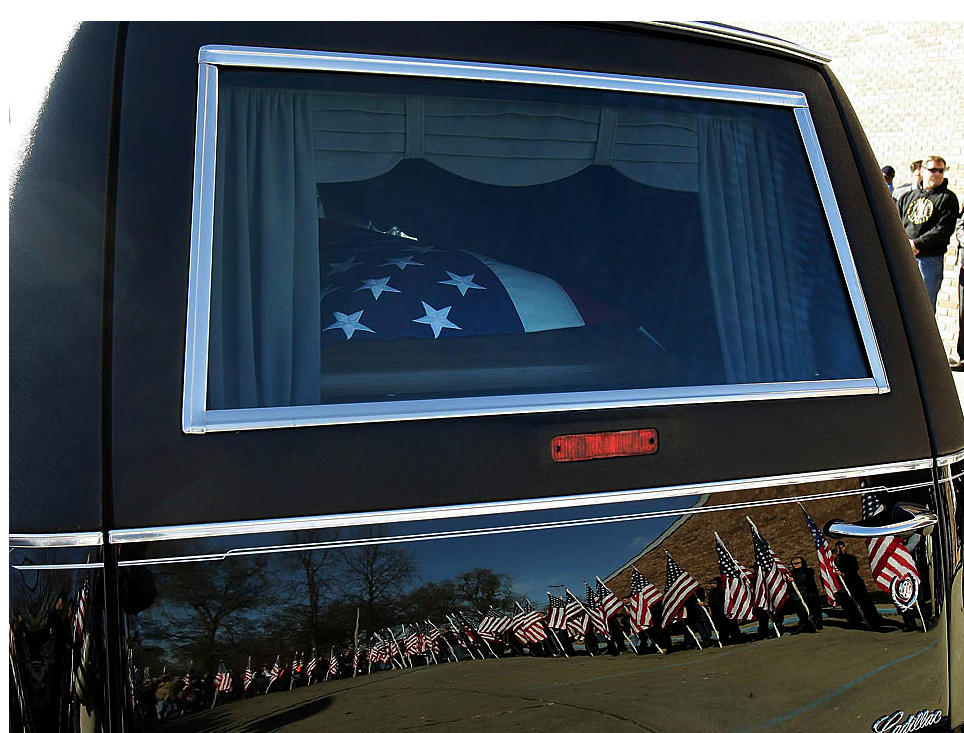
war hearse

November 11th was originally proclaimed Armistice Day by President Wilson in 1919 as a day for remembering those who sacrificed their lives in the first “war to end all wars.”  In 1926 the U.S. Congress passed a joint resolution in which November 11th was designated as a day for commemorating “with thanksgiving and prayer exercises designed to perpetuate peace through good will and mutual understanding between nations.”  In 1954 Armistice Day was renamed “Veteran’s Day” by President Eisenhower in order to acknowledge and honor all veterans in the wake of World War II and the Korean conflict. The movement from commemorating a “war to end all wars” in the name of peace, good will and mutual understanding to a day for honoring Veterans of all wars without prejudice is not subtle, although we rarely if ever seem to acknowledge the difference.  The point to be made here, however, is that this very shift in meaning correlates in no small way with the difficulty we have had in recent times in judging any national military aggression lest we risk doing harm to those who actually do the fighting.

The many slide shows at mainstream journalistic websites marking Veteran’s Day this past week make the point, as photograph after photograph presents visually eloquent and decorous displays of the sacrifices of those who nobly served and often died in the service of their country without any specific reflection on the particular wars being fought. This battle, that invasion, it doesn’t really seem to matter, as the reasons for fighting are visually trumped by an abstract, visual display of national sacrifice that, in the end, reduces the individual to the nation-state.  The photograph above from the Wall Street Journal is a case in point. The hearse carries the flag draped remains of a soldier recently killed by a roadside bomb in Afghanistan.  There is nothing in the image that marks that fact, although the caption does give the deceased’s name and rank, but notice how the photograph itself works to deflect attention from the particular sacrifice inside the hearse to the wall of flags that extends to infinity reflected on the vehicle’s highly polished, exterior surface.  The hearse is thus cast as a mirror, and as the photograph invites us to view it as such, what we see—as with any mirror—is a reflection of ourselves.  And what that reflection reveals is not the individual per se, but the nation signified by an inexorable march of the flag.  Whatever specific cause took the life of this soldier seems to pale in comparison, and certainly is not subject to question.

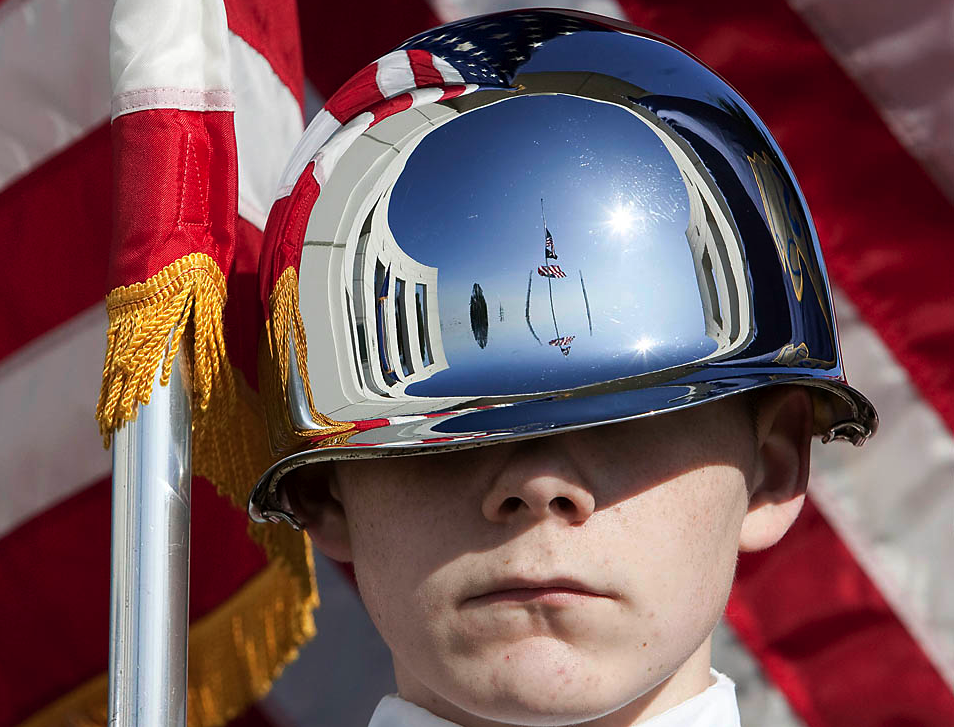
A second photograph from the same paper on the same day underscores and extends the nationalist implications of the first image above.

Junior Officer

Here we have a boy who is described without a name as a “Junior Reserve Offices Training Corps honor guard” participating in a Veteran’s Day ceremony.  Lacking a name, he takes on the quality of a individuated aggregate—an individual cast in the role of a collective.  He stands for something more than himself.  But what?  The eyes, we are told, are the windows to the soul.  But here, notice that his  eyes are hidden from view; if he has an individual soul it is not accessible to us.  What we have instead is his serious countenance defined by the set of his jaw balanced against the bright, mirror-like surface of his highly polished helmet, an instrument of war turned to ceremonial purposes.  The helmet reflects both the deeply saturated colors of the national flag that he appears to be holding, and which shrouds his head and shoulders, as well as another flag, more difficult to make out, that appears to be in his line of vision.  There is no hint of the boy here, let alone the individual veteran, but a connection between past (behind him) and future (in front of him) defined only by the national colors.  His (and our) present is defined  by  a direct line from past to future and the trajectory is … well, fated.  And once again, the flag marches on.

We can and should remember those who sacrifice their lives for the common good.  But in doing so we are well advised to recognize and reflect on what is being sacrificed to what, and to avoid the temptation—however comforting it might be—to make a fetish of the flag and what it represents in the process.

Credit:  Darron Cummings/AP; Nati Harnick/AP

 2 Comments

Sight Gag: Going Rogue

Palin the Rogue

Credit:  All Hat No Cattle

“Sight Gags” is our weekly nod to the ironic and carnivalesque in a vibrant democratic public culture.  We typically will not comment beyond offering an identifying label, leaving the images to “speak” for themselves as much as possible.  Of course, we invite you to comment … and to send us images that you think capture the carnival of contemporary democratic public culture.

 3 Comments

On the Road to …

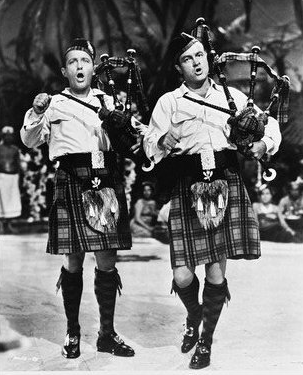
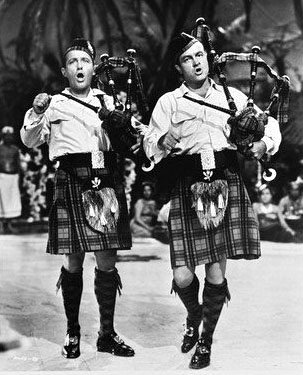
Like Hope and Crosby, your NCN guys are on the road this week. Unfortunately its nothing as exotic as Bali, or Rio, or Zanzibar … but who knows what mayhem we will create.  We’ll be back next Sunday with a new sight gag as we get ready to wind down another year.

HOPE

 1 Comment

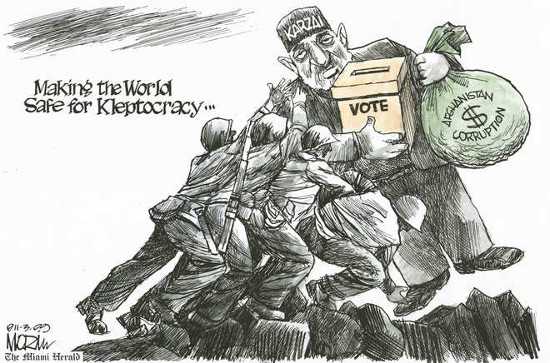
Sight Gag: "Making the World Safe …"

jm110309

Credit: Jim Morin, Miami Herald

“Sight Gags” is our weekly nod to the ironic and carnivalesque in a vibrant democratic public culture.  We typically will not comment beyond offering an identifying label, leaving the images to “speak” for themselves as much as possible.  Of course, we invite you to comment … and to send us images that you think capture the carnival of contemporary democratic public culture.

 2 Comments

Sony World Photography Awards

The World Photography Organization manages the Sony World Photography Awards, which offer parallel competitions for professional photographers and for amateurs.  Entry in competitions is free.  This year’s deadline for submission is January 4, 2010.  Information is available at the website, along with images of last year’s winners and amateur submissions.  The winners deserve our attention, but others do as well.  Images like this, for example:

chernobyl-hospital-ruin

Photograph of the department for newborn children, Pripyat’s hospital, Chernobyl alienation Zone, Ukraine, by Sergii Shchelkunov.

 4 Comments

Traces of Torture in the Visual Archive

The persistence of torture is enough to condemn modern civilization, the human race, and any conception of a just God.  Any thinking, feeling human being should be ashamed at what is done, and appalled at the perversion and obscenity and stupidity that it requires, and outraged at those who fabricate lies and evasions to excuse what is always a deliberate act of horror.

It’s pitiful that there is even need to say so, and because discussion of the topic involves facing evil while risking rationalization, good people might be loathe to consider how torture can be exposed, documented, and brought to public attention and so perhaps to justice.  The problem is compounded by the irony that so much of the damage done need not be visible.  The ratio between harm and evidence of harm may be greater with torture than with any other form of violence, not least because of the cleverness expended in devising techniques for causing pain without leaving physical scars (American citizens might want to to think of waterboarding and sleep deprivation, for example).  This is why the images collected by German radiologist Hermann Vogel provide eloquent testimony to the continuing agony and shame.
torture-x-rays-kurdistan

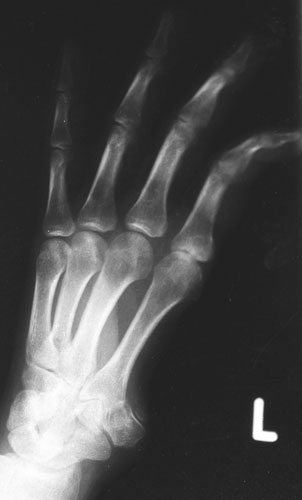
This is an X-ray of the hand of a victim from Kurdistan; after hanging from his fingers for far too long, the thumb had to be amputated.  (“Clearly the work of amateurs,” a seasoned torturer might say.) I find the image to be at once beautiful and heartbreaking.  The skeletal whiteness against the black void signifies a deep vulnerability, as we are at once creatures of light and yet so easily ghosted away into the void.  The delicately elongated fingers suggest the incredible sensitivity of which a human hand is capable–one can easily imagine these fingers creating gorgeous music at the piano, or making an intricate ornamental pattern on paper, or gently stroking a lover’s face.  All that was turned against the poor soul, however, as the same nerves were made to scream for mercy that never came.  And so the missing thumb speaks to a terrible absence, not only of itself, but also of the whole hand, and the whole body and self intact, and everything else that also had to be missing–and was–for evil to occur.

As reported by articles in The Guardian, Vogel has been collected X-ray images of torture and other forms of violence for almost thirty years.  This work is slowly bearing fruit, including the book A Radiologic  Atlas of Abuse, Torture, Terroism, and Afflicted Trauma, and Vogel currently is lobbying the EU to allow X-ray evidence in juridical proceedings such as asylum hearings.  Hearings that might offer some solace to the victims, or better yet, have saved someone from this:
torture-x-rays-iranian-girl

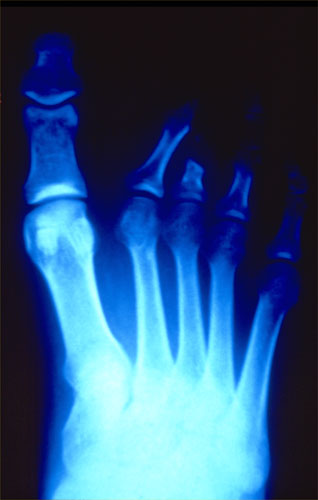
The X-ray reveals the permanent deformity produced when the toes of a 14-year-old girl were clamped by ­revolutionary guards in Iran.  She was being punished for wearing make-up.  Again, there is something touching about the image because it contains both a damaged body and a suggestion of the beauty that was broken.  Perhaps the crooked foot suggests the awkwardness of the teenage years, and certainly the blue and white hue evokes the color of a young woman’s clothes and love of life.  (These images obviously work in tandem with our foreknowledge of the victim’s circumstances, but that is hardly unusual.)  And again, the part less damaged is still suffused with light, while the brokenness blends into the dark beyond.  These images not only provide indexical signs of violence, they capture what is at stake in torture, which is nothing less than a war on all that is beautiful about human life.

It seems that evidence of trauma depends on assumptions about the formal integrity and right proportions of the human body that might be subject to criticism in some academic forums.  That indites no one, but it is a reminder that, on the one hand, ethical judgments can depend on aesthetic perception and visual evidence can extend well beyond factual verification, and, on the other hand, that nothing should be taken for granted and there will be reason to develop many other resources in order to press the case against torture.  In the meantime, however, one might appreciate the irony that these X-ray images, of all things, can evoke an emotional responsiveness essential to acknowledging the inhumanity of torture.  In the final analysis, these photographs may be seen more as art than as evidence, but they could be all the more important for that.

Photographs collected by Hermann Vogel.

 3 Comments

Public Images of the Clinical Eye

The eye can see a great deal, but it rarely sees itself, and never directly.  Perhaps that is one reason why photographs such as this one remain somewhat scandalous.

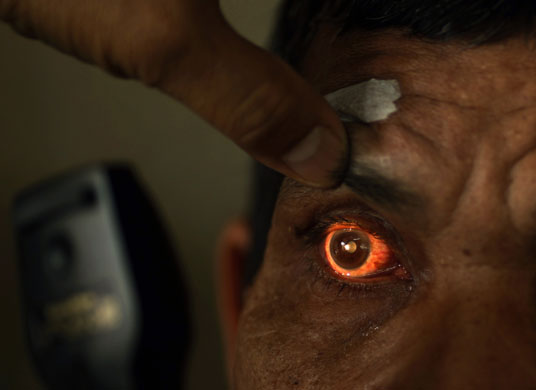
eye-examine-indonesia

This close-up of an eye exam in Indonesia exposes the eye as an object of sight.  We see a soft, wet organ, an aperature that ironically looks camera-like, and coloration that we know isn’t normal.  The orange and red could be a sign of disease or only a diagnostic dye, but in any case the organ’s vulnerability is highlighted.  The blunt thumb holding up the eyebrow is there to help, but it could just as easily blind the man, whose fragment of a face is tense with the strain of holding his eye unprotected before a bright light.  His mute fear becomes even more animal-like when contrasted with the optical instrument in the left foreground.  We are seeing an eye, but one that is trapped, first in disease and then in the clinical apparatus.  His eye has been made an object of the clinical gaze, which comes from outside the frame.

This staging becomes even more intense in the next photograph.

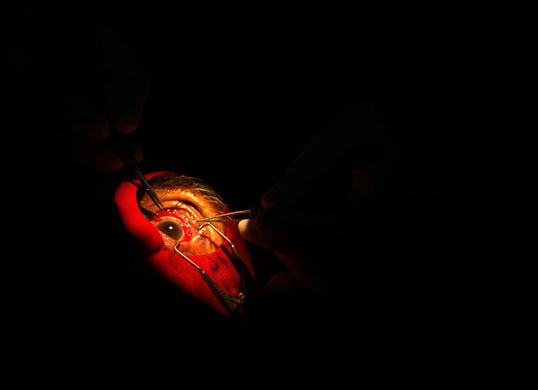
eye-surgery-indonesia

Once again, we see an eye isolated as an object of clinical manipulation guided by an instrumental gaze signified by medical instruments.  All the dramatic values have been enhanced: the eye is more fully decontextualized, with even the face now absent; the instruments now are inside the eye cavity during surgery; the light on the eye is harsher while the eye itself is immobilized (and sure to be harmed if it moves). This is a moment of extreme vulnerability, but if any emotion is to be supplied it has to happen without any cue from the patient, who in fact could be anaesthetised.  The emotional vector, if any, will follow another feature common to both images: the presentation of this clinical intervention to a third viewpoint, that of the spectator.

Every photograph can be thought of as being reflexive, that is, as showing not only some part of the world but also the act of seeing.  That seeing can be further refined as seeing photographically, and as seeing individually, or publicly, or in many other senses as well.  The two images above operate somewhat like popular science writing: they put the viewer alongside a medical intervention as if you could be part of the scene on the basis of your interest rather than actual expertise.  Thus, one watches as if an attending physician or as if in an operating theater, but actually from a third position of the public spectator who becomes aligned with the structure of expertise.

It probably is significant that both the expert and public viewers are not visible.  The eye being seen is completely subordinated to being an object of sight rather than a perspective on those watching, and one should note that the embodied eye is poor in the first case and blacked out in the second.  So, it might seem that these images are not reflexive: the clinical eye is the eye examined, not that of the examiner, and the public is not represented in any form but the photograph itself.  But as I’ve tried to suggest, the images can reveal quite a bit about two intertwined ways of seeing.

Photographs by Beawiharta/Reuters,

 2 Comments

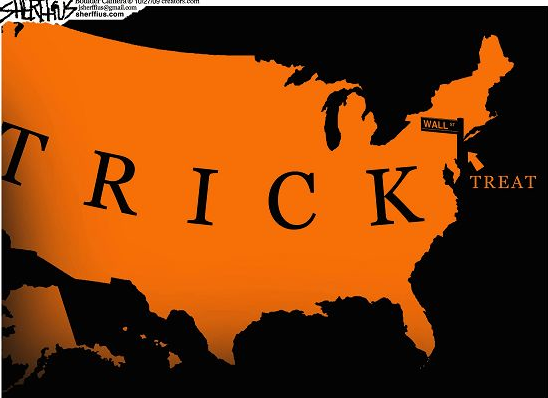
Sight Gag: Happy Halloween

sherfj2009

Credit: John Sherrfius

“Sight Gags” is our weekly nod to the ironic and carnivalesque in a vibrant democratic public culture.  We typically will not comment beyond offering an identifying label, leaving the images to “speak” for themselves as much as possible.  Of course, we invite you to comment … and to send us images that you think capture the carnival of contemporary democratic public culture.

 2 Comments